

Savolture Technical Guide
Is a 14kWh Battery Big Enough for an Australian Home? (2026 Guide)
Battery sizing is where most Australian solar quotes quietly go wrong — and in 2026 it costs more than ever. Undersize the battery and you still buy expensive grid power t...
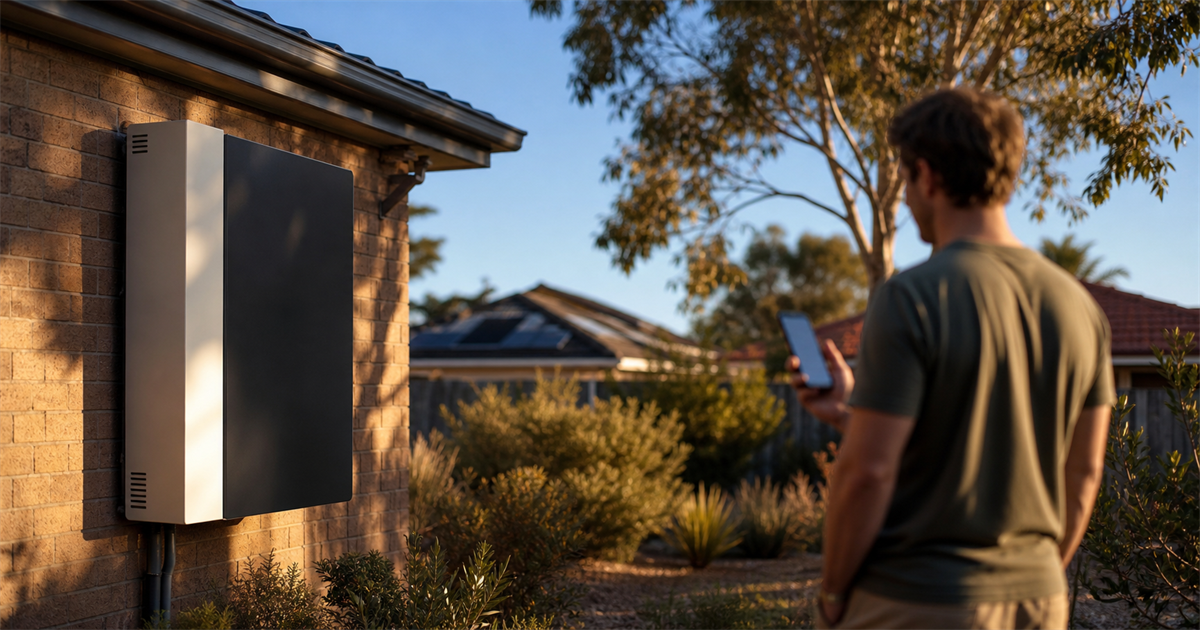
Battery sizing is where most Australian solar quotes quietly go wrong — and in 2026 it costs more than ever. Undersize the battery and you still buy expensive grid power through the evening peak, while leaving part of the federal Cheaper Home Batteries Program discount on the table. Oversize it and you sink thousands of dollars into capacity that never cycles before the sun comes back up. The number almost everyone lands on is 14 kWh, because it is the most popular CEC-listed residential size in the country. This guide answers the real question behind that choice: is a 14 kWh battery actually big enough for your home, how much of a typical Australian day it really covers, and when you genuinely need to go larger.
Quick answer: For most Australian homes, a 14 kWh battery is big enough to cover the evening and overnight load and shift the bulk of daily consumption off the grid. A typical home uses roughly 16–20 kWh per day, but only about 8–12 kWh of that falls after solar production ends — which a 14 kWh battery (around 11.5 kWh usable at an everyday 80% depth of discharge) handles comfortably, with headroom for a cloudy day. You should size larger than 14 kWh if you charge an EV at home, run an all-electric house with electric heating/hot water, or want multi-day backup. The battery must be on the Clean Energy Council (CEC) approved product list to qualify for the Cheaper Home Batteries Program rebate.
Related guides: CEC-listed home batteries for Australia, what solar battery storage costs in 2026, how to size a battery system from your actual loads, and battery backup without solar for grid-only setups.
How much electricity does an Australian home actually use?
Sizing starts with consumption, not with a battery brochure. Across the National Electricity Market, a typical detached Australian home draws somewhere between 16 and 20 kWh per day, with smaller apartments closer to 8–12 kWh and large all-electric households pushing past 30 kWh. The figure that matters for a battery is not the daily total, though — it is how much of that energy you use when the sun is not shining.
On a solar home, daytime loads are largely covered by the panels directly. The battery’s job is the evening peak (roughly 3 pm to 9 pm, when families cook, wash, heat or cool, and watch TV) plus the overnight base load of the fridge, standby electronics, and any pool or hot-water cycle. For most homes that after-dark slice is about 8 to 12 kWh — the real target a battery has to hit.
Rule of thumb: Size the battery to your evening + overnight load, not your 24-hour total. Your panels cover the day. Pull a winter week of half-hourly data from your retailer’s app and add up consumption from sunset to sunrise — that is the number your battery must serve.
What 14 kWh actually delivers (nameplate vs usable)
A “14 kWh” battery never gives you 14 kWh to spend, and understanding the gap is the difference between a battery that covers your night and one that taps out at 4 am. Take the CEC-listed 14.34 kWh LiFePO4 unit Savolture offers as a worked example. Its nameplate energy is 14.34 kWh, but you draw against a depth of discharge (DoD):
- Everyday use (80% DoD): about 11.5 kWh usable per cycle — the figure to size against for daily cycling and long battery life.
- Technical limit (90% DoD): up to roughly 12.9 kWh when you need the extra reserve during an outage or a long winter night.
That 11.5 kWh of everyday usable energy maps almost exactly onto the 8–12 kWh evening-and-overnight load of a typical home — which is precisely why 14 kWh became the default Australian size. The chemistry matters here too: LiFePO4 (lithium iron phosphate) tolerates daily deep cycling far better than older chemistries, and this unit is rated for over 8,500 cycles with a 15-year warranty, so cycling it to 80% every single night does not shorten its service life the way it would a lead-acid bank. For how chemistry affects usable life, see LFP vs NMC home batteries compared.
Is 14 kWh enough for your home? Sizing by household
“Big enough” depends on your load, not an average. Match your after-dark consumption to the right size:
| Household profile | Evening + overnight load | Is 14 kWh enough? |
|---|---|---|
| Apartment / small home, gas cooking & hot water | ~5–7 kWh | More than enough — a 10 kWh unit may suffice |
| Typical 3–4 bedroom family, mixed gas/electric | ~8–12 kWh | Yes — the sweet spot |
| All-electric home (electric HVAC + hot water) | ~13–18 kWh | Borderline — consider 14 kWh + expansion later |
| All-electric + home EV charging | 20 kWh+ | No — go larger or add a second unit |
The practical takeaway: for the broad middle of the Australian market — the 3-to-4-bedroom family home — 14 kWh hits the target with a comfortable cloudy-day margin. Homes at the heavier end are not shut out, because a quality battery platform is expandable: the unit referenced here parallels up to 16 modules for 229 kWh total, so a household can start at 14 kWh and add capacity as loads grow rather than over-buying on day one. Browse expandable options on the CEC-listed battery page.
14 kWh and the Cheaper Home Batteries Program
Since 1 July 2025, the federal Cheaper Home Batteries Program has cut roughly 30% off the installed cost of a home battery, and it reshaped how Australians size storage. Two rules drive the sizing decision:
- The battery must be on the CEC approved product list. The discount is only available for batteries (and inverters) listed by the Clean Energy Council. If a unit is not CEC-listed, it does not qualify — full stop. This is the single most important eligibility filter, and it is why the CEC listing sits at the centre of any rebate-eligible quote. For how installers confirm a specific model is listed, see our CEC approved battery list compliance guide.
- The rebate scales with usable capacity. The discount is calculated per usable kWh, so a 14 kWh battery attracts a larger rebate than a 10 kWh one — which has pushed the market’s centre of gravity from 10 kWh up toward the 14 kWh class.
Pro tip: Program terms, the per-kWh rate, and state top-ups change over time, so confirm the current figures with your installer before you sign. But the CEC-listing requirement is fixed: choose the battery from the approved list first, then size it. A cheaper non-listed battery that forfeits a ~30% rebate is rarely the cheaper option.
When to go bigger than 14 kWh
14 kWh is the right starting point for most, but four situations justify more:
- Home EV charging. A single overnight EV charge can add 10–40 kWh of demand — more than the whole house. If you want to charge the car from stored solar rather than the grid, plan for a second unit or a larger bank.
- All-electric homes. Electric ducted heating/cooling and electric hot water can push overnight load past what 14 kWh covers in winter, when solar harvest is lowest and heating demand is highest.
- Multi-day or whole-home backup. If you want to ride through a multi-day outage (common in regional and bushfire-exposed areas) rather than just cover the evening, you need reserve capacity well beyond daily cycling needs.
- Planned electrification. If an induction cooktop, heat-pump hot water, or an EV is on the roadmap, size for where you are heading. Choosing an expandable platform means adding modules later instead of replacing the system.
Quick reference: home type to battery size
| If your home is… | Target size | Where to start |
|---|---|---|
| Small / apartment, gas-assisted | ~10 kWh | CEC-listed range |
| Typical family home | 14 kWh | 14 kWh CEC-listed unit |
| All-electric, no EV | 14–20 kWh (expandable) | Start at 14 kWh, add modules |
| All-electric + EV / off-grid | 20 kWh+ to 229 kWh | Load-based sizing guide |
Two sizing scenarios
Picture a 4-bedroom family home in Brisbane with a 6.6 kW solar array, gas cooking, and ducted air conditioning used mostly in summer evenings. Daily use averages 18 kWh, but only about 10 kWh falls after sunset. A 14 kWh battery (11.5 kWh everyday usable) covers that evening-and-overnight load with margin to spare, exports surplus solar by day, and qualifies for the rebate as a CEC-listed unit. Here, 14 kWh is not just enough — it is well matched.
Now consider an all-electric home in regional Victoria with reverse-cycle heating, a heat-pump hot-water system, and a plug-in hybrid charged at home a few nights a week. Winter overnight load runs 16–22 kWh. A single 14 kWh battery would be drained before sunrise on the coldest nights. The right move is an expandable platform — start at 14 kWh and parallel a second module — rather than forcing one undersized unit to do a job it cannot.
Most common 14 kWh sizing mistakes
Across the Australian households we help installers size, the same 14 kWh assumptions trip people up — usually because the brochure number gets read as usable energy. These are the ones we flag before a quote is finalised.
- Sizing to the 24-hour total, not the after-dark load. Don’t buy 18 kWh because you use 18 kWh a day — your panels cover daytime. Size to sunset-to-sunrise consumption.
- Confusing nameplate with usable. A 14 kWh nameplate is ~11.5 kWh of everyday usable energy. Don’t plan as if all 14 kWh is available every night.
- Ignoring the CEC list to save money. A non-listed battery forfeits the ~30% Cheaper Home Batteries rebate. Choose from the approved list first.
- Forgetting winter. Solar harvest is lowest exactly when heating load is highest. Size for the worst week, not the annual average.
- Buying a non-expandable unit. If electrification or an EV is coming, a fixed-capacity battery means a full replacement later instead of adding modules.
- Over-buying for backup you don’t need. If you only want to cover the evening peak, paying for 30 kWh of multi-day reserve is capital that never cycles.
The true cost of getting the size wrong
Undersizing is the quieter, more common loss. If a battery taps out two hours before sunrise, you buy that gap from the grid every night — at peak or shoulder rates that can run 30–45c/kWh, a 3 kWh nightly shortfall is roughly $1/day, or $300–$400 a year of avoidable grid spend, plus a smaller rebate captured up front. Oversizing fails the other way: paying for 6–8 kWh of capacity that rarely discharges ties up $3,000–$5,000 of capital earning nothing. Getting the size right — matched to your real after-dark load — is where the economics of a home battery are won or lost. For the full cost picture, see solar battery storage cost in 2026.
Next steps
- Compare rebate-eligible options: browse the CEC-listed battery range for Australia, including the expandable 14.34 kWh LiFePO4 unit.
- Get sized properly: use the load-based sizing method to turn your evening-and-overnight consumption into a target capacity.
- Read next: what home battery storage actually costs in 2026 — including how the rebate changes the maths.
Frequently asked questions
Is a 14 kWh battery big enough for a house?
For most Australian homes, yes. A 14 kWh battery delivers about 11.5 kWh of everyday usable energy, which covers the typical 8–12 kWh evening-and-overnight load with margin. It may be undersized for all-electric homes with electric heating and hot water, or for households charging an EV at home, where 20 kWh or more is a better target.
How long will a 14 kWh battery last overnight?
At a typical overnight base load of 0.5–1 kW (fridge, standby, networking) a 14 kWh battery can run essential circuits for well over 12 hours. Under a heavier evening load of 2–3 kW (cooking, heating or cooling, appliances) its ~11.5 kWh usable energy lasts roughly 4–6 hours of peak demand before tapering to base load — comfortably covering a normal evening into the next morning’s solar.
Does a 14 kWh battery qualify for the Cheaper Home Batteries Program?
It qualifies if the specific battery is on the Clean Energy Council (CEC) approved product list and is installed by an accredited installer. The rebate is calculated on usable capacity, so a 14 kWh battery attracts a larger discount than a 10 kWh unit. Always confirm the current program rate and any state top-ups with your installer.
Is Sigenergy CEC approved?
Sigenergy lists battery products on the CEC approved product list, which is why they appear in rebate-eligible quotes. The CEC list includes many brands; eligibility for the Cheaper Home Batteries Program depends on the exact model and capacity being listed, not just the brand name. When comparing brands, check that the precise model you are quoted — including its usable kWh — appears on the current CEC approved list.
How long does CEC approval take for a battery?
CEC product listing is a certification the battery maker completes, and it typically takes several months, as it requires the battery to meet the relevant safety standards (such as IEC 62619) and pass the Council’s review. For a homeowner, the practical point is simpler: you do not wait on approval — you choose from batteries already on the approved list, which is updated by the CEC and published online.
Can I add more capacity to a 14 kWh battery later?
With an expandable platform, yes. The 14.34 kWh LiFePO4 unit referenced here parallels up to 16 modules for as much as 229 kWh total, so a household can start at 14 kWh and add capacity as loads grow — for example after adding an EV or going all-electric — rather than replacing the system. Confirm the maximum parallel configuration on the product datasheet.
See also: CEC approved battery list
See also: 200Ah LiFePO4 battery
Sources
- Clean Energy Council — Approved products (batteries) list and listing requirements.
- Australian Government / Cheaper Home Batteries Program — program overview and eligibility (effective 1 July 2025).
- Australian Energy Regulator — residential electricity consumption benchmarks.
- IEC 62619 — safety requirements for secondary lithium cells and batteries for industrial and stationary applications.
Ready to size your system?
Get a free battery recommendation.
Tell us your load, location, and backup target — we will spec the right 48V LiFePO4 system for you.