

Off-grid solar systems
Off-Grid Solar Systems with LiFePO4 Battery Storage
Year-round, self-sufficient power for cabins, rural homes, farms, and remote sites — built around UL 9540-certified LiFePO4 storage.
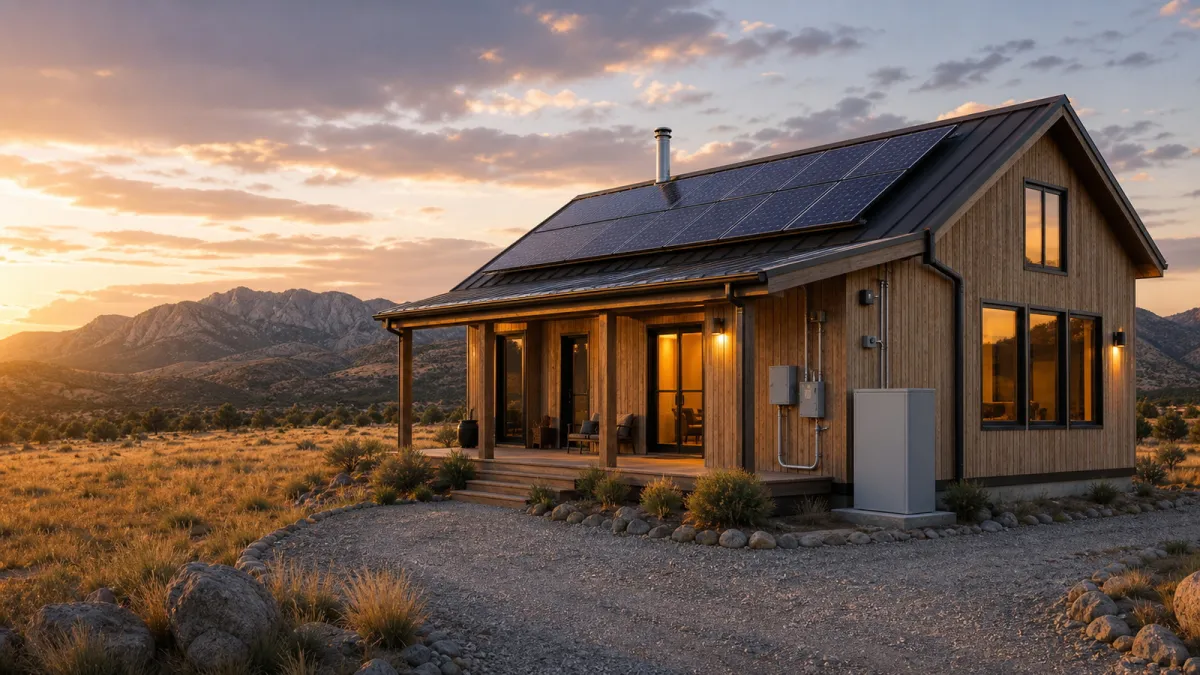
Off-grid battery sizing
LiFePO4 lets you use about 95% of rated capacity, so the bank works harder than lead-acid for the same nameplate kWh.
Solar Battery Storage: Off-Grid or Grid-Tied?
“Solar battery storage” covers two very different architectures, and the right one depends on whether you plan to keep a utility connection. This page covers off-grid systems in full. If you are staying connected to the grid, the design, sizing and certification requirements are different, and the resources below apply to you instead.
Off-Grid Solar Battery Storage
No utility connection. The battery bank is sized for full autonomy through night and multi-day cloud cover, typically paired with a backup generator for extended low-sun stretches. This is what the rest of this page covers.
Grid-Tied Solar Battery Storage
Stays connected to the grid. The battery is sized for outage backup and time-of-use savings rather than full autonomy, and the system can still draw from or export to the utility. See our UL 9540 grid-tied home battery system, or the CEC-listed platform for Australian installs.
An off-grid solar system runs entirely on its own — solar panels charge a battery bank during the day, and that stored energy powers the property at night and through cloudy stretches, with no connection to the utility grid. The hard part of going off-grid is rarely generation. It is storage: keeping the lights, pumps, and appliances running after sunset and across a string of overcast days. That is why the battery bank is the heart of any serious off-grid build.
Who Needs an Off-Grid Solar System?
Off-grid makes the most sense when connecting to the utility grid is expensive, unreliable, or simply not an option. Extending a power line to a remote site can run well over $15,000 per mile, which often makes a self-contained solar-plus-storage system the cheaper long-term choice. Four situations come up again and again:

Remote cabins and rural homes. Picture a property where the nearest utility pole is half a mile away. A LiFePO4 battery bank paired with rooftop or ground-mount solar removes the trenching, the line-extension quote, and the monthly bill in one move.
Working farms and ranches. Water pumps, barn lighting, electric fencing, and cold storage all need dependable power. An off-grid system sized for those loads keeps operations running whether or not the grid reaches the back forty.
RVs, vans, and marine. Mobile off-grid setups trade a few large fixed loads for compact, deep-cycling storage that tolerates daily charge and discharge.
Grid-failure-prone areas. Where the grid is technically present but unreliable, a property can run as a full off-grid island during outages and load-shedding rather than waiting on the utility.
If your situation looks more like backup during occasional outages, a grid-tied or hybrid setup is usually the better fit. We cover that trade-off in our hybrid vs off-grid vs grid-tied inverter guide — worth reading before you commit to a full off-grid design.
What Goes Into an Off-Grid Solar System?
Every off-grid solar system is built from the same four building blocks. Get the battery and inverter right and the rest follows.
Off-Grid Batteries (LiFePO4 Storage)
The battery bank is what separates a working off-grid system from a daytime-only one. For off-grid duty, lithium iron phosphate (LiFePO4) has become the default chemistry, and for good reason. Off-grid batteries cycle hard — charged every day, discharged every night — so cycle life and usable depth of discharge matter more than anything else.
LiFePO4 off-grid batteries for solar typically deliver 6,000+ cycles at roughly 95% usable capacity, compared with 1,500–3,000 cycles at only about 50% usable for lead-acid. In practice that means a LiFePO4 bank does far more real work per nameplate kWh and lasts years longer before replacement. Off-grid solar batteries also have to survive temperature swings that grid-tied indoor batteries never see. Our 314Ah LFP battery uses self-heating to keep cells in their safe charge window in cold climates, which is exactly where many off-grid sites sit. For smaller or modular builds, our 48V LiFePO4 battery, 200Ah, and 100Ah lithium batteries cover the common bank sizes.
Off-Grid Solar Inverters and Inverter-Chargers
The inverter turns stored DC energy into the AC power your appliances use. Off-grid solar inverters differ from grid-tied ones in a key way: they have to form their own grid rather than follow the utility’s. Most off-grid builds use an off-grid inverter charger — a single unit that inverts battery power to AC, charges the bank from solar, and manages an optional generator input.
Size the inverter to your peak surge load, not just your average draw. A well pump or air conditioner can pull several times its running wattage at startup, and an undersized inverter will trip when those loads kick in. Many off-grid owners also wire in a backup generator for the worst winter weeks, letting the inverter-charger top up the battery bank when solar alone falls short. Our hybrid inverter handles both off-grid and backup duty and pairs directly with our LiFePO4 banks.
Solar Panels and Charge Controllers
Solar panels and the charge controller form the charging side of the system. The charge controller sits between the panels and the battery, regulating voltage and current so the bank charges safely. There are two types, and the difference is real money in an off-grid context: MPPT (maximum power point tracking) controllers harvest 20–30% more energy than older PWM controllers, especially in cold weather and partial shade. For off-grid systems, where every harvested watt-hour counts, MPPT is the standard choice. Size your array so it can fully recharge the battery bank on an average day in your worst solar month, not your best.
Balance of System
The remaining pieces — wiring, fusing, disconnects, surge protection, mounting, and monitoring — are what make the system safe and serviceable. They are easy to under-budget and the first thing an inspector checks. A clean, code-compliant install also protects the warranty on your storage and inverter.
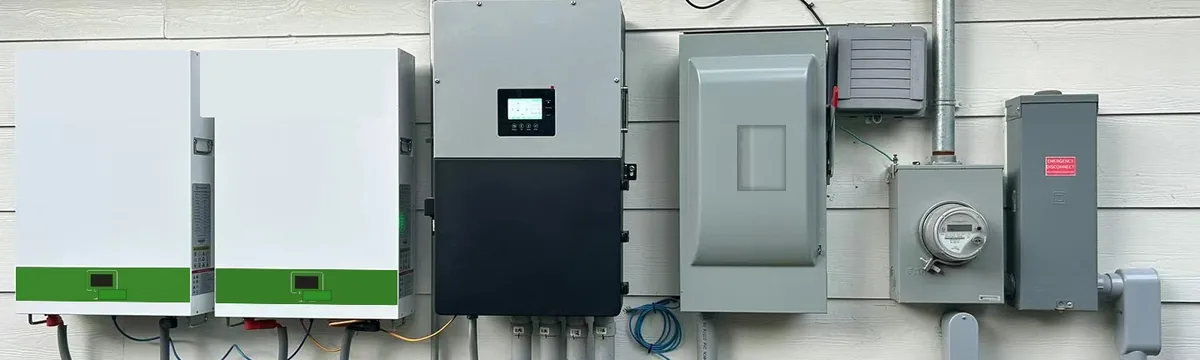
Off-Grid LiFePO4 Battery Specifications
The core specs that decide whether an off-grid battery survives years of daily deep cycling — not just a spec sheet, but what each number means for an off-grid home.
How to Size Your Off-Grid Battery Bank
Sizing comes down to three numbers: how much energy you use per day, how many days of autonomy you want (how long the system runs with little or no sun), and how deeply you can discharge the battery. The relationship is simple:
Off-Grid Solar System Packages with Batteries
Most off-grid builds fall into four storage tiers. These are starting points — we size the final off-grid solar system packages with batteries and a matched inverter to your actual loads.
5 kWh — Weekend cabin / light loads. Lights, a fridge, phone and laptop charging, and a water pump for intermittent use. A single LiFePO4 battery and a compact inverter.
Package options10 kWh — Small full-time home / essential loads. Refrigeration, lighting, well pump, and everyday electronics with one day of autonomy in a sunny climate.
Package options15 kWh — Family home / most appliances. Adds laundry, larger refrigeration, and headroom for cloudy days. Usually a 48V bank with a 6–8 kW inverter.
Package options20 kWh+ — Full off-grid home / all loads with autonomy. Whole-home loads plus multiple days of autonomy and surge capacity for pumps and HVAC. A stacked LiFePO4 bank with a 10 kW+ inverter, often with generator integration.
Package optionsWhat an Off-Grid Solar System Costs
Illustrative equipment cost ranges by storage size. Final pricing varies by region, panel/inverter selection, and your installer — we quote the battery and balance-of-system, not the install labor.
*Illustrative equipment-only ranges, not installed quotes. Use the off-grid battery calculator to size your system, then send your loads for a spec’d quote.
Why Build Your Off-Grid System with Savolture LiFePO4
Off-grid storage has to work unattended, often in tough conditions, for years. That is where the storage spec matters most:
We work with installers, EPC partners, and serious off-grid homeowners to match storage and inverters to the load — not to sell a one-size box.
UL9540 & Certification Resources
Off-grid battery installations require UL9540-certified systems in most US jurisdictions. These guides cover the compliance and permitting steps your installer or AHJ will ask about:
- UL9540 Certification Explained — What the listing covers, which states require it, and how to package the documentation for permit submittal.
- UL9540 vs UL9540A: What’s the Difference? — When your AHJ asks for “UL9540A test data,” here is the precise distinction and what fire marshals actually review.
- UL9540 Battery Permit: What AHJ Inspectors Check in 2026 — Field-level checklist of documentation, labeling, and spacing requirements inspectors verify on permit day.
Off-Grid Solar System FAQs
How many batteries do I need for an off-grid solar system?
Multiply your daily energy use by the number of days of autonomy you want, then divide by the battery’s usable depth of discharge. A 12 kWh-per-day home wanting 2 days of autonomy on LiFePO4 needs about 25 kWh of storage. Use our off-grid battery calculator to size it for your loads.
Can I use LiFePO4 batteries for off-grid solar?
Yes — LiFePO4 is the preferred chemistry for off-grid solar batteries. It tolerates deep daily cycling, delivers 6,000+ cycles, allows about 95% usable capacity, and is more thermally stable than other lithium chemistries, which matters for remote, unattended sites.
What size inverter do I need for an off-grid system?
Size the off-grid inverter to your peak surge load, not your average draw. Motors in well pumps, air conditioners, and power tools can pull several times their running wattage at startup. Most full off-grid homes use a 6–12 kW inverter-charger; smaller cabins need less.
How long do off-grid solar batteries last?
A quality LiFePO4 off-grid battery rated for 6,000+ cycles will typically last 10–15 years under daily off-grid use — far longer than lead-acid, which usually needs replacement in 3–5 years. Keeping the bank within its temperature and depth-of-discharge limits extends its life.
Off-grid vs hybrid vs grid-tied — which do I need?
Choose off-grid when there is no practical grid connection or you want full independence. Choose hybrid or grid-tied when the grid is available and you mainly want backup or bill savings. Our hybrid vs off-grid vs grid-tied inverter guide breaks down the decision in detail.
Is an off-grid system worth it compared with extending the grid?
Often, yes. When a utility line extension costs more than $15,000 per mile, a self-contained solar-plus-storage system can pay for itself versus the trenching and ongoing bills — and the federal 30% tax credit on solar-plus-storage through 2032 improves the math further. Compare the line-extension quote against a sized off-grid build before deciding.
Planning an off-grid build?
Get an off-grid battery spec sized to your loads
Tell us your daily kWh and how many days of autonomy you need. We’ll match LiFePO4 storage and a compatible inverter for your site.