

Savolture Technical Guide
UL9540 vs UL9540A: What’s the Difference?
UL 9540 certifies the system as safe; UL 9540A is a fire-propagation test method. Here is the difference, when each is required, and how 9540A data changes your permit and install.
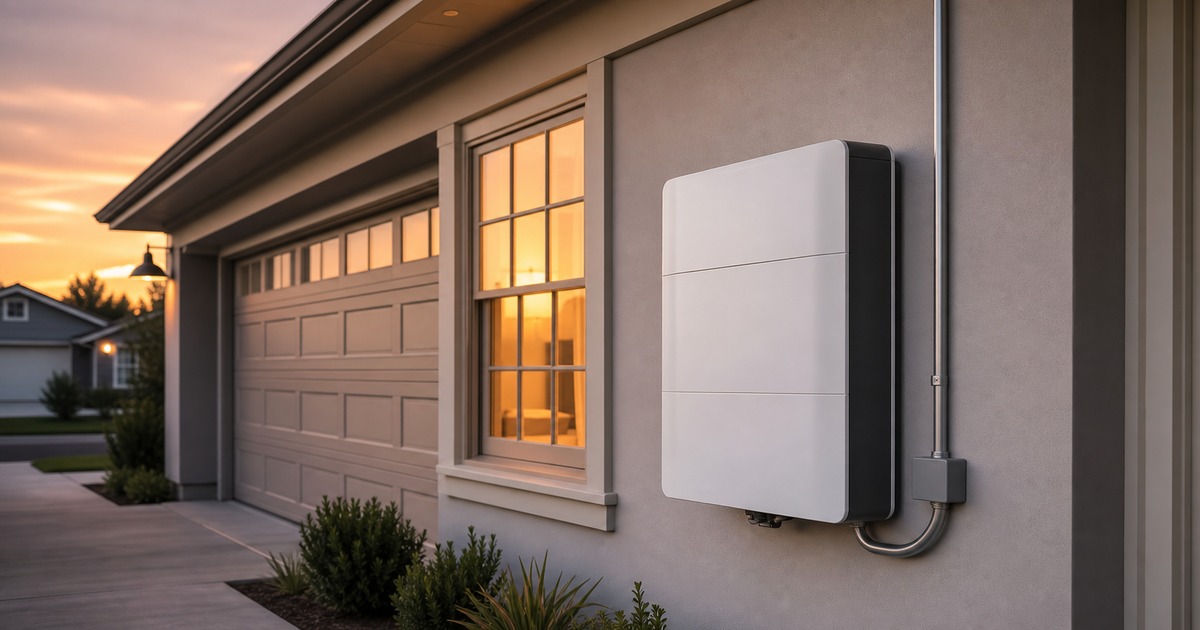
When 9540A kicks in
Above the default residential allowances, fire-propagation test data is required to permit the install. UL 9540 lists the product; UL 9540A data governs spacing and placement.Reviewed by the Savolture Technical Team — Updated June 2026
Your AHJ plan reviewer just returned your energy storage permit with one line highlighted: “Provide UL 9540A test data.” But your battery spec sheet says “UL 9540 Listed.” You assumed those were the same thing. They are not — and the difference can cost you a six-week permit delay, a re-engineered enclosure, or a failed final inspection.
This confusion shows up on residential and commercial storage projects every week. The two designations sound nearly identical, they come from the same standards body, and suppliers routinely blur the line in their marketing. Here is the precise, defensible difference — what each one actually certifies, when an inspector requires each, and how UL 9540A test data directly changes where you can put the battery and how far apart the units have to sit.
The One-Sentence Answer
UL 9540 is a product safety certification that says the complete energy storage system is safe to operate. UL 9540A is a fire test method that measures how a battery behaves when a cell goes into thermal runaway. One is a pass/fail listing for the product; the other is laboratory data that fire codes use to decide how you are allowed to install it.
Rule of thumb: If someone tells you a battery “passed UL 9540A,” be skeptical — you do not pass or fail UL 9540A. It produces a fire-propagation dataset. A system is Listed to UL 9540; it is tested per UL 9540A.
What UL 9540 Actually Certifies
UL 9540 is the Standard for Energy Storage Systems and Equipment. It is a system-level safety certification: a Nationally Recognized Testing Laboratory evaluates the entire energy storage system as an integrated product — the battery, the battery management system (BMS), the inverter or power conversion system, and the controls — and confirms it meets construction, electrical, and operational safety requirements.
UL 9540 does not test the parts in isolation. It references the component-level standards those parts must already meet:
- UL 1973 — the battery pack and BMS
- UL 1741 — the inverter / power conversion system
- UL 1998 — safety-related control software, where applicable
When an authority having jurisdiction (AHJ) asks whether a system is “certified” or “listed,” this is the listing they mean. A UL 9540 Listing is the baseline credential that gets an energy storage system onto a permit at all. For a deeper walk-through of how to read and request that documentation, see our UL9540 certification guide for installers.
What UL 9540A Actually Measures
UL 9540A is the Test Method for Evaluating Thermal Runaway Fire Propagation in Battery Energy Storage Systems. The key word is method. It is a defined laboratory procedure, not a certification you hang on the wall. Technicians deliberately drive a cell into thermal runaway and measure what happens next: how much heat is released, what gases are produced, whether the fire spreads to neighboring cells, modules, or units, and whether the released gas is flammable enough to require explosion control.
The test is run at up to four escalating scales, and the results at one level determine whether the next level is needed:
- Cell level — characterizes a single cell’s thermal runaway and gas behavior
- Module level — does the failure spread from cell to cell within a module?
- Unit level — does it spread from one module or enclosure to the next?
- Installation level — full-scale test replicating the real mounting arrangement
The output is a body of data — temperatures, heat-release rates, gas composition, propagation behavior — that fire code officials and the system designer use to make installation decisions. There is no “UL 9540A certificate of compliance.” There is a UL 9540A test report.
Pro tip: Ask your supplier for the UL 9540A report summary, not a certificate. A legitimate supplier can provide the test results showing cell chemistry, the scale tested, and whether propagation was contained. If all they can produce is a marketing line, treat the “9540A” claim as unverified.
The Core Difference, Side by Side
| Factor | UL 9540 | UL 9540A |
|---|---|---|
| What it is | Product safety certification (Listing) | Fire-propagation test method |
| Question it answers | Is the system safe to operate? | How does it behave in a fire? |
| Result format | Pass/fail Listing mark | Test report with data |
| Scope | Whole system (battery + BMS + PCS + controls) | Thermal runaway and fire spread |
| Who relies on it | AHJ & electrical inspector | Fire marshal & code official |
| Drives | Whether you can install at all | Where you can install and spacing |
| Referenced by | NEC, product approval | NFPA 855, IFC Section 1207 |
Read that “Drives” row twice, because it is the practical heart of the matter. UL 9540 gets the system approved as a product. UL 9540A data is what lets you place that product closer to a wall, indoors, or in larger aggregate capacity than the default code allowances permit.
When Each One Is Required
UL 9540 is effectively non-negotiable: in most U.S. code-adopting jurisdictions, a residential or commercial energy storage system must carry a UL 9540 Listing to be permitted. There is rarely a path around it. Savolture’s 48V LiFePO4 platform — all models carry UL 9540 listing.
UL 9540A data becomes necessary when your installation exceeds the default allowances written into the fire code. Under NFPA 855 and IFC Section 1207, residential energy storage systems are governed by limits such as:
- An individual unit capacity ceiling around 20 kWh for residential installations
- A minimum separation of roughly 3 ft (0.9 m) between units and from doorways or exits
- Aggregate capacity limits per location and restrictions on indoor and habitable-space placement
When a project stays inside every default limit, large-scale UL 9540A data may not be requested. The moment you want to exceed a threshold — more aggregate kWh, units mounted closer together, an indoor or garage location the default rules restrict — the AHJ can require UL 9540A test results to prove the closer, larger, or indoor arrangement does not allow a fire to propagate. The test data is the evidence that justifies the exception. See our guide on sizing your ESS so it stays below the 20 kWh UL9540 review threshold.
How UL 9540A Data Changes Your Install
This is where the abstract distinction turns into real money and real layout decisions. Favorable UL 9540A results — data showing that thermal runaway in one cell does not propagate to adjacent units — can let the AHJ approve:
- Reduced separation distances — units mounted closer together or nearer to walls than the 3 ft default
- Indoor and garage placement that default code language would otherwise restrict
- Larger aggregate capacity at a single location
- Relief from a dedicated fire-rated enclosure in some configurations
In other words, UL 9540 gets your system on the permit; UL 9540A data is the lever that makes a tight garage wall, a multi-battery bank, or an indoor mechanical room actually approvable. Chemistry matters enormously here. LFP (LiFePO4) systems consistently produce better thermal-runaway and fire-propagation behavior in UL 9540A testing than older NMC chemistry — one of several reasons LFP has become the residential default. We cover that chemistry gap in detail in our LFP vs NMC comparison.
Rule of thumb: If your design pushes any limit — spacing, indoor location, or total kWh — request the UL 9540A report before you finalize the layout. Designing the install around the available test data is far cheaper than redesigning after the plan reviewer rejects it.
Quick Reference: Which Document Do You Need?
| Your situation | What the AHJ wants | Recommended system |
|---|---|---|
| Single residential unit, within default spacing and ≤20 kWh | UL 9540 Listing | 200Ah wall-mount LFP |
| Multiple units mounted close together | UL 9540 + UL 9540A propagation data | UL9540 flagship system |
| Indoor / garage placement code restricts | UL 9540 + UL 9540A installation-level data | UL9540 flagship system |
| Larger aggregate capacity bank | UL 9540 + UL 9540A + NFPA 855 review | 314Ah high-density cabinet |
| Entry-level single-room backup | UL 9540 Listing | 100Ah entry module |
The Most Common UL 9540 vs UL 9540A Mistakes
The single question we field most often from installers is which of the two documents an AHJ will actually ask for. Nine times out of ten the confusion below is why a submission stalls, so we walk through it before any paperwork goes in.
These are the errors that most often cost installers a permit cycle or a failed inspection:
Mistake 1: Treating “UL 9540A” as a higher grade of UL 9540. They are not tiers of the same thing. One is a system listing; the other is a fire test method. Correct framing: “The system is UL 9540 Listed, and we have UL 9540A test data for the install configuration.”
Mistake 2: Assuming a UL 9540 Listing covers your spacing exception. The Listing says the product is safe; it does not authorize closer-than-default spacing or restricted indoor placement. Only UL 9540A data supports those exceptions. Correct: confirm what your specific layout requires before quoting.
Mistake 3: Accepting a “9540A certificate” at face value. There is no such certificate. Ask for the report summary identifying chemistry, test scale, and propagation outcome. Correct: a marketing line is not test data.
Mistake 4: Ignoring the test scale. Cell-level data does not answer an installation-level question. If your AHJ is concerned about unit-to-unit propagation against a garage wall, cell-level results will not satisfy them. Correct: match the test scale to the question being asked.
Mistake 5: Leaving the fire marshal out until final inspection. UL 9540A questions come from the fire code official, who is sometimes separate from the electrical plan reviewer. Correct: surface the fire-side requirements during plan review, not at the final walk-through.
The True Cost of Getting It Wrong
The 9540 vs 9540A mix-up is not a paperwork nuisance — it carries a direct financial cost. A permit kicked back for missing UL 9540A data commonly adds 4–6 weeks to the timeline while the report is obtained and resubmitted. If the layout has to be re-engineered to meet default separation because no propagation data exists, a dedicated fire-rated enclosure or relocation can add $1,500–$2,500 to the job. A failed final inspection means a second truck roll, a re-inspection fee, and a delayed payment milestone — frequently $800–$1,200 in soft costs before the rework itself.
Obtaining the right documentation up front costs nothing but a request email. The asymmetry is the whole argument for getting this right at the design stage.
Two Scenarios Where the Distinction Decides the Job
Scenario A: A Phoenix, AZ garage install pushing the spacing limit
Picture a Phoenix-area installer mounting two battery units on a shared garage wall, spaced closer than the 3 ft default to fit the available space. The system is UL 9540 Listed, so the installer assumes the permit is straightforward. The fire code official disagrees: closer-than-default spacing requires UL 9540A propagation data proving a runaway event in one unit will not spread to the second. Because the chosen LFP platform already had unit-level UL 9540A results showing no propagation, the installer submits the report and the tight layout is approved — no enclosure, no relocation. Had the data not existed, the only options would have been re-spacing the units or adding a fire-rated barrier.
Scenario B: A Portland, OR whole-home bank exceeding aggregate capacity
Consider a Portland-area whole-home project specifying enough storage to exceed the default residential aggregate capacity at a single location. UL 9540 Listing alone does not clear that threshold. The AHJ requires UL 9540A installation-level data plus an NFPA 855 review to approve the larger bank indoors. Selecting a high-density LFP cabinet with available installation-scale test data lets the project proceed as designed. The lesson is identical to Scenario A: the listing opens the door; the test data is what permits the size and placement the homeowner actually wants.
Next Steps
UL 9540 and UL 9540A work together: the Listing certifies the product, and the test data governs how you are allowed to install it. Get both questions answered before you finalize a layout. For the full plan-review walkthrough, see the UL 9540 permit and inspection guide.
- Browse UL 9540 Listed systems — Compare the 100Ah, 200Ah, and 314Ah LFP modules; all are built for code-compliant residential and light-commercial permitting.
- Read the UL 9540 certification guide — Before you submit a permit, walk through exactly which documents to request and the five most common permitting mistakes in our UL9540 installer guide.
- Confirm inverter compliance — Pair your UL 9540 Listed battery with a UL9540 compatible hybrid inverter for grid-tied battery storage to keep the full system on a single listed configuration.
- Request the documentation package — Send us your project size, location, and target layout, and we’ll return the UL 9540 Listing details and the relevant UL 9540A test summary within 24 hours. Contact us →
UL 9540 vs UL 9540A FAQ
Is UL 9540A the same as UL 9540?
No. UL 9540 is a product safety certification that lists the complete energy storage system as safe to operate. UL 9540A is a separate fire test method that measures how a battery behaves during thermal runaway. UL 9540 is a pass/fail listing; UL 9540A produces a fire-propagation data report. They are different tools that serve different parts of the approval process.
Can a battery “pass” UL 9540A?
Not in the pass/fail sense. UL 9540A is a test method that generates data — temperatures, heat release, gas composition, and whether fire propagates between cells, modules, or units. Code officials and designers interpret that data to decide installation requirements. A supplier should be able to provide a UL 9540A test report summary, not a “pass” certificate.
When is UL 9540A test data required?
UL 9540A data is typically required when an installation exceeds the default allowances in NFPA 855 or IFC Section 1207 — for example, mounting units closer than the roughly 3 ft default separation, placing batteries indoors where code restricts it, or exceeding residential aggregate capacity limits. The data justifies the exception by demonstrating that a thermal runaway event will not propagate.
Does my home battery need UL 9540, UL 9540A, or both?
Nearly every permitted residential system needs a UL 9540 Listing. Whether you also need UL 9540A data depends on the layout: a single unit within default spacing and capacity usually needs only the Listing, while close-spaced multiple units, indoor placement, or larger banks generally require UL 9540A data as well. Confirm with your AHJ during plan review.
Why does battery chemistry matter for UL 9540A?
Chemistry strongly affects fire-propagation behavior. LFP (LiFePO4) cells have a higher thermal runaway threshold and a less energetic failure than NMC cells, so LFP systems generally produce more favorable UL 9540A results. Better propagation data makes it easier to win approval for reduced spacing or indoor placement, which is one practical reason LFP has become the residential standard.
Who reviews UL 9540A data on a project?
The fire code official or fire marshal is usually the reviewer most concerned with UL 9540A data, since it relates to fire propagation and installation safety. This can be a different person than the electrical plan reviewer who checks the UL 9540 Listing. Surfacing fire-side requirements early in plan review — rather than at final inspection — prevents costly late surprises.
Sources & Further Reading
- UL 9540A Test Method (UL Solutions) — official description of the thermal runaway fire-propagation test method and its four test scales
- NFPA 855 — Standard for the Installation of Stationary Energy Storage Systems — separation, capacity, and large-scale fire test requirements
- International Fire Code, Chapter 12 (Energy Systems) — Section 1207 residential and commercial ESS provisions
- NREL Lithium-Ion Battery Technology Assessment — chemistry safety and performance benchmarks (free, publicly accessible)
Related Reading
If you are building a residential or light-commercial storage system, these guides cover the next steps after confirming compliance:
See also: UL9540 certification
See also: battery permit inspection
- UL9540 Home Battery System — Savolture’s UL9540-listed LiFePO4 platform with complete permit documentation, 10–57 kWh.
- Off-Grid Solar Systems with LiFePO4 Battery Storage — System design guide covering inverter pairing, battery sizing, and UL9540 permit documentation for fully off-grid installs.
- UL9540 Certification Explained — What the listing covers, what AHJ inspectors actually review, and how to pull the documentation for your permit package.
Need UL 9540 + 9540A documentation?
Get the full certification package
Send your project size, location, and target layout — we will return the UL 9540 Listing details and the relevant UL 9540A test summary within 24 hours.