

Savolture Technical Guide
Industrial Peak Shaving & Demand Charge Management with BESS: Sizing, Tariff Mechanics & ROI (2026)
Engineering guide to industrial peak shaving and demand charge reduction using LiFePO4 BESS. Learn the 3 utility bill components, 5 ROI drivers, sizing math, and 125kW/261kWh modular configurations.
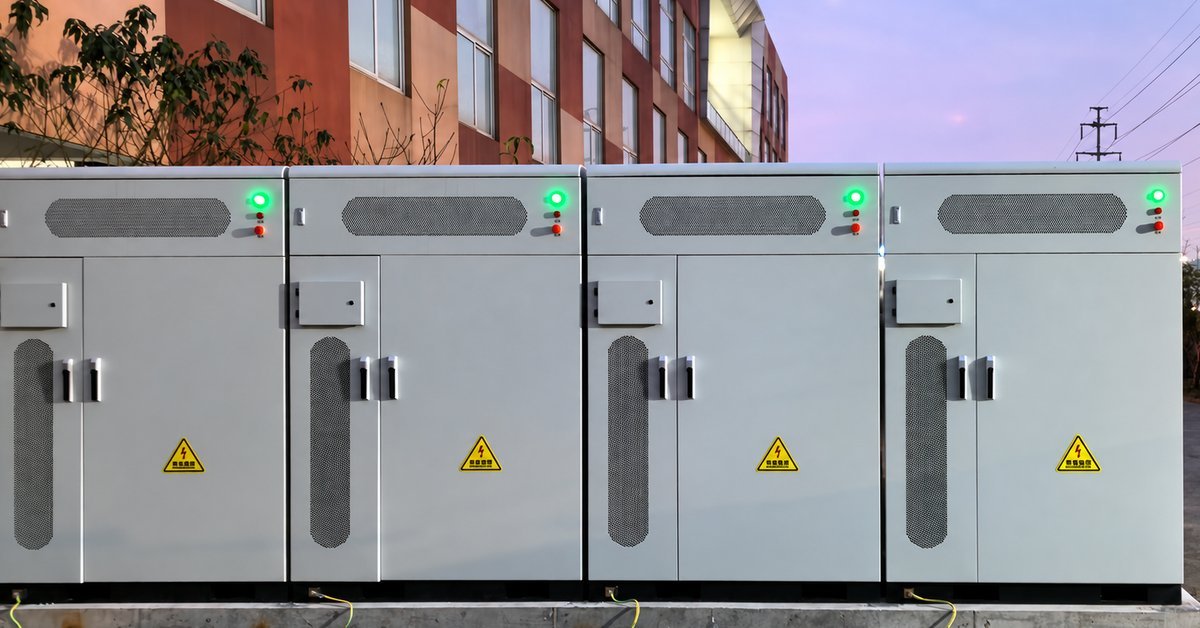
Quick Answer: Industrial electricity bills are rarely driven by total kilowatt-hour (kWh) consumption alone; monthly Peak Demand Charges (billed per kW or kVA of maximum 15-minute power draw) and excess capacity penalties often account for 25% to 45% of a manufacturing plant’s utility invoice. Deploying a commercial LiFePO4 Battery Energy Storage System (BESS) for Peak Shaving clips short-duration power spikes — such as heavy motor starts, chiller staging, and shift-overlap surges — discharging stored energy locally so grid draw never exceeds a programmed kilowatt threshold. Engineering a bankable peak shaving system requires analyzing Three Utility Bill Components, evaluating Five Operational ROI Drivers, and matching site load profiles to Four Modular BESS Configurations (anchored by the standard 125 kW / 261 kWh liquid-cooled cabinet platform).
This engineering guide is written for industrial energy managers, manufacturing plant directors, cold-chain facility operators, and commercial EPC contractors evaluating behind-the-meter battery storage. All sizing formulas and financial payback projections below represent modeled benchmark scenarios designed to structure technical audits prior to utility interconnection filings.
Guidance Boundaries: This article provides an engineering and financial modeling framework, not a site-specific electrical single-line diagram (SLD) or utility tariff ruling. Actual demand charge reductions depend on local utility tariff schedules, demand ratchets, billing interval windows, and formal utility approval when reducing contracted transformer capacity.
Savolture supplies industrial-grade, liquid-cooled and air-cooled LiFePO4 battery storage systems (including the modular 125 kW / 261 kWh outdoor cabinet platform) utilizing cells certified under IEC 62619 and UN 38.3, paired with bi-directional Power Conversion Systems (PCS) tested to IEC 62109-1/-2 for commercial peak shaving, time-of-use (TOU) load shifting, and backup power applications.
The Three Components of an Industrial Electricity Bill
Many commercial storage proposals fail during financial due diligence because they project percentage savings across the entire utility invoice. Before sizing a battery bank, EPC engineers must audit 12 months of utility bills and separate the charges into three distinct buckets:
| Tariff Component | Utility Billing Mechanism | Impact of BESS Peak Shaving |
|---|---|---|
| 1. Peak Demand / Contracted Capacity Charge ($/kW or $/kVA/month) | Billed either on the highest measured 15-minute (or 30-minute) average power draw during the billing cycle, or as a fixed monthly fee tied to contracted connection capacity (kVA). | Primary Target: Under measured peak tariffs, BESS discharges during load spikes to cap grid import immediately. Under fixed contracted kVA tariffs, sustained peak shaving allows the facility to apply for a formal contract capacity downgrade with the local utility. |
| 2. Volumetric Energy Charge ($/kWh — TOU Peak vs. Off-Peak) | Billed per kWh consumed, typically split into Time-of-Use (TOU) windows where evening or afternoon peak rates are 1.4× to 2.5× higher than night off-peak rates. | Secondary Arbitrage: The BESS charges during low-rate off-peak hours (or from midday rooftop solar surplus) and discharges during peak tariff windows, capturing the price spread per kWh cycled. |
| 3. Excess Demand & Power Factor Penalties | Punitive surcharges (often 1.5× to 2.0× base capacity rates) triggered when transient facility demand exceeds contracted transformer limits or when inductive motor loads drag power factor below 0.85–0.90. | Immediate Elimination: Four-quadrant PCS inverters inject active power (kW) to prevent contract overruns and reactive power (kVAR) to maintain unity power factor at the point of common coupling (PCC). |
Measured Demand vs. Contracted Capacity Ratchets
In medium-voltage industrial tariff classes (typically facilities above 200 kVA), utilities employ two different capacity billing structures. In measured maximum demand jurisdictions, a single 15-minute coincidence of compressor startups, electric ovens, and HVAC chillers sets the high-water mark for the entire month — or triggers an annual “demand ratchet” that locks in 80% to 100% of that peak charge for the next 11 months. In contracted capacity jurisdictions (common across Southeast Asia and parts of the Middle East), the monthly capacity fee remains fixed until the facility demonstrates stable lower peak demand over several billing cycles and executes an amended connection agreement with the utility.
Five Operational Drivers That Determine Peak Shaving ROI
- Utility Tariff Class and Demand Rate ($/kVA): Peak shaving economics are strongest for medium-voltage and high-voltage industrial connections (>200 kVA) facing steep monthly demand charges (e.g., $8 to $20+ per kW/month) or severe TOU peak multipliers. Small commercial connections on flat volumetric rates rarely justify standalone peak shaving storage without solar coupling or backup criticality.
- Contracted Capacity vs. Actual Peak Utilization: Many industrial plants are over-contracted — paying monthly reservation fees for a 500 kVA utility feed when actual peak demand only reaches 320 kVA during brief shift transitions. Shaving the top 80 to 100 kW of transient load allows the plant to safely renegotiate its utility contract down toward actual base load plus a 10% safety buffer.
- Daily Load Factor and Peak-to-Average Ratio: A continuous 24/7 base-load facility (such as a flat-profile chemical plant with a 1.15:1 peak-to-average ratio) offers no narrow peak to shave. Conversely, facilities with a 2.0:1 to 3.0:1 peak-to-average ratio — driven by batch processing, metal stamping, cold-room pull-downs, or daytime shift overlaps — enable a compact BESS to eliminate massive demand spikes using minimal kilowatt-hour storage.
- Peak Duration Window (Hours per Day): Required battery energy capacity scales linearly with spike duration. Clipping a 100 kW demand spike that lasts 90 minutes requires half the battery cabinet expenditure of clipping a 100 kW plateau that persists for 3 hours. In general, peak durations of 1 to 3 hours yield the fastest C&I BESS capital recovery.
- Transformer Upgrade Deferral & Solar PV Synergy: When an expanding factory wants to add new production lines or EV fleet chargers that would push peak demand beyond its existing 500 kVA or 1,000 kVA utility transformer, utility grid reinforcement can take 12 to 24 months and require substantial capital contributions. Installing a modular BESS caps peak grid draw below the existing transformer limit immediately, while integrating rooftop solar PV allows daytime surplus energy to recharge the battery for zero marginal cost.
Step-by-Step Peak Shaving BESS Sizing Methodology
To ensure a battery storage system can still clip the full target demand spike in Year 8 or Year 10 of operation without missing a single 15-minute billing interval, engineers apply a two-stage power and energy calculation:
Step 1: Determine Required PCS Continuous & Surge Power (kW / kVA)
From 15-minute (or 1-minute) smart meter interval data over a 12-month baseline, establish the facility’s maximum historical demand ($P_{\text{max}}$) and the target grid import threshold ($P_{\text{target}}$) set in the Energy Management System (EMS):
Step 2: Calculate Nominal Battery Storage Capacity (kWh)
Multiply the shaved power by the maximum continuous duration ($t_{\text{peak}}$) of the demand plateau, then derate for system conversion losses, operational Depth of Discharge (80% daily DoD for LiFePO4 longevity, reserving 90%–95% strictly as a technical emergency limit), and End-of-Life aging margin (80% EoL):
Illustrative Sizing Calculation: 350 kVA Food Processing Facility
Consider a medium-voltage food processing plant operating two daily shifts with a 350 kVA utility connection. Historical meter logs reveal that afternoon batch cooking and blast-chiller compressor staging push peak demand to 280 kW for 1.5 hours each afternoon, while base load remains below 180 kW. The facility wants to cap grid import at 180 kW (shaving 100 kW for 1.5 hours):
- Delivered AC Energy per Shaving Cycle:
100 kW × 1.5 hours = 150 kWh AC - PCS Power Requirement:
100 kW × 1.10 margin = 110 kW continuous(matched to a standard 125 kW PCS) - Nominal LiFePO4 Capacity Requirement: Applying a 95% discharge efficiency ($\eta = 0.95$), an 80% daily operational DoD ($\text{DoD} = 0.80$), and an 80% End-of-Life capacity retention threshold ($\text{EoL} = 0.80$):
Engineering Match: This 246.7 kWh nominal requirement maps directly to a single 125 kW / 261 kWh liquid-cooled outdoor LiFePO4 BESS cabinet, providing 125 kW of active power capacity and 261 kWh of nominal storage (delivering ~158.7 kWh of usable AC energy even at End-of-Life, or ~198.4 kWh of usable AC energy at Beginning-of-Life at 80% DoD).
Four Modular C&I BESS Configurations for Industrial Plants
The reference building block for commercial peak shaving is the 125 kW / 261 kWh liquid-cooled LiFePO4 cabinet platform (configured with 314Ah prismatic LFP cells in a 1P260S high-voltage string at 832 V nominal, IP55 outdoor enclosure with integrated aerosol fire suppression, and ≥6,500 cycle life at 25°C, 0.5C, 70%–80% EoL per cell manufacturer specifications):
| Modular Configuration | Rated Power / Nominal Energy | BoL Usable AC Energy (80% DoD, 95% η) | Typical Industrial Facility Profile |
|---|---|---|---|
| Config 1: Single All-in-One Cabinet | 125 kW / 261 kWh (Liquid-Cooled) or 241 kWh (Air-Cooled) | ~198 kWh AC (Liquid) / ~183 kWh AC (Air) | 200–500 kVA light manufacturing, food processing, commercial hotels, and EV charging hubs. |
| Config 2: Dual-Parallel Cabinet Bank | 250 kW / 522 kWh | ~396 kWh AC | 500–1,000 kVA plastics extrusion, cold storage distribution hubs, and medium industrial plants. |
| Config 3: Quad-Parallel Array | 500 kW / 1,044 kWh (1.04 MWh) | ~793 kWh AC | 1,000–2,500 kVA textile mills, beverage bottling plants, and multi-shift assembly facilities. |
| Config 4: Multi-Cabinet / Containerized Cluster | 1.0 MW to 2.5 MW+ / 2.0 MWh to 5.0 MWh+ | 1,580+ kWh AC | Heavy industry, steel fabrication, cement grinding, and large industrial park substations. |
Thermal Management Note: For outdoor installations or high-ambient regions where summer temperatures regularly exceed 40°C to 45°C, liquid-cooled cabinets are strongly preferred over air-cooled variants. Liquid cooling maintains cell-to-cell temperature differentials within ≤2°C–3°C, minimizing thermal derating during high-power afternoon peak shaving discharges (note that PCS inverters and battery strings remain subject to manufacturer thermal derating curves when ambient temperatures exceed 45°C).
Modeled Financial Scenario: Two-Stage Revenue Stacking
Consider the 350 kVA food processing plant analyzed above, deploying one 125 kW / 261 kWh liquid-cooled BESS cabinet to shave 100 kW of afternoon peak demand while shifting 180 kWh of daily energy from peak TOU hours to off-peak night charging. In modeled C&I financial evaluations, revenue capture typically unfolds across three streams:
- Stream 1 — Immediate Elimination of Excess Demand Penalties & Measured kW Spikes: From Month 1 of commissioning, high-speed CT sensors at the main utility meter trigger the BESS whenever plant load approaches 180 kW. In jurisdictions with monthly measured peak kW billing, demand charge savings begin immediately. In jurisdictions with fixed contracted kVA fees, Month 1 savings start with eliminating excess-demand penalty events while logging clean load profiles for utility contract renegotiation.
- Stream 2 — Daily TOU Energy Arbitrage (Peak-to-Off-Peak Shifting): By recharging the battery bank during low-tariff night hours (or absorbing midday solar PV curtailment) and discharging ~180 kWh during evening peak tariff windows, the facility captures the daily $/kWh TOU price spread across 300 to 350 operating days per year.
- Stream 3 — Medium-Term Contracted Capacity Reduction or Transformer Deferral: Once historical utility meter logs confirm that peak grid draw stays reliably below 200 kVA, the facility can formally apply to downgrade its contracted utility capacity (where tariff rules permit) or connect new manufacturing machinery without paying for a utility transformer upgrade.
In benchmark industrial simulations combining peak demand shaving with daily TOU arbitrage (or rooftop solar self-consumption), simple capital payback typically ranges from 3.5 to 6.0 years depending on local utility demand charges, TOU tariff spreads, and total turnkey EPC installation costs.
Five Common Engineering & Financial Mistakes in Peak Shaving Projects
- Confusing Nominal kWh with Usable AC kWh: A 261 kWh battery cabinet does not deliver 261 kWh to the AC switchgear. After accounting for 80% daily planning DoD and 95% discharge efficiency, Beginning-of-Life usable energy is ~198.4 kWh AC, and End-of-Life (80% EoL) usable energy is ~158.7 kWh AC. Sizing without these derating factors causes the battery to deplete mid-peak, allowing a single unshaved 15-minute spike to wipe out an entire month’s demand savings.
- Sizing Without High-Resolution Interval Data: Monthly utility invoices only show total kWh and a single peak kW number; they do not reveal whether that peak lasted 15 minutes or 6 hours. Always deploy a 3-phase power quality logger for at least 2 to 4 weeks (or extract 15-minute utility smart meter CSV logs) before finalizing BESS capacity.
- Ignoring CT Sensor Placement and EMS Response Latency: If the current transformers (CTs) monitoring grid import are installed on a sub-feeder rather than the main utility point of common coupling (PCC), or if the EMS control loop responds too slowly to sudden motor inrush, transient spikes will register on the utility meter before the PCS ramps up output.
- Overlooking Turnkey Balance-of-System (BoS) Costs in ROI Models: Equipment ex-works pricing represents only ~60% to 70% of total installed project cost. Realistic financial models must include sea freight, customs clearance, concrete pad civil works, AC cabling, isolation transformers (if voltage matching is required), protection relays, and local EPC commissioning.
- Failing to Reserve Soc Headroom for Critical Backup: If a facility relies on the same BESS for both daily peak shaving and emergency blackout protection (such as cold storage refrigeration backup or data center UPS support), the EMS must partition a dedicated minimum State of Charge reserve (e.g., 20% to 30% SoC floor) so an outage at the end of a peak shaving window does not find an empty battery.
Frequently Asked Questions (FAQ)
How does a BESS reduce industrial peak demand charges?
A peak shaving BESS continuously monitors facility grid import at the main utility meter using real-time current transformers (CTs). Whenever plant load rises above a programmed kilowatt threshold—such as during simultaneous motor starts or afternoon shift overlaps—the battery Power Conversion System (PCS) discharges stored energy within milliseconds to seconds to supply the excess load locally. As a result, the utility meter never sees the power spike, capping monthly maximum kW or kVA demand charges.
What is the difference between peak shaving and time-of-use (TOU) load shifting?
Peak shaving focuses on power capacity (kW or kVA): it discharges high power over short durations (typically 30 minutes to 2 hours) to flatten load spikes and reduce monthly demand charges or avoid transformer overloads. Time-of-use (TOU) load shifting focuses on energy volume (kWh): it charges the battery during low-cost off-peak hours (or from midday solar surplus) and discharges over 2 to 4 hours during expensive peak tariff windows. A modern C&I BESS Energy Management System can execute both strategies simultaneously.
How do you size a peak shaving BESS for a 100 kW demand spike lasting 1.5 hours?
Clipping a 100 kW spike for 1.5 hours requires 150 kWh of delivered AC energy. Applying a 95% electrical discharge efficiency, an 80% daily operational Depth of Discharge (DoD) planning window, and an 80% End-of-Life (EoL) capacity retention margin yields: 150 kWh ÷ (0.95 × 0.80 × 0.80) = 246.7 kWh nominal capacity. This matches a single standard 125 kW / 261 kWh liquid-cooled LiFePO4 BESS cabinet.
Does peak shaving automatically lower fixed contracted kVA charges on day one?
It depends on the local utility tariff structure. If the utility bills demand based on the highest measured 15-minute or 30-minute kW draw each month, savings begin in the first full billing cycle. However, if the utility charges a fixed monthly fee based on contracted connection capacity (kVA), the BESS first eliminates excess-demand penalty surcharges; reducing the base contracted fee requires logging stable lower peak demand and submitting a formal contract capacity reduction request to the utility.
Can a 125 kW / 261 kWh peak shaving BESS integrate with existing rooftop solar PV?
Yes. Pairing a peak shaving BESS with commercial rooftop solar PV significantly accelerates financial payback. Depending on the hardware variant, the system can couple on the AC bus alongside existing grid-tied PV inverters or accept direct DC solar string inputs via a hybrid PCS. Storing midday solar surplus to discharge during late-afternoon and evening peak demand windows combines solar self-consumption with demand charge reduction.
Primary Engineering Standards & Industry References
- IEC 62619:2022: Safety Requirements for Secondary Lithium Cells and Batteries for Use in Industrial Applications
- IEC 62109-1 & IEC 62109-2: Safety of Power Converters for Use in Photovoltaic and Energy Storage Power Systems
- NFPA 855: Standard for the Installation of Stationary Energy Storage Systems
- UL 9540 & UL 9540A: Energy Storage Systems Safety and Thermal Runaway Fire Propagation Testing
- UN 38.3: Transport of Dangerous Goods Manual of Tests and Criteria for Lithium Batteries
- NREL: Identifying Potential Markets for Behind-the-Meter Battery Energy Storage — A Survey of U.S. Demand Charges
Next Steps for Facility Energy Managers & EPC Contractors
To evaluate whether peak shaving storage is financially viable for your plant, compile 12 months of utility electricity invoices, 15-minute load profile logs, your current transformer nameplate rating, and any planned production expansion schedules. For off-grid or weak-grid facilities running captive diesel generation, review our companion engineering guide on hybrid diesel genset + BESS integration.
Savolture supplies modular 125 kW / 261 kWh liquid-cooled and air-cooled LiFePO4 BESS cabinets engineered for industrial peak shaving, TOU load shifting, and critical facility backup. To request technical datasheets, single-line interconnection templates, or a custom load-shaving simulation for your project, contact the Savolture C&I engineering team.
Ready to size your system?
Get a free battery recommendation.
Tell us your load, location, and backup target — we will spec the right 48V LiFePO4 system for you.