

Savolture Technical Guide
Hybrid Genset + BESS Integration: Sizing, Fuel Savings & ROI for Industrial Microgrids (2026)
Comprehensive engineering guide for hybrid diesel generator and BESS integration. Learn the 3 operating models, 4 ROI variables, minimum loading rules, and microgrid design.
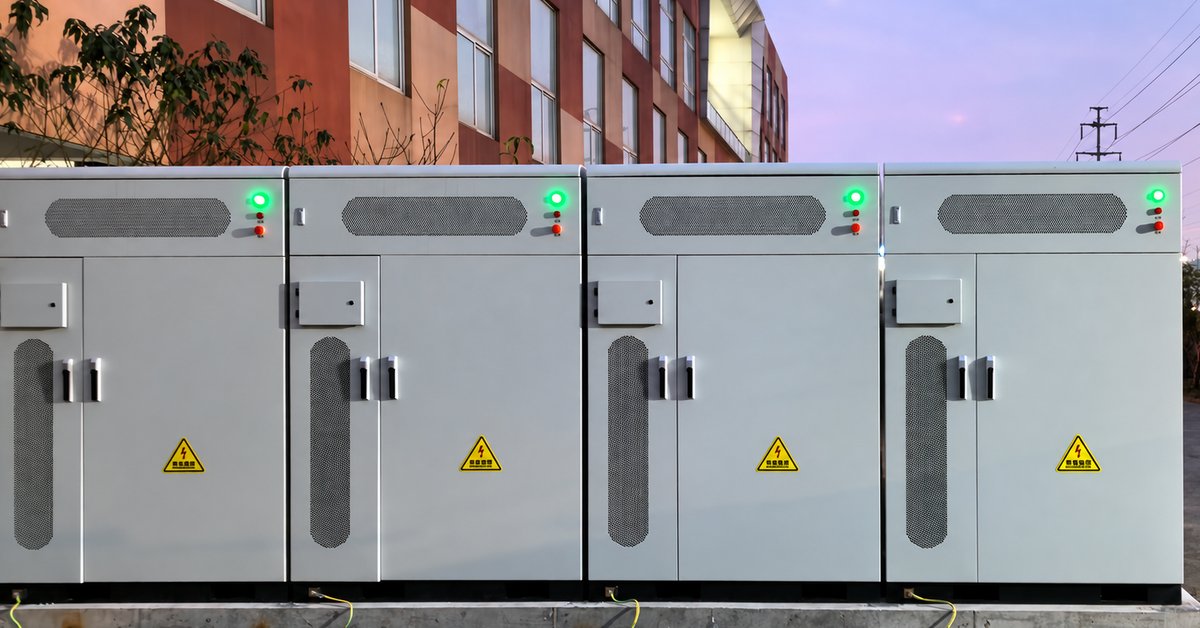
Quick Answer: Transitioning an industrial facility or remote off-grid site away from expensive diesel generation does not require an immediate, high-risk 100% replacement. A Hybrid Genset + BESS Architecture — retaining existing diesel generators while integrating a utility-grade LiFePO4 (LFP) Battery Energy Storage System — can reduce site fuel consumption significantly (with modeled benchmark savings often spanning 20% to 70%+ depending on solar resource and load profile), mitigates low-load engine wet stacking, and extends generator service intervals without jeopardizing operational continuity. Real-world implementation centers on Three Hybrid Operating Models (Peak Shaver, Base Load Shifter, and Diesel-Off Backup), Four Financial ROI Drivers (delivered fuel costs, engine specific fuel consumption, modular BESS CapEx, and baseline operating hours), and Five Key Advantages over an all-or-nothing renewable microgrid overhaul.
This technical guide is structured for industrial plant engineers, mining operations directors, island resort facility leads, telecom infrastructure managers, and EPC contractors operating off-grid or weak-grid electrical systems. Sizing calculations and scenario models below represent illustrative engineering practices designed to guide technical briefs prior to vendor bidding.
Guidance Boundaries: This document serves as an engineering evaluation framework, not an approved electrical interconnection single-line diagram or protection coordination study. Interfacing energy storage with rotating synchronous generators requires dedicated protection relays, reverse-power trip interlocks, and verified microgrid control schemes.
Savolture supplies industrial-grade, liquid-cooled LiFePO4 containerized and cabinet BESS platforms (such as the standard 125 kW / 261 kWh modular architecture) certified under IEC 62619 and UN 38.3, paired with grid-forming inverters and microgrid controllers engineered to interface with common industrial digital genset controllers (via standardized protocols such as Modbus and CANbus), subject to project-specific protection coordination and governor tuning.
The Operational Dilemma: Why 100% Diesel Generation Is Financially Unsustainable
In off-grid and remote industrial facilities — such as mining camps, quarry operations, agricultural processing plants, and island resorts — relying solely on diesel generation presents escalating operational liabilities. Beyond the fluctuating purchase price of diesel fuel, remote operators incur substantial logistics surcharges: long-distance tanker transportation, fuel storage tank maintenance, fuel theft, evaporation losses, and frequent engine oil and filter changes every 250 to 500 operating hours.
However, completely retiring existing diesel generators to deploy a 100% solar PV + battery microgrid often meets severe resistance from financial controllers and risk-averse operational boards. An all-renewable microgrid must be massively oversized (often 3 to 4 times average daily energy demand) to survive rare 4-to-5-day seasonal storm events, inflating initial Capital Expenditure (CapEx). Furthermore, discarding relatively young, functional generator assets writes off unamortized capital.
The Hybrid Genset + BESS model represents the optimal middle ground: the diesel generator remains in place as an active capacity anchor, the BESS absorbs transient load swings and enables extended engine-off windows, fuel consumption plummets immediately, and the door remains open for incremental solar PV expansion over time.
The Three Hybrid Genset + BESS Operating Models
| Hybrid Model | Operating Principle | Modeled Generator Duty & Indicative Fuel Impact (Benchmark Scenarios) | Optimal Application |
|---|---|---|---|
| Model 1: Peak Shaver | Generator runs continuously at optimal steady load (70–80%); BESS injects high power (kW) during motor starting surges. | Generator runs 24 hours/day but operates in peak efficiency envelope; mitigates low-load idling; modeled fuel reduction: 10–20%. | Industrial plants with stable base loads and frequent heavy motor / crusher starting spikes. |
| Model 2: Base Load Shifter | Solar PV + BESS supply daytime and evening demand; generator runs only during a scheduled window (e.g. 2–4 hours at night) for bulk charging. | Modeled engine runtime drops from 24h to a scheduled 2–4h bulk-charge window in high-solar microgrid simulations; indicative fuel reduction: 50–75% (site-specific). | Remote mining camps, agricultural cold hubs, and eco-resorts with strong solar irradiation. |
| Model 3: Diesel-Off Backup | Solar PV + BESS engineered to carry 95%+ of annual demand; diesel generator acts strictly as cold emergency reserve. | Generator runs strictly during multi-day overcast storms or scheduled battery servicing; indicative fuel reduction: 85–95%. | Critical telecom repeaters, island microgrids, and remote medical posts with strict zero-noise or emissions mandates. |
Model 1 — Peak Shaver (Generator Base + BESS for Surges)
Operating Mechanism: The diesel generator supplies steady-state base load continuously, operating within its manufacturer-certified fuel efficiency sweet spot (typically 65% to 80% of rated capacity). When heavy equipment starts up — such as conveyor belts, industrial rock crushers, or refrigeration compressors — the LiFePO4 BESS fast-acting Power Conversion System injects active power within electrical cycles via coordinated droop control. This sub-second response significantly dampens mechanical shock loading and mitigates transient frequency excursions, reducing engine wear and permitting more conservative sizing for future generator replacements.
Key Limitation: The generator still operates 24 hours a day. While specific fuel consumption (Liters per kWh generated) improves noticeably and mechanical wear decreases, total engine operating hours continue to accumulate, maintaining standard maintenance intervals.
Model 2 — Base Load Shifter (Solar + BESS Dominant, Genset Window)
Operating Mechanism: On-site solar PV powers daytime operations while charging the LiFePO4 battery storage bank. From late afternoon through midnight, the BESS discharges autonomously to carry the entire facility load. During the early morning hours (e.g., 02:00 to 05:00, when battery State of Charge reaches low thresholds and solar generation is hours away), the diesel generator starts automatically, synchronizes, and runs at an optimized 80% to 85% load — simultaneously powering facility night loads and bulk-recharging the battery bank. Upon sunrise, the generator shuts down.
Key Benefit: In benchmark microgrid simulations with adequate solar PV, engine operating hours can be compressed from continuous 24-hour baselines to an optimized 2 to 4 hour window. Depending on solar resource, load curves, and dispatch tuning, fuel savings can reach 50% to 75%, allowing operating teams to extend scheduled oil and filter service intervals proportionately.
Model 3 — Diesel-Off Backup (Solar + BESS 95%, Generator as Emergency Insurance)
Operating Mechanism: The renewable solar + BESS system is engineered with 8 to 12 hours of usable autonomy, capable of satisfying 95% or more of annual electrical energy requirements. The diesel generator is retained in an automated standby state with engine block heaters active. The generator only cranks if the BESS experiences an unexpected shutdown, during scheduled annual battery maintenance, or during extreme consecutive multi-day monsoonal storms.
Key Benefit: Captures virtually all the economic and decarbonization benefits of a 100% renewable microgrid while retaining a rock-solid, 100% reliable safety net that satisfies conservative lenders and insurance underwriters.
The Four Financial Drivers of Hybrid Genset + BESS ROI
- Delivered Diesel Fuel Cost: Financial models must incorporate the fully burdened, delivered cost of fuel at the job site — including remote freight delivery fees, on-site storage transfer losses, and theft prevention overhead — rather than wholesale metropolitan terminal prices. Every $0.10/liter increase in delivered fuel accelerates hybrid payback by 4 to 6 months.
- Real-World Engine Efficiency (Liters per kWh): Diesel generators operating under low loads (<30% capacity) suffer from severe efficiency degradation, burning up to 0.40 to 0.50 liters per kWh generated while accumulating exhaust wet stacking. In contrast, a generator running at 75% to 80% load delivers optimal efficiency (typically 0.26 to 0.29 L/kWh). Hybrid systems elevate average engine loading to its peak efficiency envelope.
- Modular BESS CapEx Structure: Standardizing on factory-integrated, liquid-cooled modular platforms (such as standard 125 kW / 261 kWh outdoor cabinets) minimizes on-site civil works and commissioning costs compared to custom, field-assembled battery banks.
- Baseline Generator Operating Hours: A facility running generators 24/7/365 under continuous duty achieves dramatic fuel and maintenance savings, typically recovering capital investment in 2.5 to 4 years. Facilities operating single 8-hour daytime shifts experience longer payback horizons.
Five Key Advantages of Hybrid Systems Over 100% Full Microgrid Transitions
| Strategic Advantage | Why Hybrid Genset + BESS Wins | Operational Risk of 100% Full Solar+BESS |
|---|---|---|
| 1. Substantially Lower CapEx | Solar PV and batteries are sized for typical daily patterns, not rare multi-day storm edge cases. | Severe over-sizing of solar PV and battery storage capacity to bridge multi-day weather anomalies inflates initial capital expenditure and results in underutilized capacity during high-solar periods. |
| 2. Operational Risk Mitigation | Existing diesel generators provide proven, dependable backup during battery maintenance or component failure. | Any unforeseen inverter or battery string trip results in an immediate, total facility blackout. |
| 3. Asset Amortization Protection | Existing, relatively young generator assets remain productive, preserving unamortized capital value. | Forcing immediate retirement of young generators writes off substantial balance sheet equity. |
| 4. Modular Scalability Path | Operators can install one or two modular BESS cabinets today, validating savings before adding more capacity. | Requires a high-stakes, all-in engineering commitment at the outset with zero room for sizing error. |
| 5. Stakeholder & Board Buy-In | Conservative plant managers and operational directors readily approve proposals that retain proven generators. | Plant leadership frequently vetoes 100% renewable proposals due to perceived operational vulnerability. |
Five Critical Engineering Pitfalls in Hybrid Design (and How to Avoid Them)
While the financial business case for hybridizing diesel generators is compelling, poor electrical integration can damage equipment or cause nuisance tripping. EPCs must guard against five common design errors:
- Violating the 30% Minimum Generator Loading Rule: Standard industrial diesel engines should never be operated below 30% of their continuous nameplate rating. Running below this threshold causes low combustion temperatures, leading to unburnt fuel glazing cylinder walls, gumming piston rings, and depositing carbon in exhaust manifolds (“wet stacking”). The hybrid microgrid controller must either throttle solar/battery injection to preserve a 30% generator floor, or shut the generator down entirely.
- Inadvertent Reverse Power Flow: Rapid cloud cover clearance can cause solar PV production to spike instantly. If battery charging cannot ramp up quickly enough, excess power can flow backward into the diesel generator alternator, motoring the engine and causing severe mechanical damage. Fast-acting reverse-power protection relays (ANSI Device 32R) and sub-second PCS curtailment controls are mandatory.
- Uncoordinated Voltage and Frequency Droop: Both the diesel generator governor and the battery PCS attempt to regulate microgrid frequency and voltage. If droop parameters are mismatched, the systems will fight each other, setting up dangerous power oscillations across the AC bus. Controllers must implement coordinated active power-frequency (P-f) and reactive power-voltage (Q-V) droop curves.
- Neglecting Automated Generator Exercise Cycles: In Model 2 and Model 3 configurations where generators sit idle for weeks, starter batteries can discharge and lubricating oil drains away from upper cylinder heads. Automated controllers must schedule periodic 30-minute exercising runs under at least 50% load to maintain mechanical readiness.
- Sizing for Energy (kWh) While Neglecting Inrush (kVA): Sizing an energy storage system solely to cover 4 hours of average kilowatt demand often results in an undersized PCS that trips whenever heavy pumps or industrial crushers start up. Inverter continuous kW and 10-second overload kVA must be independently matched to connected motor schedules.
Frequently Asked Questions (FAQ)
Can an industrial BESS operate in parallel with existing diesel generators?
Yes. When equipped with four-quadrant grid-forming inverters and coordinated microgrid controllers, a BESS can operate in parallel with synchronous generators via standard industrial protocols. The BESS provides sub-second frequency and voltage damping, absorbs transient motor starting spikes, and helps maintain generator loading within healthier efficiency bands (typically 70% to 80% of rating).
How much fuel can a hybrid genset + BESS system realistically save?
Fuel savings depend strictly on site solar irradiance, baseline generator loading, and the dispatch model deployed. In published microgrid benchmark studies: Peak Shaver configurations typically achieve 10% to 20% fuel savings by eliminating low-load engine idling; Base Load Shifter configurations modeled under strong solar conditions can achieve 50% to 75% fuel reductions by confining engine runs to scheduled bulk-charging windows; and Diesel-Off Backup configurations can eliminate 85% to 95% of diesel consumption by utilizing generators strictly for seasonal emergency reserve.
What happens to a diesel generator if it runs at very low loads?
Operating a diesel generator below 30% of its rated capacity causes incomplete fuel combustion, a condition known as “wet stacking.” Unburnt fuel and carbon residue build up in exhaust valves, turbochargers, and exhaust piping, resulting in fouled fuel injectors, oil dilution, increased emissions, and premature engine failure. Hybrid systems eliminate wet stacking by ensuring generators only run under healthy, high-efficiency loads.
Why is a hybrid system preferred over a 100% full solar + battery transition?
A hybrid system delivers substantial fuel reductions at a fraction of the capital expenditure required for a standalone 100% renewable microgrid. Sizing a pure solar + battery system to guarantee zero unserved energy through extended consecutive overcast days requires massive oversizing of solar PV and battery capacity. Retaining an existing generator as a designated safety reserve handles extreme weather edge cases affordably while preserving continuous operational security.
What communication protocol is used between the BESS controller and diesel genset?
Standard industrial microgrid integration utilizes Modbus TCP/IP, Modbus RTU (RS-485), or CANbus communication protocols to interface with digital generator controllers (such as Deep Sea Electronics, ComAp, Woodward, or Deif). Hardwired dry contacts provide fail-safe emergency start/stop and trip signals independent of network communication buses.
Primary Engineering Standards & Microgrid References
- IEC 62619:2022: Secondary Lithium Cells and Batteries for Industrial Applications
- IEC 62933-5-2:2025: Safety Requirements for Grid-Integrated Electrochemical Energy Storage
- NFPA 855: Standard for the Installation of Stationary Energy Storage Systems
- UL 9540 & UL 9540A: Energy Storage Systems and Equipment Safety Standards
- UN 38.3: Lithium Metal and Lithium Ion Battery Transport Safety Testing
Next Steps for Industrial EPCs & Facility Operators
Prior to finalizing a hybrid microgrid specification, collect 12 months of historical diesel fuel purchasing invoices, generator maintenance logs, 15-minute interval electrical load profiles, and existing single-line diagrams. These data points allow engineering teams to precisely model levelized cost of energy (LCOE) reductions and select the optimal modular BESS platform.
For specialized mission-critical cooling requirements, review our companion guides on cold storage BESS sizing and data center BESS and UPS integration.
Savolture designs and supplies ruggedized, liquid-cooled modular LiFePO4 battery storage systems engineered for seamless integration with commercial diesel generators and industrial microgrids globally. To review electrical interconnection diagrams, motor starting models, or turnkey containerized solutions, contact the Savolture microgrid engineering team.
Ready to size your system?
Get a free battery recommendation.
Tell us your load, location, and backup target — we will spec the right 48V LiFePO4 system for you.