

Savolture Technical Guide
Best Solar Battery for Home in 2026: How to Actually Choose
The best home solar battery isn't a brand - it's the one that fits your loads, inverter, permit path, and expansion plan.
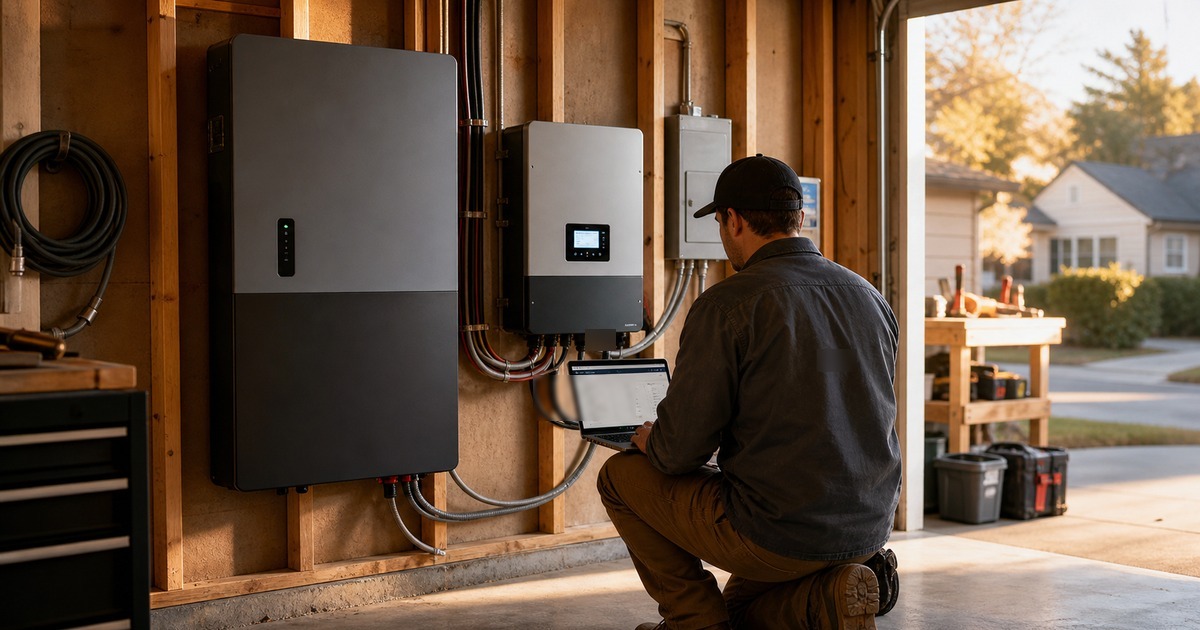
The key insight
Fit beats brand rankings Score chemistry, usable kWh, UL listing, inverter compatibility, cycle-life cost, and expandability before choosing a battery.Search “best solar battery for home” and you get a wall of brand rankings — Tesla Powerwall at the top, then Enphase, then whatever the affiliate payout favors that month. The problem is that a popularity list answers the wrong question. The best battery is not the most famous one; it is the one that matches your evening load, survives your climate, talks to your inverter, and clears your local permit. Two homes on the same street can have two different “best” batteries. This guide hands you the six criteria installers actually use to judge a home battery, shows which capacity wins for which household, and flags the 2026-specific facts — the federal tax-credit change, UL 9540 permitting, inverter lock-in — that brand lists quietly skip.
Quick answer: The best solar battery for a home in 2026 is a UL 9540-listed LiFePO4 (LFP) battery sized to your evening-and-overnight load — for most households a 10–16 kWh system delivering 8–13 kWh of usable energy at 80% depth of discharge, on an open platform that pairs with common hybrid inverters and can expand later. Judge it on fit, not brand name.
Related guides: LFP vs NMC home batteries compared, which inverters work with a 48V battery, how to size a battery from your real loads, and what home battery storage costs in 2026.
“Best” is a fit, not a brand
Here is the uncomfortable truth the ranking articles bury: brand popularity and “best for your home” are different measurements. Tesla Powerwall and Enphase IQ are genuinely good products, but they are closed, premium platforms — you pay a brand premium and commit to that vendor’s ecosystem for the life of the system. That can be the right call, or it can be a $3,000 tax you did not need to pay. The only way to know is to stop scoring on logo and start scoring on the six things that actually determine how a battery performs in your house.
Run any battery — famous or not — through these six filters, in order. The first three are non-negotiable; the last three decide value.
1. Chemistry: LFP, not NMC
For a battery you deep-cycle every night, lithium iron phosphate (LiFePO4, or LFP) is the 2026 default. It runs cooler, tolerates daily deep cycling, and does not enter thermal runaway the way nickel-manganese-cobalt (NMC) chemistry can under heat or abuse — which is exactly why LFP now dominates stationary home storage and why it passes safety listing more easily. The trade-off, slightly lower energy density per kilogram, is irrelevant for a wall- or floor-mounted home unit where weight is not a constraint. If a quote uses NMC for daily home cycling, ask why. Full breakdown: LFP vs NMC home batteries.
2. Usable kWh matched to your night — not nameplate
A “10 kWh” battery never gives you 10 kWh. What you actually spend is the usable figure at an everyday 80% depth of discharge — so a 10.24 kWh pack delivers about 8.2 kWh a night. And you size to your evening-and-overnight load, not your 24-hour total, because solar covers the daytime directly. Most homes draw 25–30 kWh a day but only 8–13 kWh of it after the sun sets. That after-dark slice is the number the battery must serve. Get this right and the capacity question answers itself (see the home-type table below); get it wrong and you either run out before sunrise or pay for capacity that never discharges. Method: how to size a battery from your loads.
3. UL 9540 listing: can it actually get permitted?
In the US a home battery has to clear your local authority having jurisdiction (AHJ), and the listing inspectors look for is UL 9540 (the system standard) backed by UL 9540A thermal-runaway test data, installed to NEC 2023 Article 706. A battery that is not built to these standards can be the cheapest line on the quote and still fail inspection — turning a weekend install into a months-long permitting fight. The right question is not “is the brand famous” but “does this exact model carry a UL 9540 listing my inspector will accept.” Our whole-home systems are built to UL 9540 with UL 9540A test data for exactly this reason.
Installer rule of thumb: “Look for the UL 9540 listing” — on the specific model, not the brand. A listing on one product in a lineup does not cover the others. Ask for the listing number and the UL 9540A test report before you buy, not on inspection day.
4. Inverter compatibility: open platform or lock-in?
This is the criterion that separates a smart buy from an expensive corner you painted yourself into — and almost no brand list mentions it. A 48V LFP pack only works if it closes the communication loop with your inverter over CAN bus or RS485. Open, battery-agnostic inverters — Sol-Ark, Deye, Solis, Growatt, LuxPower — talk to any compliant 48V LFP battery, so you can mix brands, expand later, or change suppliers without replacing the inverter. Closed platforms only run their own approved batteries, committing you to a single-vendor stack. If your customer already owns an open inverter, a standards-based 48V battery is the path of least resistance — no inverter swap, no approved-battery politics. We keep our packs on the standard CAN/RS485 protocols the open ecosystem expects; the full inverter-battery compatibility matrix shows which models close the loop, and the hybrid inverter page covers pairing.
5. Cycle life and cost per usable kWh (the real price)
Sticker price is the wrong number. A battery you cycle nightly should be judged on cost per usable kWh over its rated cycle life. Quality LFP is rated for 6,000–8,500 cycles at 80% DoD — cycle once a night and that is 15+ years of service, backed by a 10-year warranty. A cheaper pack rated for 3,000 cycles is not cheaper; it is a replacement you will buy twice. Divide installed cost by (usable kWh × rated cycles) and the “expensive” LFP unit is usually the lowest lifetime cost. The full math, including round-trip efficiency, is in what home battery storage costs in 2026, and the day-to-day reality of those cycles in the 48V LiFePO4 voltage chart.
6. Expandability: can it grow with the house?
Loads grow — an EV in the driveway, a heat pump, an induction range, an all-electric retrofit. A modular platform that parallels extra modules lets you start right-sized and add capacity later instead of replacing the whole system. Buy a sealed, non-expandable unit and the day your loads jump you are back to square one. Confirm the maximum parallel configuration on the datasheet before you buy. The 48V battery system overview covers how single-unit and paralleled configurations differ in practice.
How the big brands score on these six
Run the famous names through the same rubric and the picture gets honest fast. Tesla Powerwall 3 is a polished, well-integrated AC-coupled system — but it is a closed platform at a premium price, and you commit to Tesla’s ecosystem. Enphase IQ is excellent microinverter-native engineering, also closed and premium, best when you are already all-in on Enphase. Both are good products; neither is automatically “best for your home” if you value open inverter compatibility, a lower cost per usable kWh, or the freedom to expand with a different supplier later. The takeaway is not “avoid the big brands” — it is score them on the six criteria like everything else, and don’t pay a brand premium for closed-ness you did not want.
What we see in the field: the buyers who regret a purchase almost never regret the chemistry or the cycle rating — they regret discovering, after install, that the battery only talks to one inverter brand or cannot be expanded. Compatibility and expandability are where “best” is won or lost.
Best solar battery by home type
There is no single best battery — there is the best fit for your after-dark load. Match your household to the right usable-capacity band, then confirm the specific model is UL 9540-listed and inverter-compatible before you commit. The Savolture LFP lineup spans the common US sizes:
| If your home is… | Evening + overnight load | Best-fit usable capacity | Where to start |
|---|---|---|---|
| Apartment / small home, gas cooking & hot water | ~4–6 kWh | 5–8 kWh | 100Ah (5.12 kWh) LiFePO4 |
| Typical 3–4 bedroom family, mixed gas/electric | ~8–12 kWh | 10–14 kWh (the sweet spot) | 200Ah (10.24 kWh) wall-mount |
| All-electric home (heat pump + electric hot water + EV) | ~13–18 kWh | 16–20 kWh | 314Ah (16 kWh) rack unit |
| Large home / wants whole-home backup | 18 kWh+ | 20 kWh+ (parallel) | 14.34 kWh UL 9540 system, paralleled |
Every option here is a 48V LFP platform built around the same priorities: high usable energy, 6,000–8,500 cycle life, UL 9540 listing, open inverter compatibility, and the ability to parallel more modules as loads grow. If whole-home backup through an outage is the goal, the whole-home backup solution shows how the battery, hybrid inverter, and critical-loads panel work together.
Grid-tied with backup, or fully off-grid?
Most US buyers want a grid-tied battery with backup: it charges from solar and the grid, shifts evening load off peak time-of-use rates, and keeps essential circuits running through a blackout. That setup pairs a UL 9540-listed battery with a hybrid inverter that manages solar, battery, grid, and backup in one box — start from the hybrid inverter and a right-sized LFP pack. A smaller group — rural properties, cabins, and homes at the end of long, unreliable feeders — genuinely need to leave the grid. Off-grid sizing is a different discipline: you build in days of autonomy and carry a larger bank because there is no grid to fall back on. If that is you, work from the off-grid solar systems guide rather than a grid-tied calculator.
The 2026 facts brand lists skip
Two things changed for US buyers that older articles still get wrong. First, the federal incentive picture shifted at the end of 2025. The 30% residential clean-energy tax credit (IRS Section 25D) that covered home batteries through 2025 is not available for property placed in service after December 31, 2025 — do not size a 2026 purchase around a “30% off” figure you read in an older article. Confirm what federal credit, state program, or utility incentive currently applies to your install before you sign; the current cost picture is in what home battery storage costs in 2026. Second, UL 9540 plus NEC 2023 enforcement has tightened — more AHJs now require documented listings and 9540A test data, which makes “is it permittable here” a bigger differentiator than brand. Both of these reward the buyer who scores on fit and paperwork over the one who scores on logo.
Most common mistakes buying a home solar battery
- Don’t pick by brand ranking. Do score every option — famous or not — on the six criteria for your home.
- Don’t compare on nameplate kWh. Do compare usable kWh at 80% DoD — that is what you spend each night.
- Don’t size to your 24-hour total. Do size to your evening-and-overnight load (8–13 kWh for most homes) — solar covers the day.
- Don’t assume a battery is permittable. Do confirm the exact model carries a UL 9540 listing your AHJ accepts, with 9540A test data.
- Don’t ignore inverter compatibility. Do verify the battery closes the loop with your inverter over CAN/RS485 — before you buy, not on install day.
- Don’t buy a sealed, non-expandable unit if loads may grow. Do choose a platform that parallels extra modules for an EV or all-electric upgrade later.
- Don’t judge on sticker price. Do judge on cost per usable kWh over the rated cycle life — the cheap pack you replace twice is the expensive one.
Next steps
- Confirm compatibility first: check your inverter against the inverter-battery compatibility matrix so you buy a battery that will actually talk to it.
- Size it properly: turn your evening-and-overnight load into a target capacity with the load-based sizing method, then match it to the home-type table above.
- Read next: LFP vs NMC compared and what home battery storage costs in 2026.
Frequently asked questions
What is the best solar battery for a home in 2026?
For most homes it is a UL 9540-listed LiFePO4 battery sized to your evening-and-overnight load — typically a 10–16 kWh system delivering 8–13 kWh of usable energy at 80% depth of discharge. “Best” is defined by fit, not brand: LFP chemistry, usable kWh matched to your night, a UL 9540 listing your inspector accepts, open inverter compatibility, a long 6,000–8,500 cycle life, and an expandable platform.
Is Tesla Powerwall the best home battery?
Tesla Powerwall is a polished, well-integrated product, but it is a closed, premium platform — “best” depends on your priorities. If you value open inverter compatibility, a lower cost per usable kWh, or the freedom to expand with a different supplier later, an open-platform LFP battery often scores higher for your home. Judge any battery, including Powerwall, on the six criteria: chemistry, usable kWh, UL 9540 listing, inverter compatibility, cycle-life cost, and expandability.
What size solar battery do I need for my home?
Size to your evening-and-overnight load, not your daily total, because solar covers most daytime use. Most US homes need 8–13 kWh of usable energy after dark, which a 10–16 kWh battery delivers at 80% depth of discharge. Step up to 16–20 kWh or more if you charge an EV at home, run a heat pump and electric hot water, or want whole-home backup; a gas-cooking apartment may need only 5–8 kWh.
Why is LFP the best chemistry for a home battery?
LFP (lithium iron phosphate) is the safest, longest-lasting lithium chemistry for daily home cycling. It has a far more stable thermal profile than NMC — it does not enter thermal runaway the way NMC can under heat or abuse — and it is rated for 6,000–8,500 cycles at 80% depth of discharge versus a fraction of that for NMC. For a battery you deep-cycle every night, that safety and longevity make LFP the default for stationary home storage.
Does my home battery need to be UL 9540 listed?
In practice, yes. Most US authorities having jurisdiction (AHJs) require a battery system built to UL 9540 with UL 9540A thermal-runaway test data, installed to NEC 2023 Article 706. A battery without the listing your inspector accepts can fail permitting regardless of price or brand. Ask for the UL 9540 listing number and the 9540A test report on the specific model before you buy — a listing on one product in a lineup does not automatically cover the others.
Will any solar battery work with my inverter?
No — and this is the most overlooked criterion. A 48V LFP battery only works if it closes the communication loop with your inverter over CAN bus or RS485. Open, battery-agnostic inverters such as Sol-Ark, Deye, Solis, Growatt, and LuxPower work with any compliant 48V LFP pack, while closed platforms only run their own approved batteries. Confirm the pairing for your exact inverter model and firmware before you buy, not on install day.
Can I add more battery capacity later?
With an expandable LFP platform, yes. Modular 48V systems parallel additional units, so a household can start right-sized and add capacity as loads grow — for example after adding an EV or going all-electric — rather than replacing the whole system. Confirm the maximum parallel configuration on the product datasheet before you buy, and keep the added module on the same chemistry and platform.
About this guide
We wrote this because the “best home battery” search is dominated by brand rankings that never teach you how to judge a battery for your own home. Savolture supplies LFP home and off-grid storage systems — built to UL 9540 by our manufacturing partners and kept on the open CAN/RS485 protocols the major hybrid inverters expect — and the questions installers and homeowners ask us most are the six in this guide: chemistry, usable size, permitting, inverter compatibility, lifetime cost, and expandability. If you want, we will confirm the inverter pairing and the right capacity for your load before you order. Start with the compatibility matrix or tell us your inverter model and evening load, and we will point you to the right-sized LFP system.
Sources
- NREL — Residential battery storage cost and lithium chemistry performance benchmarks.
- U.S. Department of Energy — Home energy storage and depth-of-discharge / cycle-life guidance.
- UL 9540 and UL 9540A — energy storage system safety standard and thermal-runaway test method.
- NFPA 70 (NEC 2023), Article 706 — energy storage system installation requirements.
- IRS — Section 25D Residential Clean Energy Credit (status as of 2025 legislation; confirm current eligibility).
Choosing a home battery?
Get the right LFP battery matched to your inverter
Send your inverter model and evening load; we will confirm the capacity and communication pairing before you order.