

Savolture Technical Guide
What Is a Hybrid Solar Inverter and How Does It Work? (2026 Installer Guide)
Almost every "what is a hybrid solar inverter" guide tells you the same thing: it converts DC to AC and can use solar, battery, and grid power. True — and almost useless for dec...
The part guides skip
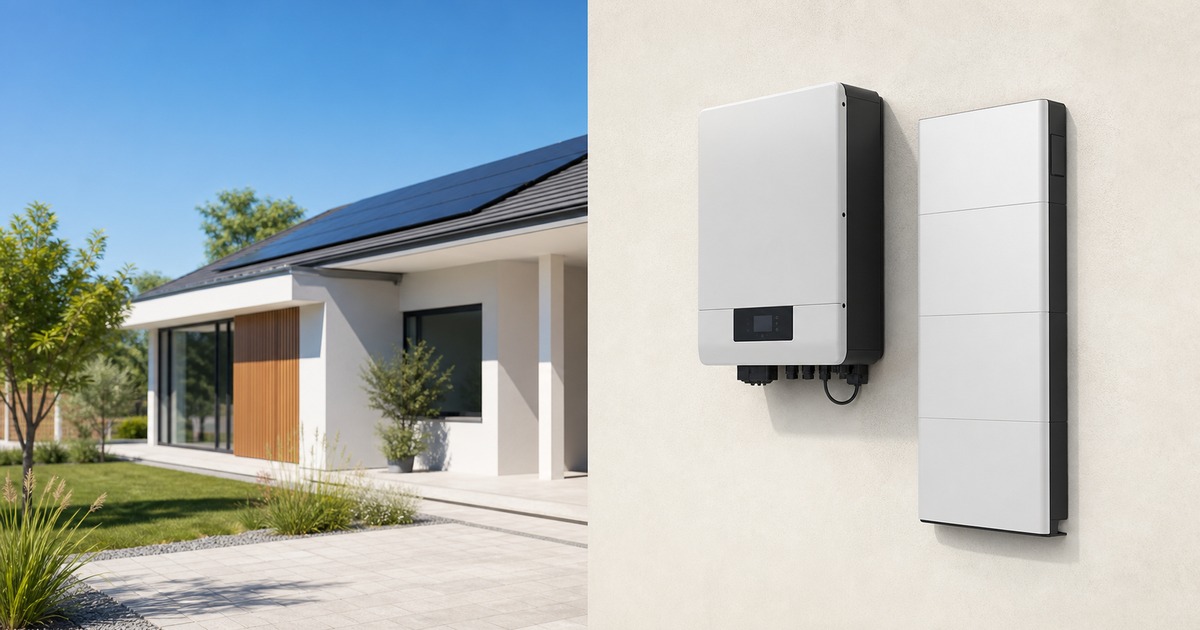
A hybrid inverter = three behaviors, not one label Outage backup needs a battery; no-battery runs grid-tied; off-grid only on rated models - buy for the behaviors you need.Almost every “what is a hybrid solar inverter” guide tells you the same thing: it converts DC to AC and can use solar, battery, and grid power. True — and almost useless for deciding what to buy. The part those guides skip is the only part that matters on a real job: a hybrid inverter is defined by three behaviors — backing up your home in an outage, running without a battery, and running off-grid — and most projects need only one or two of them. Buy for the behaviors you need, not the brochure. Here’s how a hybrid inverter actually works, and how to tell which version of it your project requires.
Quick answer: A hybrid solar inverter combines a solar inverter and a battery inverter in one box: it converts DC from your panels to AC for the home, and it manages power between solar, a battery, and the grid. But “hybrid” does not automatically mean backup power. What it can do depends on three behaviors: (1) outage backup — only with a battery and a backup-capable inverter; (2) no-battery operation — yes, it runs as a normal grid-tied inverter and you add a battery later; (3) off-grid — only on models built for it. Decide which behaviors your project needs first, then spec the inverter and battery to match.
What a hybrid inverter actually is (the 60-second version)
A standard grid-tied (string) inverter does one job: turn solar DC into AC and push it to your home and the grid. A battery inverter does a different job: charge and discharge a battery. A hybrid inverter merges both into a single unit, plus a controller that decides, moment to moment, where power should flow — solar to home, surplus to battery, battery to home at night, grid as backup. That integration is the whole point: one box, one wiring job, battery-ready.
That’s the part every guide covers. Now the part they don’t.
The three behaviors that actually decide your inverter
“Hybrid” is a category, not a guarantee. Two inverters both called “hybrid” can behave completely differently on your site. These are the three behaviors to pin down before you spec anything:
- Behavior 1 — Outage backup. Keeps your home (or critical loads) powered when the grid goes down. This needs a battery and an inverter with a backup/islanding function — a hybrid inverter alone will not do it (see the next section for why).
- Behavior 2 — No-battery operation. Runs today as a plain grid-tied solar inverter — solar offsets your bill, surplus exports — with the battery added whenever you’re ready. This “retrofit-ready” behavior is the most common reason to choose hybrid over a string inverter.
- Behavior 3 — Off-grid capability. Runs a system with no grid connection at all. Only some hybrid inverters do this; many are “grid-tied with backup” and expect a grid reference.
Most homes need Behavior 2 now and Behavior 1 later. True off-grid (Behavior 3) is a smaller set of projects. Matching the inverter to the behaviors you actually need is what separates a clean install from an expensive surprise.
Does a hybrid inverter work during a power outage?
This is the most expensive misconception in home solar, so let’s be blunt: a hybrid inverter does not back up your home in an outage unless you have a battery — and even then, only if the inverter is backup-capable and wired for it.
The reason is a safety rule called anti-islanding. Any grid-tied inverter is required to shut down when the grid goes down, so it can’t backfeed the lines and endanger utility crews. That means when the power fails, your solar panels go dark too — even on a sunny day — unless a battery and a backup-rated inverter create their own isolated “island” for your home. So:
- Hybrid inverter, no battery → no backup. Solar shuts off with the grid.
- Hybrid inverter + battery + backup function → backup. The system islands your home (usually a backup loads subpanel) and runs on battery + solar.
If outage backup is the goal, that’s a battery decision as much as an inverter one. How to size and pair that battery is covered in our 48V hybrid inverter pairing guide, and what “whole-home” backup actually takes is in our whole-home backup guide.
Can a hybrid inverter work without a battery?
Yes — and this is usually the smartest reason to buy one. With no battery connected, a hybrid inverter operates as an ordinary grid-tied solar inverter: panels power your home, surplus exports to the grid, and your bill drops. The difference is that the battery terminals and the controller are already there, so when you’re ready to add storage — for backup or to use more of your own solar at night — it’s a battery and a few settings, not a new inverter and a re-wire.
That said, running battery-less means you get none of Behavior 1: no battery, no outage backup. The hybrid inverter is buying you future-readiness, not present resilience. If you’ll never add a battery and don’t need backup, a plain string inverter is cheaper and just as good — the honest take the brochures skip.
Can a hybrid inverter be used off-grid?
Sometimes. “Off-grid” and “hybrid” are not synonyms. Many hybrid inverters are designed as grid-tied with backup — they assume a grid connection most of the time and island only during outages. A true off-grid system runs permanently with no grid, which demands an inverter rated for continuous off-grid operation, a battery sized for full autonomy, and usually generator input for cloudy stretches.
Some hybrid inverters can do both; many can’t. If your project is genuinely off-grid, confirm the inverter is built for it and size the bank to your loads — start with off-grid solar systems and how to size an off-grid battery bank. For the full grid-tied vs off-grid vs hybrid distinction, see which inverter type you need.
The specs installers actually check on a hybrid inverter
Once you know the behaviors you need, these are the numbers that decide whether a given inverter delivers them:
- Continuous and surge power (kW). Continuous covers your steady loads; surge covers the moment the aircon, well pump, and fridge all start at once. Undersize the surge rating and the system trips under exactly the loads you bought backup for.
- Battery voltage compatibility. Most residential hybrids pair with 48V (51.2V) LFP batteries. Confirm the inverter speaks to the battery’s BMS over CAN/RS485 for closed-loop control — this is the difference between a battery that just charges and one that reports true state of charge. See the inverter–battery compatibility guide.
- Backup capability and transfer. If you need Behavior 1, the inverter must have a backup/islanding output and ideally a fast transfer so loads barely notice the switch.
- MPPT count and PV voltage window. Determines how many panel strings you can run and how flexibly you can lay out the array.
- Phase and grid-code. Single- vs three-phase, and certification to your local grid standard.
Decision matrix: which behavior fits your project
| Your goal | Behaviors needed | What to spec |
|---|---|---|
| Cut my power bill with solar, maybe add a battery later | 2 | Hybrid inverter, no battery yet — confirm it’s battery-ready for 48V LFP |
| Solar now + keep critical loads on during outages | 1 + 2 | Backup-capable hybrid + 48V LFP battery + backup loads subpanel |
| Whole-home backup through long outages | 1 + 2 | Higher-power hybrid + larger / parallel 48V bank sized to full load |
| Live fully off-grid, no utility | 3 (+1) | Off-grid-rated inverter + battery sized for autonomy + generator input |
| Just offset my bill, will never add a battery | none | A plain string inverter — you don’t need hybrid |
Most common mistakes with hybrid inverters
The hybrid-inverter questions we field most from installers cluster around the same few misunderstandings below — and each one tends to surface only after the system is already on the wall.
- Assuming “hybrid” means automatic backup. Without a battery and a backup function, it doesn’t. This is the #1 surprise at the first outage.
- Buying behaviors you’ll never use. Paying for off-grid capability on a grid-tied home is wasted money; so is a backup-rated unit if you’ll never fit a battery.
- Ignoring battery compatibility. A hybrid inverter that won’t close-loop with your battery’s BMS gives you charging but not accurate control. Confirm the pairing before you buy — compatibility guide.
- Sizing on continuous power only. The surge rating is what survives motor startups; size for the worst-case simultaneous load.
- Skipping the voltage/architecture decision. Whether you go 48V low-voltage or high-voltage shapes which inverters you can use — see low voltage vs high voltage.
Next steps
- Tell us the behaviors you need: send us your project — outage backup, off-grid, or future-ready — and we’ll spec a 48V LFP battery matched to your inverter.
- Get the pairing right: the inverter–battery compatibility guide and the 48V LFP battery line.
- Going deeper: 48V hybrid inverter pairing and hybrid vs off-grid vs grid-tied.
Bottom line: a hybrid inverter converts solar DC to AC and manages solar, battery, and grid — but what it does for you comes down to three behaviors. Pin down which ones your project needs, then spec the inverter and battery to deliver exactly those. That’s the decision the brochures won’t make for you.
Frequently asked questions
What is a hybrid solar inverter and how does it work?
It’s a single unit that combines a solar inverter and a battery inverter. It converts DC electricity from your panels into AC for your home, and a built-in controller routes power between solar, a battery, and the grid — sending surplus solar to the battery or grid, and drawing from the battery or grid when solar isn’t enough. Unlike a plain grid-tied inverter, it’s built to add battery storage without replacing the inverter.
Does a hybrid inverter provide backup power during an outage?
Only with a battery and a backup-capable inverter. A grid-tied system must shut down in an outage (an anti-islanding safety rule), so solar alone goes dark. A battery plus a backup-rated hybrid inverter creates an isolated “island” that keeps your home — usually a backup loads subpanel — powered on battery and solar.
Can a hybrid inverter work without a battery?
Yes. With no battery it runs as a normal grid-tied solar inverter, offsetting your bill, and you can add a battery later for backup or self-consumption without changing the inverter. The trade-off: no battery means no outage backup. If you’ll never add storage, a plain string inverter is cheaper.
Can a hybrid inverter run off-grid?
Some can, many can’t. A lot of hybrid inverters are “grid-tied with backup” and expect a grid connection, islanding only during outages. True off-grid operation needs an inverter rated for continuous off-grid use, a battery sized for autonomy, and usually a generator input. Confirm the specific model supports full off-grid before you build around it.
What battery works with a hybrid inverter?
Most residential hybrid inverters pair with 48V (51.2V) LFP batteries. The key is that the inverter and the battery’s BMS can talk over CAN/RS485 for closed-loop control, so the inverter reads true state of charge and obeys the battery’s limits. Confirm the closed-loop pairing for your exact inverter model before buying.
Do I actually need a hybrid inverter?
If you want battery backup now or plan to add storage later, yes — it saves replacing the inverter. If you only want to offset your bill with solar and will never add a battery or need backup, a standard grid-tied string inverter does the same job for less. Decide based on whether you need the battery-related behaviors, not the label.
See also: hybrid inverter for home solar storage
Sources
- Grid-tied inverter anti-islanding requirement (IEEE 1547 / UL 1741) — basis for solar shutting down during a grid outage without battery backup.
- Hybrid vs grid-tied vs off-grid inverter function — standard residential solar inverter architecture.
- 48V LFP battery BMS communication over CAN/RS485 — closed-loop inverter–battery control basis.
Not sure which hybrid inverter behavior you need?
Get a 48V LFP battery matched to your inverter
Tell us your project - outage backup, off-grid, or future-ready - and we'll spec a 48V LFP battery and confirm the inverter pairing.