

Savolture Technical Guide
Commercial Rooftop Solar Self-Consumption & Zero-Export BESS Sizing: Engineering Guide (2026)
Engineering guide to commercial rooftop solar self-consumption and Zero-Export BESS sizing. Eliminate midday PV curtailment, size liquid-cooled LFP storage, and comply with IEC 62116.
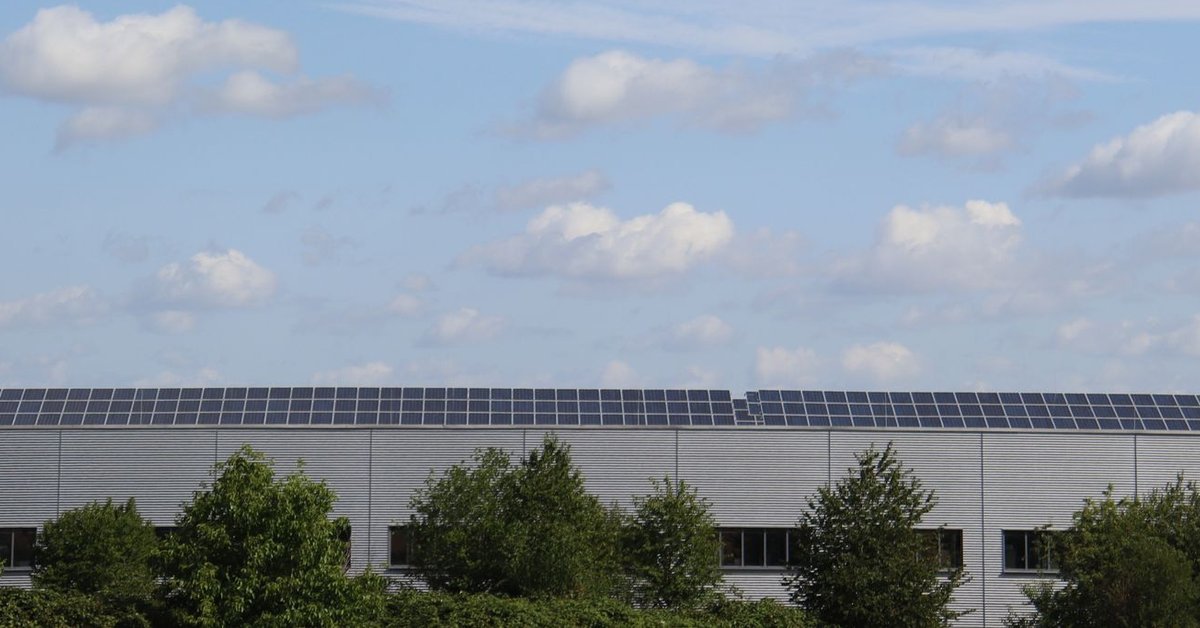
Quick Answer: Across major industrial markets, electric utilities are increasingly restricting grid export credits, capping feeder hosting capacity, or eliminating traditional retail net-metering for new commercial rooftop solar arrays. Under these rules, Commercial Rooftop Solar Self-Consumption paired with a Zero-Export LiFePO4 Battery Energy Storage System (BESS) allows factories to consume 100% of their solar generation behind the meter — storing midday solar surplus rather than curtailing it, and discharging that energy during expensive evening peak tariff windows. Designing a compliant, high-ROI system requires selecting among Three Operating Modes (Pure Zero-Export, Zero-Export + BESS Peak Shaving, and Jurisdiction-Specific Grid Export), auditing Four Rooftop & Load Sizing Criteria, and modeling Five Financial ROI Variables.
This engineering guide is written for industrial facility owners, warehouse asset managers, commercial solar EPCs, and electrical engineers designing behind-the-meter solar-plus-storage systems. All sizing formulas and operational profiles below represent modeled engineering benchmarks intended to guide technical feasibility studies prior to utility interconnection filings.
Guidance Boundaries: Zero-export control prevents reverse active power flow across the utility revenue meter, but it does not exempt a grid-parallel solar or BESS installation from formal utility interconnection registration, grid-code compliance, or IEC 62116 anti-islanding protection. Always verify local utility parallel-operation rules and structural building codes before finalizing project designs.
Savolture supplies industrial-grade, liquid-cooled and air-cooled LiFePO4 battery storage cabinets (including the modular 125 kW / 261 kWh C&I platform) utilizing cells certified to IEC 62619 and UN 38.3, paired with hybrid and bidirectional converters tested to IEC 62109-1/-2 for zero-export solar self-consumption and commercial peak shaving.
Why Commercial Solar Has Shifted from Net-Metering to Self-Consumption + BESS
Historically, industrial factories with large warehouse or workshop roofs sized solar PV systems to export midday surplus electricity back to the utility grid in exchange for 1:1 retail net-metering credits. Today, grid operators across Southeast Asia, the Middle East, Europe, and Australia face midday solar duck-curve congestion and distribution transformer over-voltage limits. In response, utilities have either repealed retail export compensation for new installations (for example, Indonesia’s Permen ESDM No. 2/2024 Article 13 removing export bill credits for new rooftop solar systems), reduced feed-in tariffs far below retail import rates, or mandated strict Zero-Export (Reverse Power Limiting) on congested industrial feeders.
When grid export is uncompensated or prohibited, an oversized solar-only array is forced to throttle (curtail) its output whenever midday solar generation exceeds instantaneous factory load — such as during shift handovers, lunch breaks, batch changeovers, or weekends. Integrating a commercial LiFePO4 BESS acts as a behind-the-meter energy sponge: absorbing every kilowatt-hour of midday solar surplus and releasing it during late-afternoon and evening peak demand hours.
The Three Operating Modes of Commercial Rooftop Solar
| Operating Mode | Control & Energy Flow Mechanism | Regulatory & Grid Status | Economic Trade-Off |
|---|---|---|---|
| Mode 1: Pure Zero-Export (Solar PV Only) | Bidirectional smart meter / CT sensors at the utility PCC command PV inverters to throttle output whenever solar generation exceeds instant facility load. | No commercial export PPA required, but formal utility parallel-operation registration and IEC 62116 anti-islanding compliance remain mandatory. | Lowest initial CapEx, but midday solar surplus during low-load windows or weekends is permanently lost to curtailment; zero backup during grid outages. |
| Mode 2: Zero-Export + BESS Peak Shaving (Dual-Engine) | Solar PV feeds daytime loads first; excess solar charges the LiFePO4 BESS instead of being curtailed; BESS discharges during evening peak TOU and demand windows. | Operates under zero-export grid limits at the PCC (requiring standard utility parallel registration and anti-islanding protection) while maximizing on-site solar capture. | Optimal long-term ROI for 2-shift and 24/7 plants: stacks daytime kWh displacement, evening TOU arbitrage, and monthly kW demand charge reduction. |
| Mode 3: Net-Metering / Net-Billing Export (Legacy or Permitted Zones) | Surplus daytime solar exports across the bidirectional utility meter in exchange for kWh bill credits or wholesale feed-in tariff payments. | Restricted strictly to grandfathered legacy contracts (e.g., pre-2024 in Indonesia) or utility zones with active net-billing quotas and feeder hosting capacity. | Unavailable or economically unattractive in many modern industrial tariffs where export credit rates are heavily discounted below retail peak import rates. |
Critical Regulatory Clarification: Zero-Export Still Requires Utility Registration
A frequent misconception among industrial facility managers is that configuring an inverter for “Zero-Export” means the system can be connected behind the meter without notifying the electric utility. From an electrical engineering standpoint, any solar PV or BESS inverter connected to an AC bus that is synchronized with the utility grid is operating in grid-parallel mode. While Zero-Export avoids commercial power-purchase export contracts, the facility must still complete local utility parallel-generation registration, verify fault-current limits, install directional reverse-power relays (ANSI Device 32R) where required, and certify IEC 62116 anti-islanding protection.
Four Engineering Criteria for Sizing Commercial Rooftop Solar + BESS
- Net Usable Roof Area (m²): Measure gross warehouse or factory roof area and deduct skylights (typically 10%–15% of industrial roofs), HVAC chillers, exhaust vents, parapet shading zones, and mandatory 1.0 to 1.5 meter fire and maintenance walkways. Modern commercial monocrystalline or TOPCon bifacial modules (550 Wp to 650 Wp) require approximately 7 to 8 m² of net roof area per 1 kWp installed (meaning a 100 kWp array requires ~700 to 800 m² of clear roof space, and a 300 kWp array requires ~2,100 to 2,400 m²).
- Daytime vs. Nighttime Facility Load Profile (kWh/day): Analyze 12 months of 15-minute interval meter logs to separate daytime load (06:00–18:00) from evening peak and nighttime load (18:00–06:00). A single-shift assembly plant operating 08:00–17:00 five days a week has a very different weekend/midday surplus profile than a continuous 24/7 cold storage or food processing plant.
- Site-Specific Solar Irradiation (kWh/m²/day): Never rely on generic textbook solar averages for final financial proposals. Industrial EPCs must extract site-specific Global Horizontal Irradiance (GHI) and seasonal cloud/dust profiles using European Commission PVGIS or NASA POWER databases, accounting for local tilt angles, industrial air pollution, or desert soiling losses.
- Roof Structural Dead-Load Margin vs. Ground-Pad BESS Placement: Solar PV modules, aluminum mounting rails, cable trays, and wind ballast add 15 to 25 kg/m² of static dead load to the factory roof structure. Older industrial roofs (>15–20 years old, or lightweight corrugated steel spans) require an independent structural engineer’s sign-off and potential purlin reinforcement before PV installation. In contrast, heavy LiFePO4 BESS cabinets (weighing ~2.5 to 3.0 metric tons per 261 kWh cabinet) are installed at ground level on reinforced concrete pads adjacent to the main low-voltage switchroom, complying with NFPA 855 spacing guidelines.
Illustrative Sizing Calculation: 300 kWp Rooftop PV + Zero-Export BESS
Consider a medium-voltage manufacturing plant with 2,400 m² of net warehouse roof space installing a 300 kWp rooftop solar PV array under a strict utility Zero-Export mandate (Mode 2). Interval load modeling shows that while the factory consumes most solar output directly during peak morning production, midday shift transitions, batch changeovers, and weekend slowdowns generate 150 kWh of daily midday solar surplus that would otherwise be curtailed and wasted. The plant wants to store this 150 kWh surplus and discharge it during the 4-hour evening peak TOU tariff window while clipping 100 kW+ afternoon demand spikes:
- Target Stored & Delivered AC Energy per Cycle:
150 kWh delivered AC - Nominal LiFePO4 BESS Capacity Calculation: Applying a 95% discharge efficiency ($\eta = 0.95$), an 80% daily operational Depth of Discharge ($\text{DoD} = 0.80$), and an 80% End-of-Life capacity retention threshold ($\text{EoL} = 0.80$):
Hardware Match: Deploying one modular 125 kW / 261 kWh liquid-cooled LiFePO4 BESS cabinet (with a pre-matched 125 kW hybrid PCS supporting up to 200 kW DC solar input or AC-coupled bus integration) provides 261 kWh of nominal storage — capturing the entire 150 kWh midday surplus even at Year 10 End-of-Life, while delivering 125 kW of fast-acting peak shaving and critical line backup.
Five Variables That Drive Commercial Solar + BESS Self-Consumption ROI
| ROI Variable | Verification Source | Financial Impact on Payback |
|---|---|---|
| 1. Effective Utility Tariff & TOU Spread | 12 months of audited utility invoices (separating daytime kWh, evening peak TOU kWh, and $/kVA demand fees). | High: Direct daytime solar displaces base kWh rates, while BESS evening discharge displaces higher peak TOU rates (often 1.4×–2.0× base tariff). |
| 2. Direct Daytime Consumption vs. Surplus Ratio | 15-minute load profile overlaid against hourly PVGIS solar generation curves. | High: Determines the exact kW/kWh ratio between solar PV panels and BESS cabinets to achieve zero curtailment without over-building battery capacity. |
| 3. Turnkey PV + Modular BESS CapEx | Itemized EPC quotes covering PV modules, racking, modular BESS cabinets, switchgear, and civil works. | High: Standardized all-in-one outdoor BESS cabinets (125 kW / 261 kWh) substantially reduce field engineering and installation labor. |
| 4. Local Grid Export & Curtailment Rules | Utility interconnection tariff schedule and feeder hosting capacity ruling. | Medium-High: Where grid export is uncompensated (Zero-Export), BESS rescues 100% of curtailed midday kWh from becoming a total financial write-off. |
| 5. Annual PV & LFP Cycle Degradation Curves | Manufacturer batch datasheets (typical monocrystalline PV ~0.4%–0.5%/yr; LFP cell ≥6,500 cycles to 70%–80% EoL at 25°C). | Medium: Liquid-cooled thermal management protects LFP cycle life in hot industrial environments, preserving Year 5–10 cash flows. |
Five Common Engineering Mistakes in Commercial Solar + BESS Design
- Oversizing Rooftop Solar PV Under Zero-Export Without Adequate BESS Storage: If an EPC installs a 500 kWp solar array on a factory whose daytime minimum load drops to 150 kW during shift changes — without pairing a BESS — the zero-export controller will forcefully curtail up to 350 kW of clean solar power every midday, destroying project IRR.
- Assuming Legacy Net-Metering Rules Apply to New Projects: Financial models that assume 1:1 retail export credits in jurisdictions that have transitioned to zero-export or wholesale net-billing overstate annual revenues by 30% to 50%. Always model new industrial projects on conservative behind-the-meter self-consumption (Mode 1 or Mode 2).
- Neglecting Independent Roof Structural Audits on Older Factories: Adding 15 to 25 kg/m² of solar dead load plus wind uplift forces onto a 20-year-old factory truss without a licensed structural engineer’s calculation risks catastrophic roof deflection or insurance invalidation.
- Slow Closed-Loop CT Feedback Causing Nuisance Utility Trips: In Zero-Export installations, if a heavy factory motor suddenly shuts off, solar surplus can surge toward the grid within milliseconds. The energy meter CTs, EMS controller, and PCS/PV inverters must execute fast closed-loop active power ramp-down (absorbing the surge into the BESS) before the utility reverse-power relay trips the plant main breaker.
- Failing to Verify Cell-Level & Converter Safety Certifications: Daily solar charge/discharge cycling in high-ambient industrial zones demands verified industrial safety. Procurement teams should require batch-traceable IEC 62619 cell/battery test reports, UN 38.3 transport documentation, and IEC 62109-1/-2 converter safety certificates.
Frequently Asked Questions (FAQ)
What is commercial solar self-consumption and how does it differ from net-metering?
Commercial solar self-consumption is an operating model where 100% of electricity generated by a rooftop solar PV array is consumed directly by facility loads or stored in an on-site Battery Energy Storage System (BESS) behind the utility meter. Unlike traditional net-metering—which relies on exporting excess midday solar power to the utility grid in exchange for retail bill credits—self-consumption with Zero-Export + BESS keeps all generated energy on-site, protecting factory ROI in jurisdictions that restrict or do not compensate grid exports.
Does a Zero-Export solar + BESS system still require utility interconnection approval?
Yes. Even when configured for Zero-Export (preventing reverse power flow into the grid), any rooftop solar PV or BESS inverter connected to a grid-tied factory switchboard operates electrically in parallel with the utility network. Facilities must still complete formal utility parallel-operation registration, comply with grid fault-level limits, and use inverters certified for anti-islanding protection under IEC 62116.
How much clear factory roof area is required per 100 kWp of commercial solar PV?
Modern commercial monocrystalline and bifacial solar modules (typically rated 550 Wp to 650 Wp per panel) require approximately 7 to 8 square meters of net usable roof area per 1 kWp installed. Therefore, a 100 kWp rooftop array requires roughly 700 to 800 square meters of unobstructed roof space, plus an additional 1.0 to 1.5 meter perimeter buffer for fire access walkways, skylights, and HVAC maintenance clearances.
How do you size a BESS to capture 150 kWh of midday rooftop solar surplus?
Recovering and delivering 150 kWh of AC energy during evening peak hours requires accounting for conversion efficiency and battery longevity margins. Applying a 95% discharge efficiency, an 80% daily operational Depth of Discharge (DoD) planning window, and an 80% End-of-Life (EoL) capacity retention margin yields: 150 kWh ÷ (0.95 × 0.80 × 0.80) = 246.7 kWh nominal capacity. This matches a single modular 125 kW / 261 kWh liquid-cooled LiFePO4 BESS cabinet.
Do older factory roofs require structural reinforcement before installing solar PV and BESS?
Rooftop solar panels, mounting rails, and cabling add 15 to 25 kg/m² of dead load to a building structure. Factories over 15 to 20 years old—or those with lightweight steel purlins—must undergo an independent structural engineering audit before installing solar arrays. Meanwhile, heavy C&I BESS cabinets (weighing ~2.5 to 3.0 metric tons per 261 kWh unit) are never placed on lightweight roofs; they are installed at ground level on outdoor concrete pads.
Primary Engineering Standards & Solar-Plus-Storage References
- IEC 62619:2022: Safety Requirements for Secondary Lithium Cells and Batteries for Use in Industrial Applications
- IEC 62116: Utility-Interconnected Photovoltaic Inverters — Test Procedure of Islanding Prevention Measures
- IEC 62109-1 & IEC 62109-2: Safety of Power Converters for Use in Photovoltaic Power Systems
- NFPA 855: Standard for the Installation of Stationary Energy Storage Systems
- UN 38.3: Transport of Dangerous Goods Manual of Tests and Criteria for Lithium Batteries
- European Commission PVGIS: Photovoltaic Geographical Information System
Next Steps for Industrial Facility Owners & Solar EPCs
To prepare a bankable Zero-Export Solar + BESS specification, gather 12 months of utility bills, 15-minute daytime vs. nighttime load logs, CAD roof layout drawings (with structural load ratings), and single-line diagrams of your main low-voltage switchboard. For facilities with mission-critical refrigeration or remote off-grid operations, explore our companion guides on cold storage BESS sizing and off-grid microgrid architecture for mining and agribusiness.
Savolture supplies modular 125 kW / 261 kWh liquid-cooled and air-cooled LiFePO4 BESS cabinets engineered for seamless solar PV self-consumption, zero-export curtailment recovery, and industrial peak shaving. To request technical datasheets or a custom PV + BESS sizing simulation, contact the Savolture C&I engineering team.
Ready to size your system?
Get a free battery recommendation.
Tell us your load, location, and backup target — we will spec the right 48V LiFePO4 system for you.