

Savolture Technical Guide
Cold Storage Battery Storage: BESS Sizing for Commercial Food & Pharma Refrigeration (2026)
Engineering guide for cold storage BESS sizing. Learn the 3 temperature zones, 5 cold chain failure modes, compressor inrush surges, and a 6-step sizing calculation.
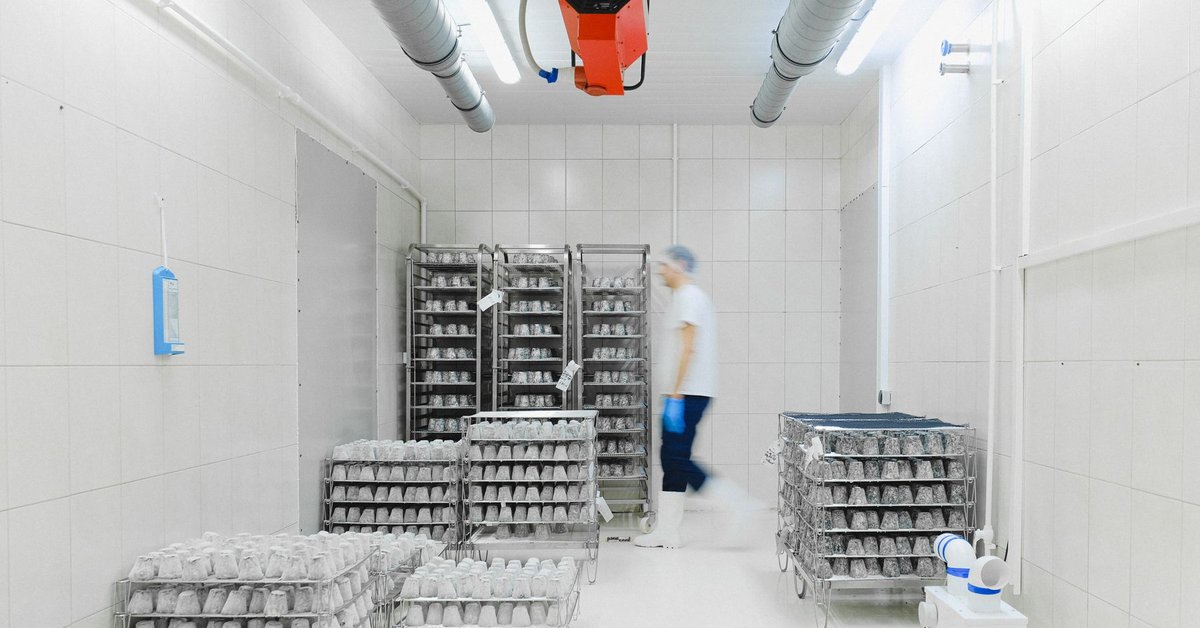
Quick Answer: Commercial cold storage operators should not view a Battery Energy Storage System (BESS) as a replacement for industrial refrigeration equipment, but rather as an essential 2-to-6 hour operational resilience bridge that sustains heavy compressors and evaporator fans during utility outages until backup diesel generators synchronize or primary power is restored. Real-world procurement decisions hinge on three core engineering realities: The Three Temperature Zones (Deep Freezer -18°C to -25°C, Chiller 0°C to 5°C, and Cool Room 10°C to 15°C), The Five Cold Chain Killers that justify the business case, and The Four Sizing Factors (compressor locked-rotor inrush, actual duty cycle, thermal mass, and thermal ice storage hybrid integration) that separate cold storage sizing from typical commercial office or data center loads.
This technical guide is structured for refrigerated warehouse directors, food export logistics executives, pharmaceutical cold-chain quality leads, and electrical EPC contractors. Sizing calculations and scenario models below represent illustrative engineering practices designed to guide technical briefs prior to vendor bidding.
Guidance Boundaries: This document serves as an engineering sizing guide, not a substitute for formal HACCP, cGMP, or ISO 22000 regulatory compliance validation. Facilities handling temperature-controlled food or pharmaceutical exports require formal validation by licensed quality assurance engineers and certification authorities.
Savolture supplies industrial-grade LiFePO4 battery storage systems certified under IEC 62619 and UN 38.3, paired with high-overload Power Conversion Systems (PCS) engineered specifically to absorb severe refrigeration compressor motor inrush currents during emergency islanding and peak shaving operations.
The Three Cold Storage Temperature Zones
Attempting to size a single monolithic battery bank by taking total facility utility meter demand and multiplying by hours of runtime leads to expensive mistakes. A professional engineering sizing framework separates the refrigerated facility into three distinct thermodynamic zones:
| Temperature Zone | Operating Range | Typical Inventory Stored | Typical Operational Holding Window (Thermal Drift Guidelines) |
|---|---|---|---|
| Zone 1: Deep Freezer | -25°C to -18°C (-13°F to 0°F) | Frozen seafood, poultry, beef, ice cream, frozen biologics & plasma | 4 to 8 hours (typical closed-door conditions): High latent thermal mass slows temperature drift; however, once core product rises above -15°C, ice recrystallization irreversibly damages cellular texture. |
| Zone 2: Precision Chiller | 0°C to 5°C (32°F to 41°F) | Fresh meat, dairy products, prepared deli items, liquid vaccines, pharmaceutical reagents | 2 to 4 hours (indicative guidelines): Subject to product-specific monographs and authority guidelines (e.g. FDA Food Code guidance for perishable foods, WHO cold chain protocols). Sustained excursions above critical holding bands (such as 7°C to 8°C for fresh proteins or 2°C–8°C for biologics) can trigger mandatory QA quarantine, batch re-inspection, or regulatory disposal. |
| Zone 3: Controlled Cool Room | 10°C to 15°C (50°F to 59°F) | Post-harvest fruits, vegetables, cut flowers, non-critical pharmaceuticals | 8 to 24 hours (operational estimate): High tolerance; this zone is designated as the first sheddable load during extended utility outages to conserve BESS capacity for Zones 1 and 2. |
The High Cost of Uniform Sizing Assumptions
Consider a large seafood exporter operating a cold storage logistics center. An inexperienced contractor might specify a massive BESS to power 100% of all facility refrigeration units — including produce staging and packaging rooms — for 6 hours. In reality, the produce room can be safely shed for up to 8 hours without product degradation, whereas the blast freezer compressors require high surge kVA to handle initial motor startup. Over-sizing storage across non-critical zones can inflate project Capital Expenditure (CapEx) by 35% to 50% without reducing operational risk.
The Five Cold Chain Killers: Defining the Investment Business Case
Killer #1: Extended Grid Outage Coupled with Diesel Generator Cold-Start Failure
Primary utility power fails, and an on-site diesel backup generator attempts a cold start. If the generator fails to turn over due to clogged fuel filters, starter battery degradation, or unprimed fuel lines, the clock starts ticking immediately. In a precision chiller room, product temperatures reach non-compliant thresholds within 2 to 4 hours. A BESS acts as an instantaneous uninterruptible energy bridge, keeping critical ammonia or Freon chillers operational while technicians troubleshoot or secondary emergency services arrive.
Killer #2: Excessive Loading Dock Infiltration During High-Throughput Shifts
In active regional distribution centers, loading dock doors may open 50 to 120 times per shift. Each door opening draws in warm ambient air, creating immediate localized thermal plumes that force refrigeration compressors into maximum continuous displacement. A BESS sized purely on static room heat-gain formulas will deplete prematurely if high door-opening traffic coincides with a peak utility tariff or localized brownout.
Killer #3: Concurrent Defrost Cycles Overlapping with Power Disruptions
Commercial freezers run automatic hot-gas or electric defrost cycles 2 to 4 times daily to clear frost accumulation from evaporator coils. Electric resistance defrost heaters draw significant instantaneous electrical power (often doubling compressor electrical load). If a utility outage or demand charge event strikes precisely during an automated defrost cycle, a standard battery inverter without sufficient surge headroom will trip on overcurrent protection.
Killer #4: Regulatory Condemnation and Forced Disposal
Food and pharmaceutical safety authorities (such as the US FDA, EFSA, SFDA in Saudi Arabia, or local municipal health inspectorates) enforce strict temperature recordkeeping. Automated data loggers showing product storage temperatures exceeding regulatory critical control points (for example, FDA Food Code criteria for perishable foods or WHO cold chain storage parameters for biologics) frequently trigger mandatory product quarantines, re-inspection costs, or forced condemnation orders. In a commercial refrigerated facility, a single condemned inventory loss can easily exceed multiples of the total turnkey capital expenditure of a 500 kWh modular BESS installation.
Killer #5: International Export Buyer Rejections and Contractual Penalties
High-value export agreements for international markets (such as seafood shipments to Japan or produce to the European Union) contain stringent cold-chain integrity clauses. Even if regulatory authorities do not seize the inventory, a temperature deviation recorded on shipment dataloggers allows international buyers to reject the entire shipment upon arrival, levy severe breach-of-contract penalties, and cancel ongoing procurement agreements.
Four Critical Engineering Factors in Sizing Cold Storage BESS
Factor #1: Peak Inrush Surge vs Steady-State Running Current
Large semi-hermetic reciprocating and screw compressors draw Locked Rotor Amperes (LRA) between 4 and 6 times their continuous running current during across-the-line starting. If three 20 kW compressors attempt to restart simultaneously after a momentary power sag, the instantaneous power draw spikes to 250–350 kVA. The BESS Power Conversion System (PCS) must possess robust 10-second overload ratings (typically 150% to 200% of nominal rating) or integrate coordinated soft-starters / Variable Frequency Drives (VFDs) with sequential restart timers.
Factor #2: Compressor Operating Duty Cycle
Refrigeration compressors cycle on and off based on thermostatic demand rather than running continuously at 100% displacement. Typical average operating duty cycles are: Freezers 40% to 60%, Precision Chillers 30% to 50%, and Cool Rooms 20% to 40%. Sizing BESS storage capacity (kWh) should be based on metered continuous energy consumption rather than the sum of all motor nameplate kW ratings.
Factor #3: Product Thermal Mass Dynamics
A freezer stacked to capacity with densely packaged frozen seafood possesses enormous latent thermal mass, resisting temperature rise for hours even with zero active refrigeration. Conversely, an empty or partially staged room warmed by warm ambient air experiences rapid thermal drift. Electrical engineering teams must model both scenarios: worst-case low thermal mass for temperature rise rates, and full-load motor operation for electrical power draw.
Factor #4: Hybrid Integration with Thermal Ice Storage
Advanced cold storage facilities frequently deploy a hybrid architecture: combining electrochemical LiFePO4 batteries with thermal ice banks. Ice banks freeze water/glycol solutions during low-cost off-peak night hours and circulate chilled fluid during peak tariff windows or emergencies. Integrating thermal ice storage can reduce the required electrochemical battery sizing by 25% to 40%, lowering initial CapEx while providing robust dual-layer resilience.
How to Calculate Cold Storage BESS Sizing (6-Step Engineering Model)
To establish an accurate, bid-ready technical specification, follow this 6-step engineering methodology:
- Zone-by-Zone Connected Load Mapping: Audit all refrigeration circuits across Zone 1, Zone 2, and Zone 3. Record compressor motor kW ratings, full-load amps (FLA), locked-rotor amps (LRA), evaporator fan power, and defrost heater wattages.
- 14-Day Baseline Interval Metering: Install high-resolution power analyzers on compressor sub-panels to capture real-world 15-minute kW demand profiles, defrost spike magnitudes, and power factor (PF) characteristics under active operational conditions.
- Define Target Autonomous Duration per Zone: Establish required bridge runtimes: typically 4 to 6 hours for Zone 1 (freezers), 3 to 4 hours for Zone 2 (chillers), and 0 hours (immediate automated shedding) for Zone 3 administrative and staging areas.
- Calculate Total Usable AC Energy Requirement: Multiply the average metered running demand of active zones by their designated operational hours, factoring in any scheduled defrost cycles:
Energy_AC (kWh) = (Avg_Load_Z1 × Hours_Z1) + (Avg_Load_Z2 × Hours_Z2) + Defrost_Allowance
- Convert to Nominal Battery Storage Capacity: Account for electrical conversion efficiency (PCS and transformer losses, typically 95%), recommended continuous planning Depth of Discharge (DoD) of 80%, and an End-of-Life (EoL) capacity retention threshold of 80%:
Nominal_Capacity (kWh) = Energy_AC ÷ (0.95 × 0.80 × 0.80)
- Verify Inverter / PCS Inrush Headroom: Ensure the continuous kW rating of the PCS accommodates maximum steady-state running loads, and that its 10-second overload kVA curve easily clears the simultaneous starting inrush of the largest connected compressor group.
Worked Engineering Scenario: 100 kW Cold Storage Facility for 4 Hours Autonomous Backup
Consider a regional commercial cold storage warehouse featuring 60 kW of running freezer compressors, 30 kW of active precision chiller loads, and 10 kW of evaporator fan and control loads. The facility targets 4 hours of autonomous bridge power during grid outages.
Total delivered electrical energy required at the distribution switchgear is: (60 kW + 30 kW + 10 kW) × 4 hours = 400 kWh AC.
Applying standard engineering derating factors — 95% overall electrical round-trip discharge efficiency, 80% daily planning Depth of Discharge (DoD), and an 80% End-of-Life capacity retention margin:
To satisfy this demand, the facility should deploy three modular 261 kWh liquid-cooled outdoor BESS cabinets (providing approximately 783 kWh nominal capacity), or a standard 750 kWh containerized unit. The PCS power rating must be sized for at least 150 kW to 200 kW continuous output with a 300 kVA short-term surge rating to comfortably absorb compressor motor starting transients.
Commercial Value: Peak Shaving and Demand Charge Reduction
A BESS in a cold storage facility should not remain idle waiting for rare blackouts. Because refrigeration compressors run heavily during hot afternoon hours — precisely when commercial electrical utilities levy punitive peak demand charges — the BESS can actively discharge to cap facility demand below utility threshold limits.
By shifting grid consumption away from peak tariff windows, facilities achieve dual financial returns: dramatic reductions in monthly demand charges, combined with 100% protection against catastrophic cold-chain spoilage. The Energy Management System (EMS) maintains a strictly protected emergency reserve threshold (e.g., 50% SoC), ensuring that commercial peak shaving never compromises food safety backup readiness.
Frequently Asked Questions (FAQ)
Can a BESS handle the severe starting inrush current of industrial refrigeration compressors?
Yes, provided the Power Conversion System (PCS) and inverter are properly engineered. Industrial refrigeration compressors draw locked-rotor inrush currents 4 to 6 times their running current. BESS installations resolve this by pairing high-overload bidirectional inverters (capable of 150% to 200% surge for 5 to 10 seconds) with sequential motor start controllers or Variable Frequency Drives (VFDs) that stagger compressor re-engagement.
How does thermal mass affect cold storage battery sizing?
Thermal mass acts as a natural cold reservoir. A fully stocked deep freezer holding tons of frozen meat or seafood will experience very slow internal temperature drift (typically rising only 0.5°C to 1°C per hour during an outage). Facilities can leverage this thermal inertia to cycle compressors intermittently or shed freezer circuits temporarily while prioritizing precision chiller rooms that drift much faster.
What is the difference between thermal ice storage and electrochemical BESS?
Thermal ice storage freezes water or glycol into ice during cheap off-peak hours and circulates chilled liquid to reduce daytime refrigeration loads; it is cost-effective but can only provide cooling. An electrochemical LiFePO4 BESS stores electricity, providing the versatility to power refrigeration compressors, lighting, automated pallet cranes, and IT tracking systems, while also enabling rapid peak shaving and backup power generation.
How do you calculate BESS capacity for a 100 kW refrigeration load for 4 hours?
Delivered AC energy required is 400 kWh (100 kW × 4 hours). Factoring in 95% electrical discharge efficiency, an 80% planning Depth of Discharge (DoD), and an 80% End-of-Life capacity retention threshold results in: 400 ÷ (0.95 × 0.80 × 0.80) = 657.9 kWh nominal storage. This is typically configured using modular outdoor cabinets providing 700 to 780 kWh nominal capacity.
Can BESS operate alongside on-site solar PV and backup diesel generators?
Yes. A tri-hybrid topology (Solar PV + BESS + Diesel Generator) provides the optimal levelized cost of energy (LCOE) for off-grid or weak-grid cold storage facilities. Rooftop solar generates direct daytime cooling power, the BESS absorbs solar intermittency and manages compressor inrush, and the diesel generator operates strictly as an emergency fallback.
Primary Standards & Industry References
- IEC 62619:2022: Secondary Lithium Cells and Batteries for Industrial Applications
- IEC 62933-5-2:2025: Safety Requirements for Grid-Integrated Electrochemical Energy Storage
- NFPA 855: Standard for the Installation of Stationary Energy Storage Systems
- UL 9540 & UL 9540A: Energy Storage Systems Safety and Thermal Runaway Testing
- UN 38.3: Lithium Metal and Lithium Ion Battery Transport Safety Testing
Next Steps for Facility Engineering Teams
Before soliciting vendor proposals, compile your facility’s connected motor schedule, locked-rotor amp ratings, interval utility billing records, and room thermal drift specifications. Establishing these technical parameters ensures vendor quotes reflect accurate system capabilities rather than arbitrary nominal kWh assumptions.
For facilities managing heavy on-site diesel generators, review our detailed guide on hybrid diesel generator and BESS microgrid integration, or explore critical IT power conditioning in our data center BESS and UPS sizing guide.
Savolture designs and supplies ruggedized, liquid-cooled LiFePO4 battery energy storage solutions for commercial cold storage logistics hubs and industrial food processors worldwide. To review equipment datasheets, motor inrush modeling, and turnkey containerized options, connect with the Savolture commercial engineering team.
Ready to size your system?
Get a free battery recommendation.
Tell us your load, location, and backup target — we will spec the right 48V LiFePO4 system for you.