

Verified Documentation
Certification Documents & CEC Listing
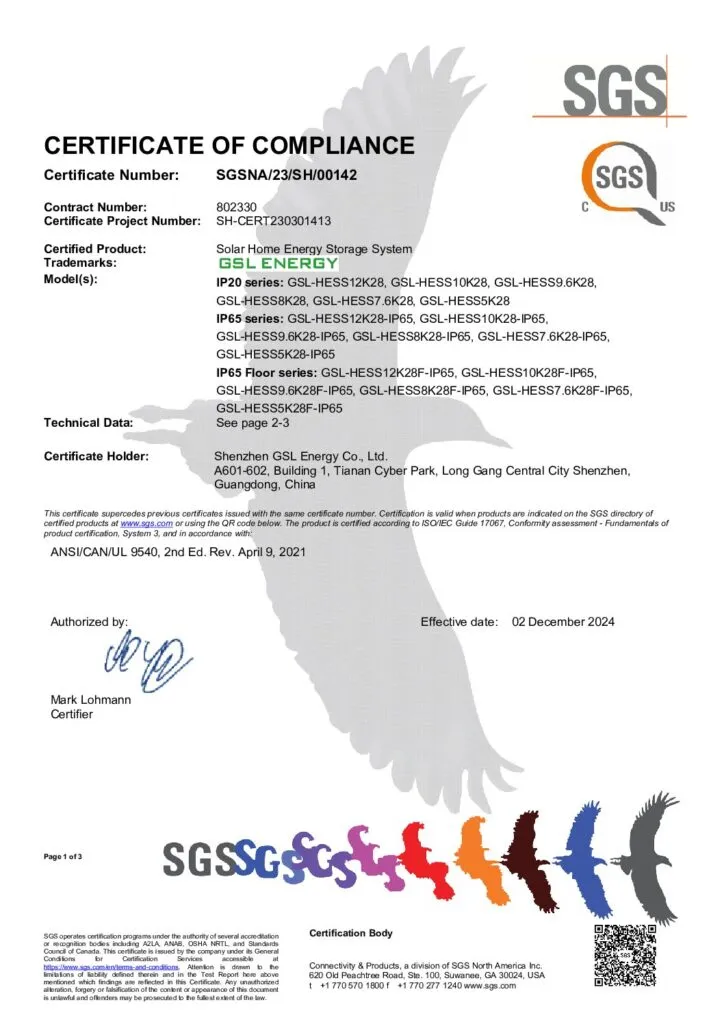
Five active UL certificates cover Savolture's flagship 14.34 kWh LFP home battery platform. Australia-ready CEC listing (see the CEC approved battery list (Australia)) and SDS documentation are also available for selected GSL ENERGY partner battery models.
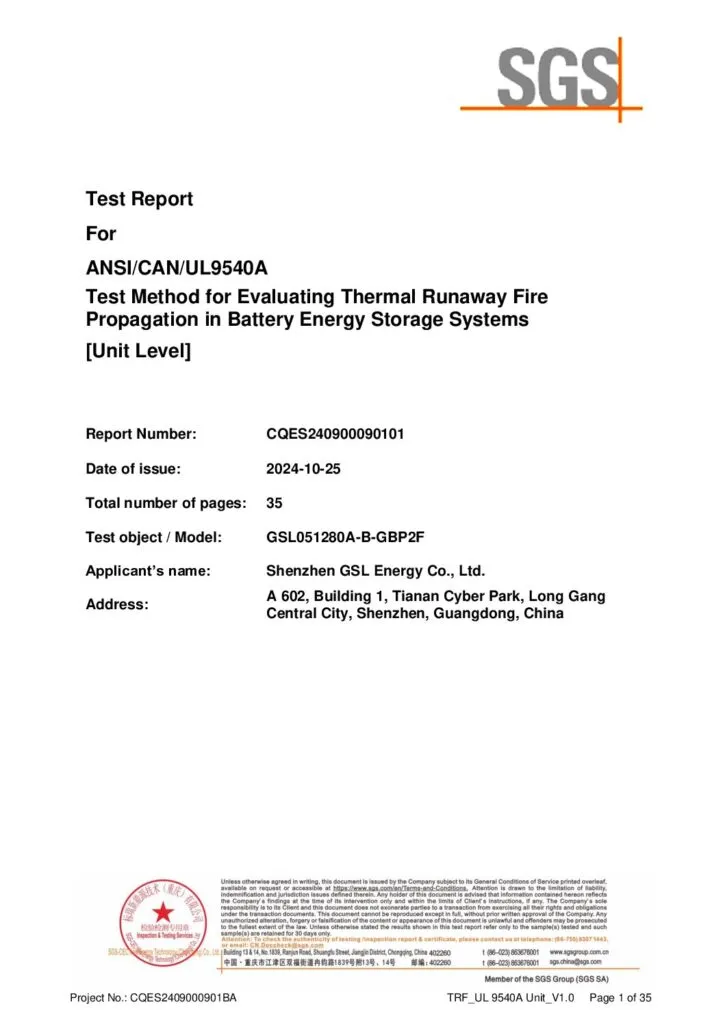
Thermal Runaway Test
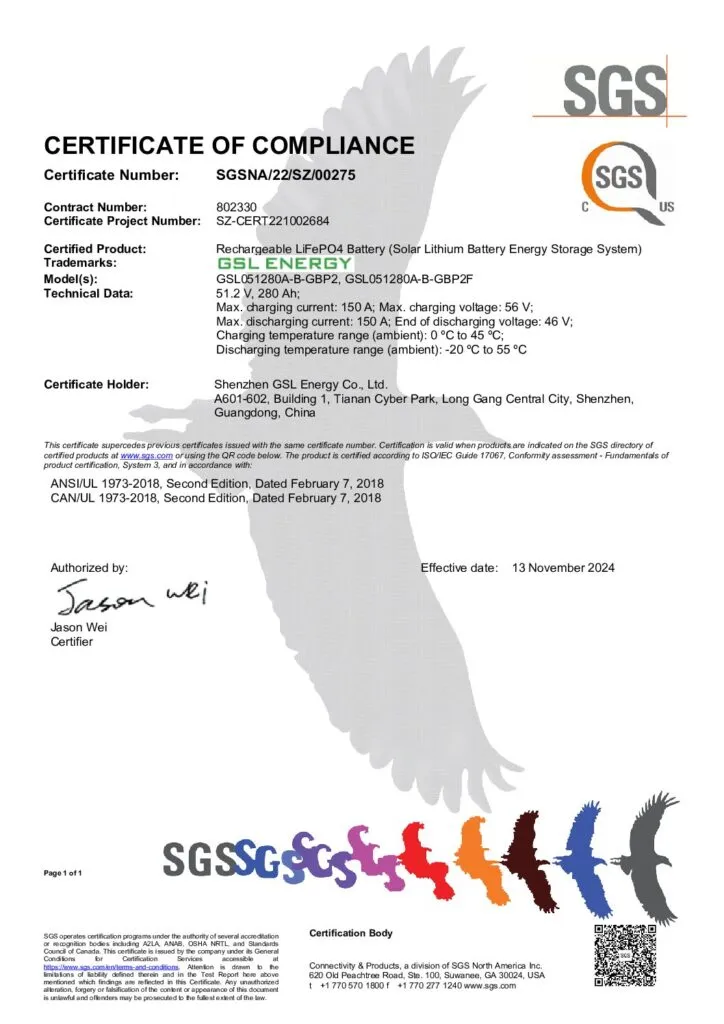
Cell Safety · 14.34 kWh
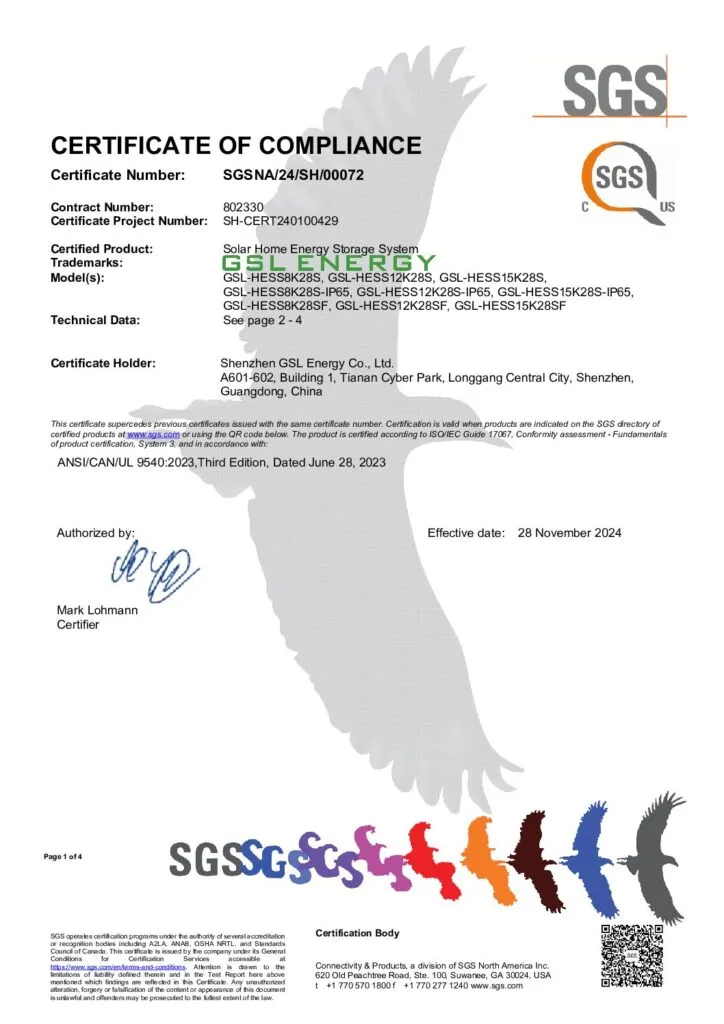
System Listing
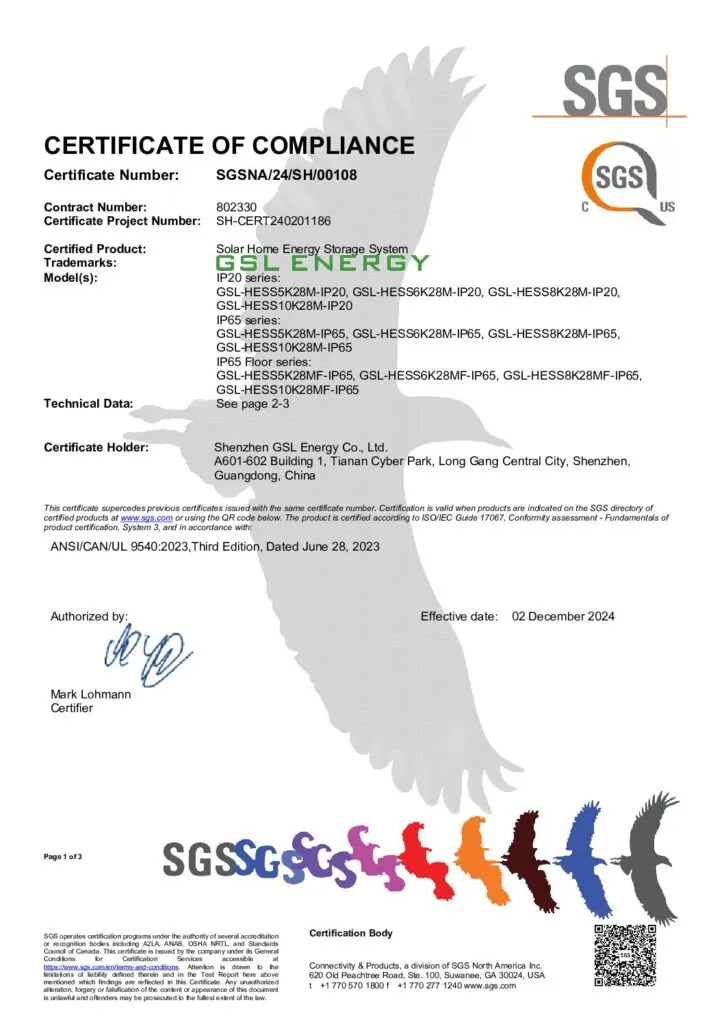
System Listing
System Listing
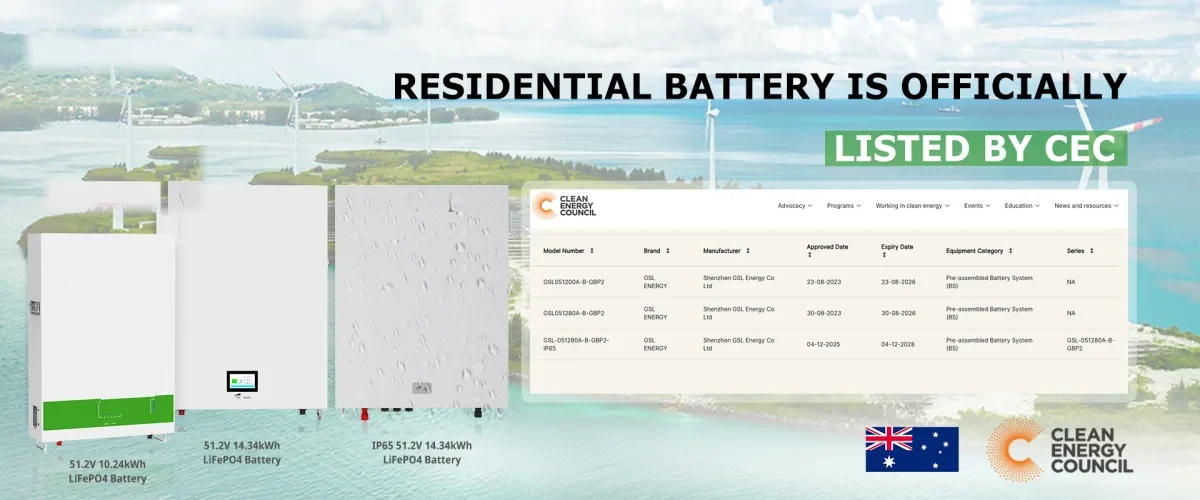
CEC-Listed Residential Battery Platform
Selected GSL ENERGY pre-assembled battery systems used for Australia-ready Savolture configurations are listed by the Clean Energy Council.
- GSL051200A-B-GBP2Approved 23-08-2023 · expires 23-08-2026
- GSL051280A-B-GBP2Approved 30-08-2023 · expires 30-08-2026
- GSL-051280A-B-GBP2-IP65Approved 04-12-2025 · expires 04-12-2028
Certifications & Compliance Documentation
Every Savolture LFP home battery system carries full compliance documentation for its target market. Below is the complete certification matrix across our product lines, plus plain-language explanations of what each certification covers and why it matters for solar installers, EPCs, and distributors.
Certification Matrix by Product
| Certification | UL9540 Battery | CEC Australia Platform | 314Ah Battery | Affordable Series |
|---|---|---|---|---|
| UL9540 (System Safety) | ✓ | — | — | — |
| UL9540A (Thermal Runaway) | ✓ | — | — | — |
| UL1973 (Cell Safety) | ✓ | — | — | — |
| CE (EU Market) | ✓ | Project pack | ✓ | ✓ |
| IEC62619 (Cell Safety) | ✓ | Project pack | ✓ | ✓ |
| UN38.3 (Transport) | ✓ | Project pack | ✓ | ✓ |
| SDS / MSDS (Hazmat) | ✓ | ✓ | ✓ | ✓ |
| CEC Listing (Australia Clean Energy Council) | — | ✓ Selected models | — | — |
| AS/NZS 5139 (Installation Standard) | Project review | Installer / AHJ review | Project review | Project review |
All certificate PDFs available within 24 hours upon request. Contact us with your project details and target market.
North American Certifications
UL9540 — System-Level Safety
What it covers: The complete energy storage system — battery cells, BMS, inverter integration, enclosure, and communications — tested as a unified system, not just individual components.
Why it matters: California Title 24 makes UL9540 mandatory for residential storage permits. Texas, Florida, New York, and other states are following. Without UL9540, AHJs (Authorities Having Jurisdiction) increasingly refuse permits for residential battery installations.
Who it protects: Solar installers (insurance liability), AHJs (permit risk), and homeowners (system safety).
For a full installer breakdown — how to verify a UL9540 certificate, what UL9540A means, and the documents AHJs actually check — read: UL9540 Certification Explained: 2026 Installer Guide →
UL9540A — Thermal Runaway Test
What it covers: Forced thermal runaway testing — deliberately igniting a cell to measure how fire propagates through the system, what gases vent, and how effective fire suppression must be.
Why it matters: Required by NFPA 855 (the National Fire Protection Association standard for stationary energy storage) and increasingly cited by fire marshals during permit review. The test report determines whether installations need additional clearances or fire suppression infrastructure.
UL1973 — Cell-Level Safety
What it covers: Individual lithium cell safety — overcharge, short circuit, thermal abuse, vibration, and mechanical shock. The foundational cell-level certification that UL9540 systems are built on.
Why it matters: Provides the cell-level safety baseline required by UL9540. Confirms the underlying LFP cells meet North American residential safety standards.
International & European Certifications
CE Marking — EU Market Entry
What it covers: EMC (Electromagnetic Compatibility) Directive and Low Voltage Directive compliance for electrical products sold in the European Union, EEA, and increasingly in markets that align with EU standards (UK, Switzerland, Norway).
Why it matters: Mandatory for EU customs clearance. Without CE, your container will be held at port. CE is also widely recognized in the Middle East, Africa, and Latin America as a baseline quality marker.
IEC 62619 — International Cell Safety Standard
What it covers: The international IEC standard for safety of secondary lithium cells and batteries used in industrial applications. Tests overcharge, external short circuit, thermal abuse, internal short circuit, and vibration.
Why it matters: The single most globally-recognized cell safety standard. Required for many tenders, government projects, and insurance approvals across Europe, Asia, Africa, and Latin America.
UN38.3 — Transport Safety
What it covers: United Nations Manual of Tests and Criteria, Section 38.3 — covers altitude simulation, thermal cycling, vibration, shock, external short circuit, impact, overcharge, and forced discharge for lithium battery transport.
Why it matters: Mandatory for any lithium battery shipped by air, sea, or road internationally. No freight forwarder will accept a container without UN38.3. Without it, you cannot ship.
MSDS — Material Safety Data Sheet
What it covers: Hazmat declaration documenting the chemical composition, hazard classification, first aid measures, and handling procedures for the lithium battery system.
Why it matters: Required by every customs office, freight forwarder, and warehouse operator handling lithium batteries. Required for compliance with OSHA, EU REACH, and equivalent regional regulations.
Australia Listing & Installation Standards
CEC Listing (Australia Clean Energy Council)
Selected GSL ENERGY pre-assembled battery systems used for Savolture Australia-ready configurations are listed by the Clean Energy Council. The currently listed models include GSL051200A-B-GBP2, GSL051280A-B-GBP2, and GSL-051280A-B-GBP2-IP65.
| CEC-listed model | Equipment category | Approved date | Expiry date |
|---|---|---|---|
| GSL051200A-B-GBP2 | Pre-assembled Battery System | 23-08-2023 | 23-08-2026 |
| GSL051280A-B-GBP2 | Pre-assembled Battery System | 30-08-2023 | 30-08-2026 |
| GSL-051280A-B-GBP2-IP65 | Pre-assembled Battery System | 04-12-2025 | 04-12-2028 |
AS/NZS 5139 — Australia / New Zealand
AS/NZS 5139 is an installation standard rather than a single product certificate. CEC-listed batteries support Australia project review, while final compliance still depends on local installer design, mounting location, enclosure clearances, documentation pack, and AHJ or distributor requirements.
Need Specific Certificate PDFs?
Tell us your project type and target market — we'll send the relevant certification documentation within 24 hours.