

Savolture Technical Guide
UL9540 Certification Explained: What Solar Installers Need to Know in 2026
UL9540 has become the deciding factor between residential battery projects that get permitted and those that don't. This guide explains what it is, how it differs from UL1973 and UL9540A, and what to verify before you quote.
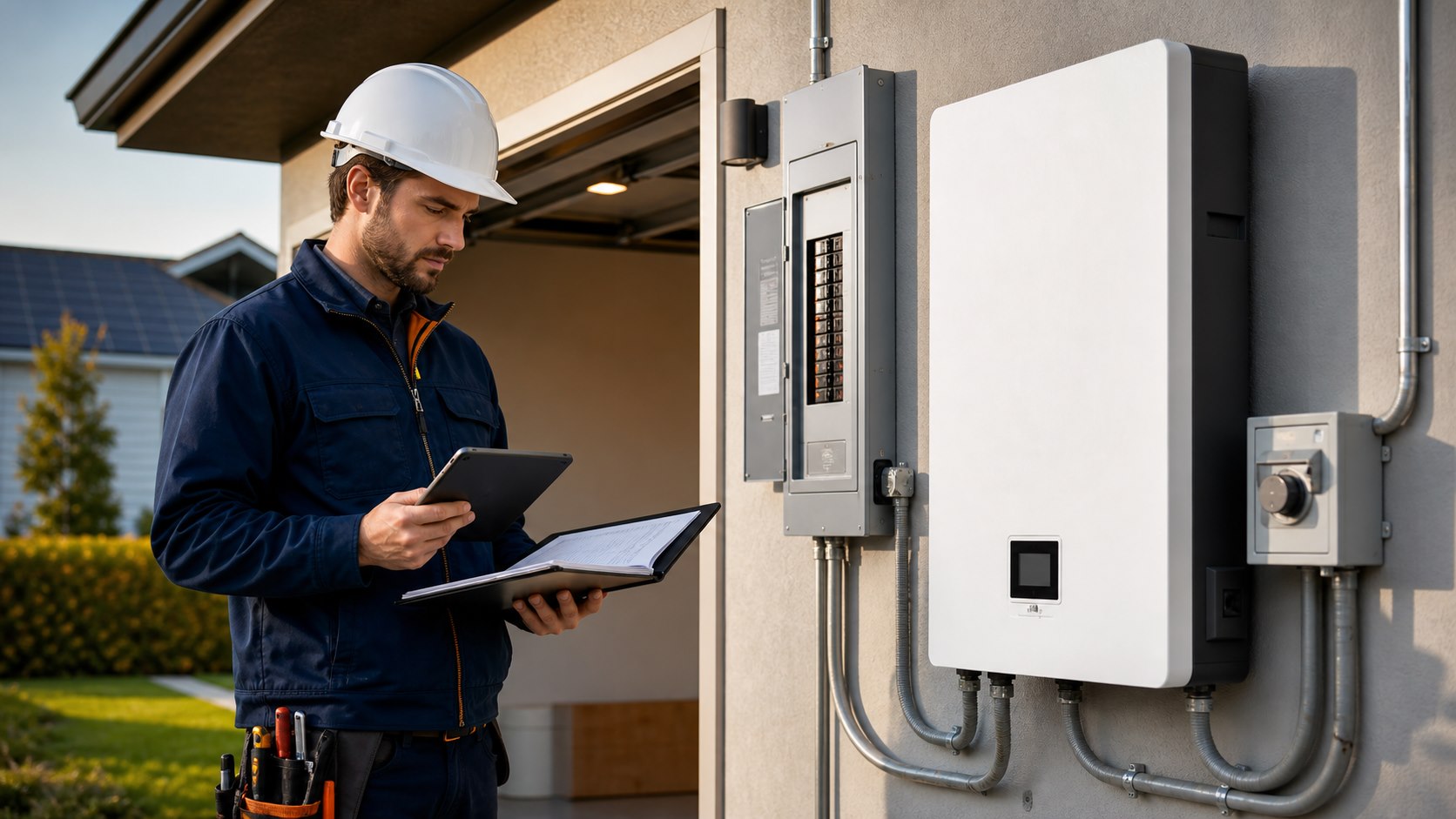
Permit check
UL9540 system listing + AHJ requirement = quote-ready battery spec Verify the complete ESS listing, not only cell or module certificates, before quoting.Over the past 60 days, three out of every five installer inquiries from California, Texas, and Florida start with the same question: “Is your battery actually UL9540 certified, or just UL listed?” That question has quietly become the make-or-break point for permitted residential battery projects. Yet most solar installers still can’t explain in plain language what the standard actually requires, how it differs from UL1973 or UL9540A, or why their insurance carrier suddenly cares. This guide closes that gap — written for the installer who needs to defend a quote tomorrow morning.
What Is UL9540?
UL9540 is a system-level safety standard for energy storage systems (ESS), published by Underwriters Laboratories. It is referenced in the National Electrical Code (NEC), the International Fire Code (IFC), and increasingly in state-level building codes including California Title 24. As of 2026, UL9540 is the de facto baseline for residential battery installations in most regulated US jurisdictions.
The key word is system-level. UL9540 evaluates the complete UL9540 battery system as it would be installed — including the lithium cells, battery management system (BMS), power conversion equipment, enclosure, communications, and any required protective components. It does not certify components in isolation.
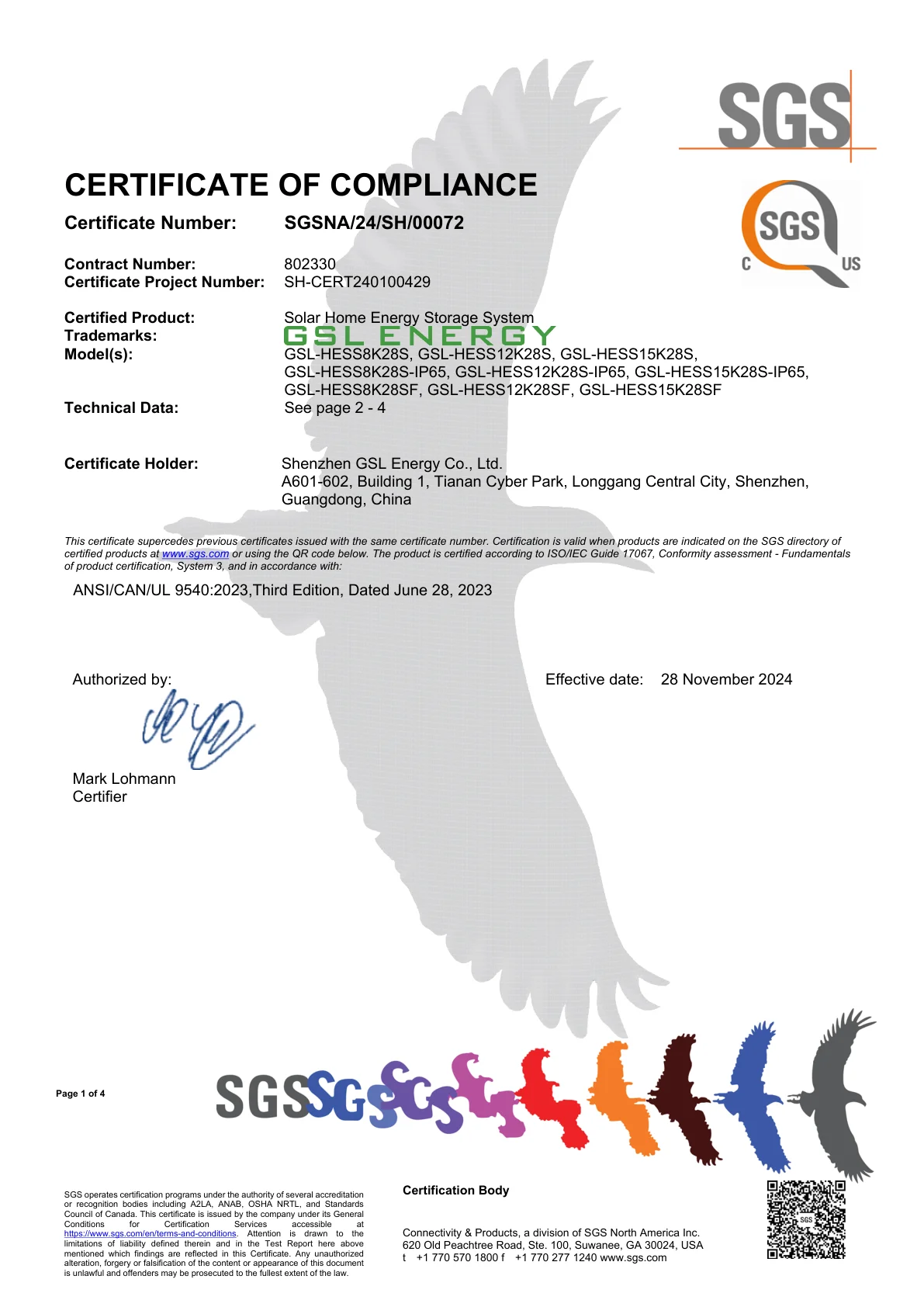
UL9540 vs UL1973 vs UL9540A: How They Stack
Most installers see these three certifications listed on battery datasheets and assume they’re interchangeable. They are not. Each addresses a distinct safety concern:
- UL1973 — Cell-level safety. Tests individual lithium cells against overcharge, short circuit, mechanical impact, vibration, and thermal abuse. This is the foundational layer.
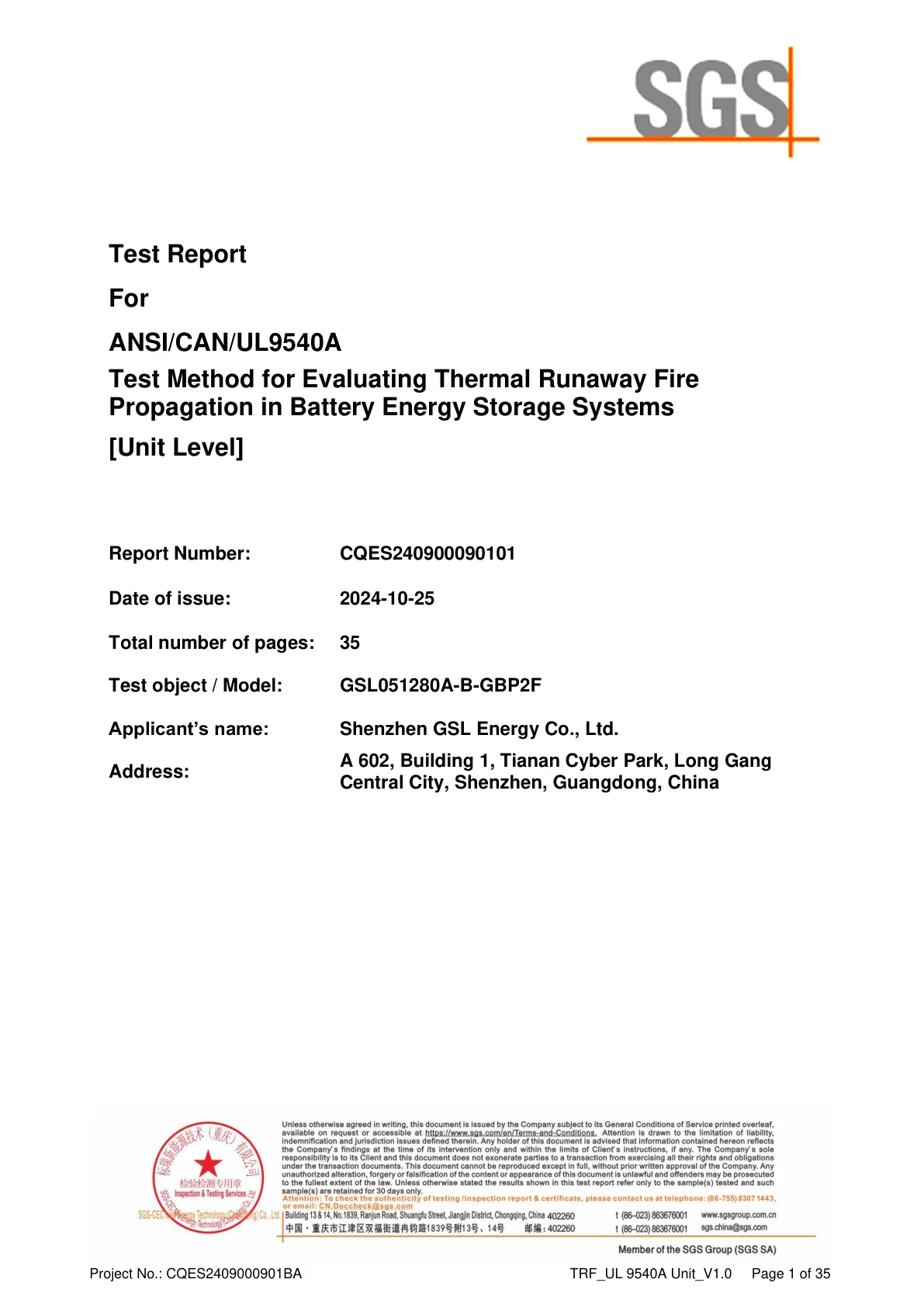
- UL9540A — Thermal runaway test. A specific test methodology that deliberately ignites a cell to characterize fire propagation, vented gases, and required clearances. The output is a UL9540A test report, not a certification mark.
- UL9540 — System-level certification. Builds on UL1973 cell certification, incorporates UL9540A test data, and adds system-level requirements for enclosure, BMS, communications, installation instructions, and integrated safety controls.
A battery can carry UL1973 (cell-level) without being UL9540 certified (system-level). For residential installers, the system-level UL9540 mark is what matters for permitting. The UL listed home battery you quote tomorrow needs all three layers behind it. For the precise distinction, see our guide on the difference between UL 9540 listing and UL 9540A fire testing. See our complete certification matrix →
Why UL9540 Now Matters for Your Permits
Three forces have converged in the last 24 months:
1. Code Adoption
California Title 24 explicitly requires UL9540 listing for residential battery installations. Texas, Florida, Arizona, Colorado, and parts of New York have adopted similar requirements through the IFC reference. AHJs (Authorities Having Jurisdiction) increasingly check the certification at plan review. Without it, permits stall or get denied outright.
2. Insurance Liability
Installer general liability insurance carriers now factor certification depth into premium calculations. After a few high-profile residential battery fires, underwriters introduced explicit questions about UL9540 compliance on renewal applications. Installing non-UL9540 systems can void coverage or trigger premium increases of 15-40% at renewal.
3. Customer Awareness
Better-informed homeowners — particularly in California, Texas, and Florida — now ask about UL9540 specifically during quoting. Installers who can produce certificate PDFs on the spot close more deals than those who have to “check with the supplier.”
What to Verify Before You Quote
Before quoting any battery system in a UL9540-mandatory jurisdiction, verify these four items with your supplier:
- Active UL9540 certificate PDF showing the model number and certification date. Check the UL Online Certifications Directory to confirm it’s current.
- UL9540A test report — required for fire marshal review in many jurisdictions, especially for installations with reduced clearances or in fire-zone designations.
- UL1973 cell certification — the underlying cell safety baseline.
- Installation manual matching the certified configuration — UL9540 certifies a specific installation methodology. Deviations can void compliance.
Suppliers who can’t produce all four documents within 24 hours of request are not actually equipped to support a UL9540-compliant installation, regardless of marketing claims.
A Real Cost: One Texas Installer’s $2,800 Lesson
Last quarter, a Texas-based installer reached out to us after his 16 kWh residential battery project was rejected at plan review. The supplier’s datasheet listed “UL1973” prominently, and the installer assumed that meant UL9540 compliance. The AHJ disagreed: cell-level UL1973 is not system-level UL9540, and the project sat for six weeks waiting on revised paperwork.
By the time the installer scrambled to find a UL9540-certified equivalent, the homeowner had moved on to a competitor. The numbers from that one project:
- Permit re-application: $480
- Six-week delay carrying overhead: ~$1,200
- Lost customer + estimated referral pipeline: ~$2,800
- Total cost of “saving” $3,200 on a non-UL9540 battery: ~$4,500 net loss
This is not an edge case — it’s the new norm in jurisdictions adopting Title 24-equivalent language. The installers who win in 2026 are the ones who never get into this position.
The Hidden Cost of Skipping UL9540
Some installers are tempted by lower-priced non-UL9540 systems, calculating that the price difference offsets the compliance overhead. The math rarely works out. Consider a typical scenario:
A 14 kWh non-UL9540 system might list at $12,000 versus $16,000 for an equivalent UL9540 system — a $4,000 spread per project. But across 12 projects per year, the typical hidden costs include:
- 2-3 permit re-applications at $400-600 each in fees + 6-week project delays
- Increased liability insurance premiums of $3,000-8,000 annually
- Lost referrals from homeowners who Google UL9540 after the install
- Potential re-installation costs if AHJ later mandates UL9540 retrofit
For an established residential solar installer, “saving” on certification typically destroys margin within two quarters. A failed permit cycle erases those savings just as fast — here is what AHJ inspectors actually check on a UL 9540 permit.
The UL9540 Documentation We Provide
The home battery system we supply ships with the manufacturer’s complete UL9540 documentation stack — the paperwork North American AHJs ask for at plan review:
- UL9540 (system safety) — the listing covering the battery and its listed inverter configuration
- UL9540A (thermal runaway) — full fire-propagation test report available on request
- UL1973 (cell-level) — underlying REPT A-grade cell certification
- Installation manual matching the listed configuration
- Fire marshal documentation packet for plan review
Available capacities, all on the 48V LiFePO4 platform: the 100Ah unit built to UL 9540 (5.12 kWh), 10.24 kWh / 200Ah, 14.34 kWh wall-mount, and 16.08 kWh / 314Ah floor-standing. These batteries are also compatible with common hybrid inverters such as Sol-Ark, Megarevo, and LXP for system pairing — confirm the specific listed configuration for your permit. We can provide the certificate PDFs within 24 hours of inquiry. Request the certificate PDFs →
The 5 Most Common UL9540 Compliance Mistakes
- Confusing UL9540 with UL1973. UL1973 certifies the battery cell or module in isolation. UL9540 certifies the complete energy storage system as installed. An AHJ requiring UL9540 will reject a permit showing only UL1973 documentation. Always confirm: “Is the UL9540 certification for the exact system configuration I’m installing — including inverter, battery, and enclosure?”
- Assuming listing = any configuration. A UL9540-listed battery may only cover specific inverter pairings or maximum parallel configurations. Installing 3 modules in parallel when the listing only tested 2 technically removes UL9540 coverage. Check the listing scope before specifying multi-module systems.
- Skipping the UL9540A fire test documentation. UL9540A is the propagation fire test required by NFPA 855 for systems above a certain energy threshold. Many AHJs now ask for UL9540A test reports separately from the UL9540 listing. Request the 9540A report proactively — it takes weeks to obtain if you wait until the permit is already in review.
- Outdated listing documentation. A certificate from 2022 for a battery model revised in 2025 may no longer reflect the current product. Always download certificates directly from the UL Product iQ database on the day you submit for permit.
- Missing NFPA 855 separation distances. UL9540 handles electrical safety certification. NFPA 855 governs installation clearances (separation distances, egress access, maximum energy per room). Both are required for commercial installs — the listing alone does not satisfy the fire marshal.
Quick Reference: UL Listing Types for Battery Storage
| Standard | What It Covers | Who Requires It |
|---|---|---|
| UL 1973 | Battery cells and modules (standalone) | Battery manufacturers; component-level approval |
| UL 9540 | Complete energy storage system as installed | US AHJs; required for most US residential and commercial permits |
| UL 9540A | Fire propagation test for large systems | NFPA 855 compliance; commercial installs above energy thresholds |
| IEC 62619 | International safety standard for LFP cells | Australia (AS/NZS), EU, and international projects |
| UN 38.3 | Transport safety for lithium batteries | Shipping compliance; required for air and sea freight |
Sources & Further Reading
- UL Product iQ Database — Search active UL9540 certifications by manufacturer and model. iq.ulprospector.com
- NFPA 855: Standard for the Installation of Stationary Energy Storage Systems (2023) — Separation distances, egress requirements, and maximum energy thresholds for residential and commercial installs.
- NEC Article 706 — Energy Storage Systems — National Electrical Code requirements for battery installation and disconnects.
- ICC / IFC Section 1207 — Energy Storage Systems — International Fire Code provisions often adopted alongside NFPA 855 by local AHJs.
- UL White Paper: Understanding UL 9540 and 9540A — Technical background on the difference between the two standards. ul.com
Frequently Asked Questions
Is UL9540 the same as “UL listed”?
No. “UL listed” is a generic phrase that can refer to any UL certification — including cell-only UL1973. UL9540 is the specific system-level certification required for residential energy storage system installations in code-adopting jurisdictions. Always ask for the UL9540 certificate PDF by name.
Pro tip: UL9540 covers the system as installed — not just the battery in isolation. If your listing was tested with Inverter Model A and you install Inverter Model B, you may technically be outside the certification scope. Confirm the listing explicitly covers your inverter model before permit submission.
Can I install a non-UL9540 battery in California?
In most California jurisdictions, no. Title 24 references UL9540 for permitted residential ESS installations. Some AHJs allow case-by-case variance for grandfathered systems, but new permits will almost always require UL9540 listing.
What’s the difference between UL9540 and UL9540A?
UL9540 is a certification mark issued after a system passes the full standard. UL9540A is a specific test methodology that produces a test report (not a mark) characterizing fire propagation behavior. UL9540 certification incorporates UL9540A test data.
How long does UL9540 certification take to verify?
A legitimate supplier can produce the certificate PDF and UL Online Directory link within 24 hours. The certificate itself takes manufacturers 6-12 months to obtain initially. If your supplier delays the request, that is a red flag.
Does UL9540 cover the inverter or only the battery?
UL9540 certifies a specific battery + inverter combination as a system. The certification names the inverter models tested. Pairing the battery with a non-listed inverter voids the UL9540 system-level claim, even if the inverter has its own certification.
What if my supplier only has UL1973 and no UL9540?
For residential US installations in UL9540-mandatory jurisdictions, you should not quote that battery. UL1973 alone covers cell-level safety, not system-level installation. Either upgrade the supplier or switch to a manufacturer that holds active UL9540 certification with your preferred inverter pairing.
Bottom Line for Installers
UL9540 is no longer a “nice-to-have.” In California it is a permit requirement. In Texas and Florida it is rapidly becoming one. In every other state with active residential battery markets, it is the direction of travel within 24-36 months. Solar installers who build their LFP home battery offering on UL9540-certified systems today will avoid the painful retrofit cycle that non-compliant installations face within the next regulatory cycle.
Need UL9540 Certificate PDFs for Your Next Project?
Next Steps
UL9540 compliance is the single most common permitting bottleneck for solar+battery projects in the US. Getting the documentation right before submittal turns a 6-week permit delay into a 2-week approval.
See also: UL9540 vs UL9540A
See also: UL9540 AHJ inspection
- Download UL9540 certificate for our battery platform — The UL9540 Home Battery System and 314Ah LFP platform both ship with complete UL9540 documentation packages including the 9540A fire test report. Request the certificate PDFs before your next permit submittal. Request certificates →
- Review the certifications matrix — See our full certifications page for all active UL, IEC, and UN listings with download links — updated every quarter directly from the UL Product iQ database.
- Read the battery sizing guide — Once UL9540 compliance is confirmed, the next decision is capacity. The Off-Grid Battery Sizing Calculator guide walks through the step-by-step sizing math so you spec the right kWh for the permit package.
- Plan your off-grid system around your UL9540 battery — Once compliance is confirmed, sizing is next. The Off-Grid Solar Systems guide covers inverter pairing, battery bank sizing, and the full UL9540 permit package for a complete off-grid build.
Need a certification-ready spec?
Send us the market and compliance requirement.
We will help verify UL9540 and UL1973 positioning and match the battery recommendation to installer documentation needs.