

Savolture / Solusi
Cadangan Baterai Seluruh Rumah
Jaga seluruh rumah tetap menyala saat listrik padam — AC, pompa air, dapur, ruang kerja — dengan kapasitas dan desain yang tepat sejak awal.
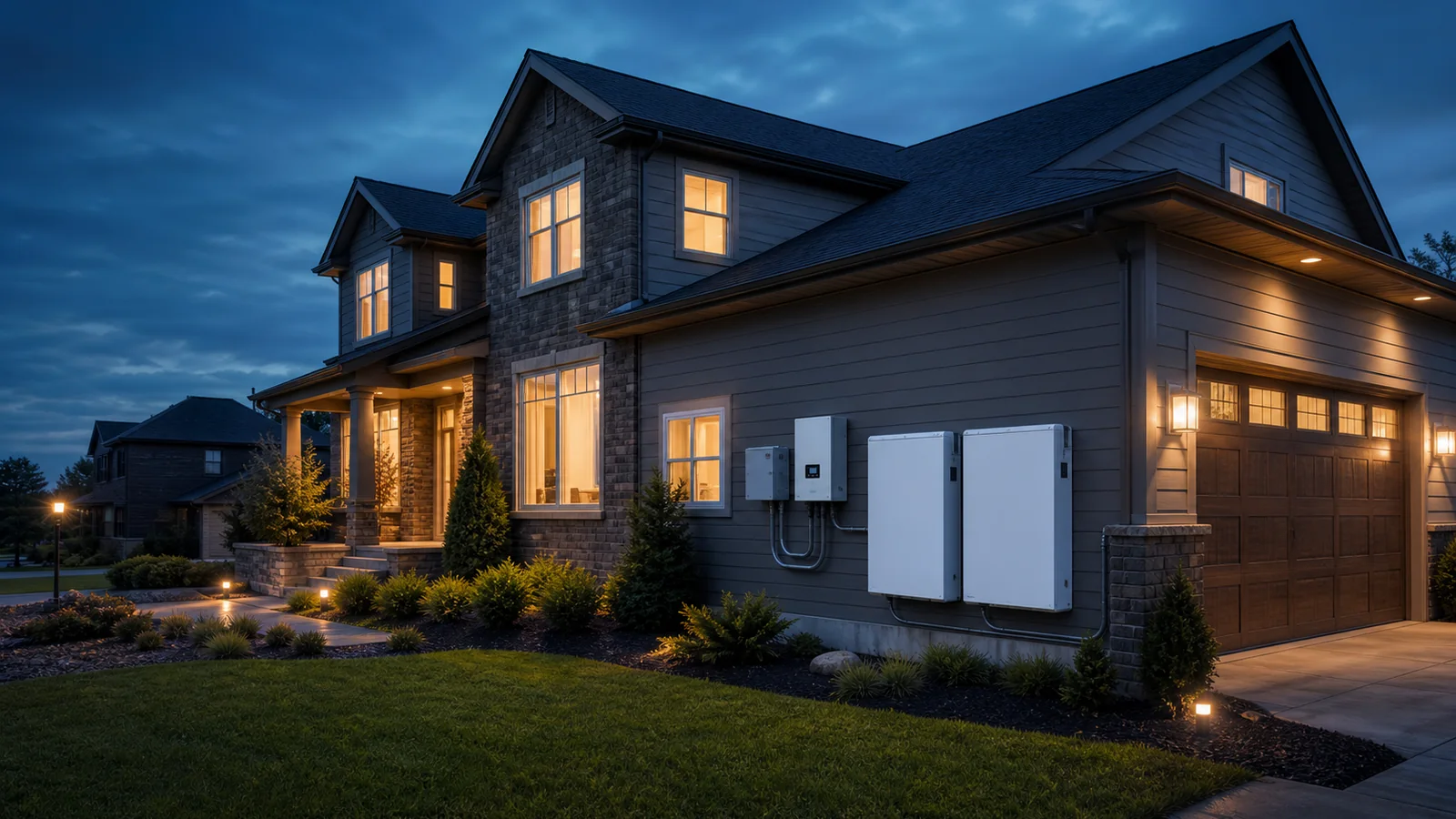
Penentuan ukuran cadangan seluruh rumah
Cadangan seluruh rumah juga memerlukan kapasitas lonjakan inverter untuk AC, pompa, dan beban motorik lainnya.
Instalasi Cadangan Seluruh Rumah Nyata
Lihat bagaimana sistem cadangan seluruh rumah terpasang di lokasi umum. Konfigurasi ilustratif.
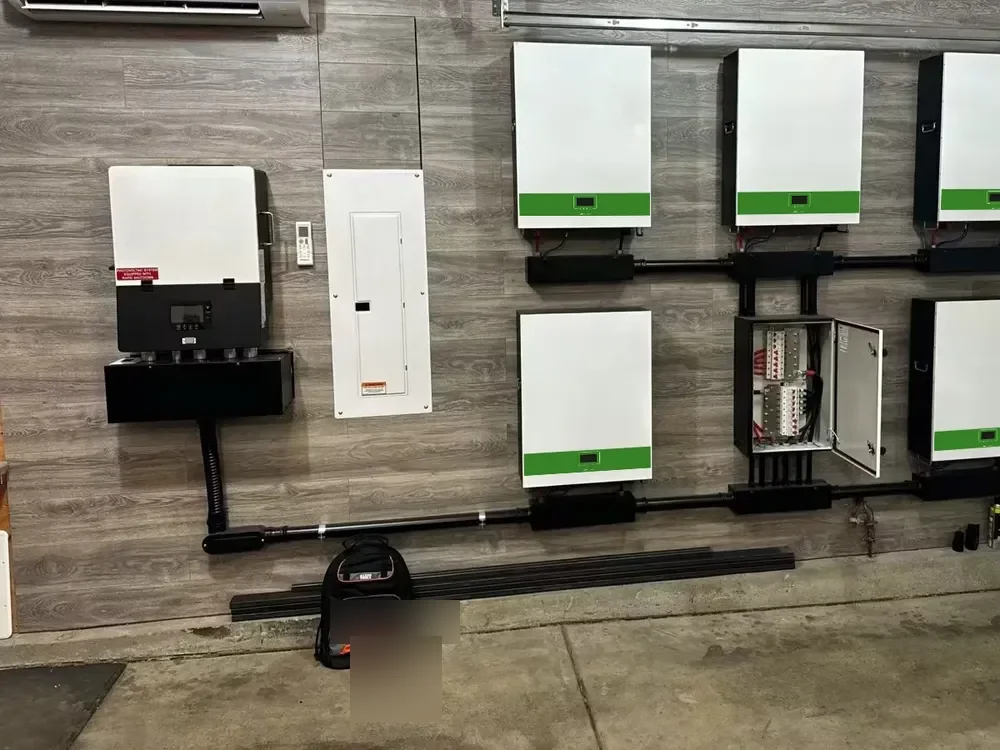
Baterai Indoor + Inverter Hybrid
Baterai LiFePO4 dan inverter hybrid dipasang di garasi di samping panel utama — tata letak cadangan seluruh rumah yang paling umum.
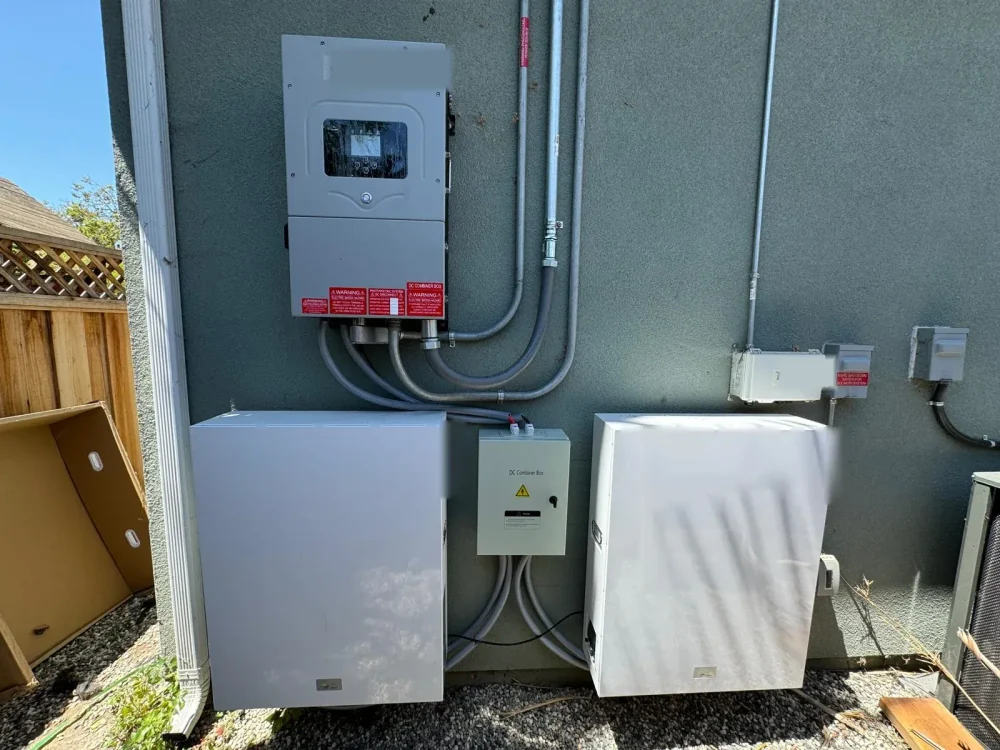
Instalasi Dinding Luar
Baterai dan inverter dinding berperingkat outdoor, disalurkan ke subpanel cadangan — untuk rumah tanpa ruang dalam ruangan.
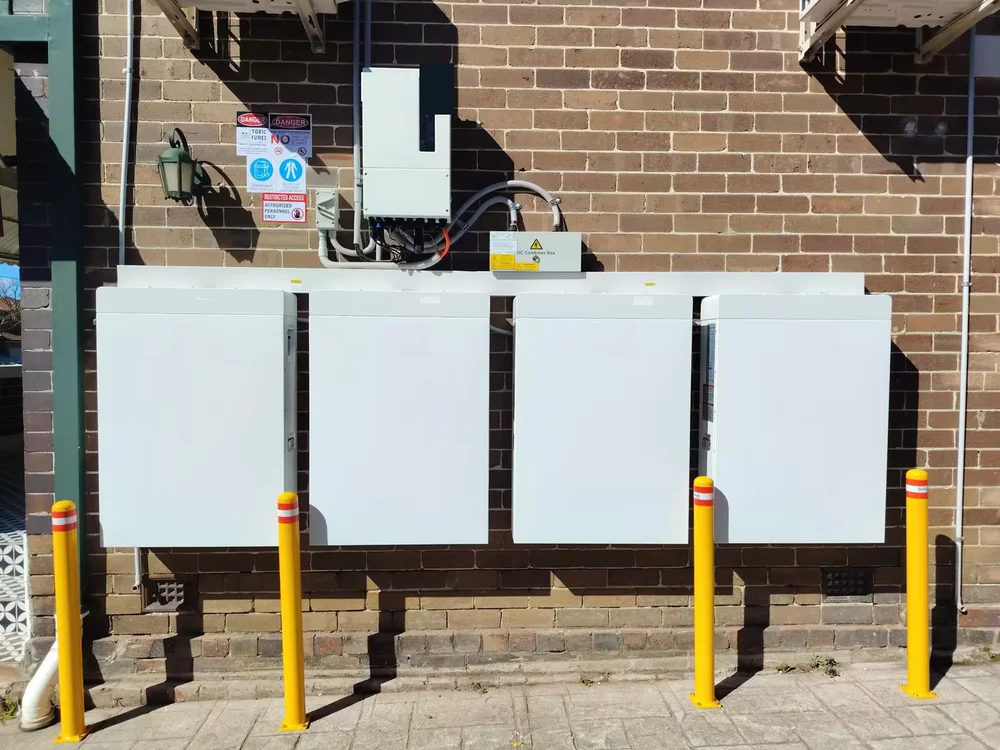
Parallel Battery Bank
Multiple LiFePO4 cabinets paralleled to back larger or all-electric homes, including EV charging during an outage.
Ketika jaringan PLN padam, cadangan parsial hanya menyalakan beberapa lampu dan kulkas. Whole home battery backup menyalakan seluruh rumah selama berjam-jam atau berhari-hari. Perbedaan antara kedua hasil tersebut adalah keputusan ukuran dan desain sistem yang Anda buat sebelum membeli — salah memilih berarti Anda menghabiskan terlalu banyak untuk kapasitas yang tidak pernah Anda gunakan, atau menemukan saat badai bahwa “cadangan” Anda tidak bisa menghidupkan AC.
Apa Sebenarnya “Cadangan Seluruh Rumah” Itu

Beban Kritis
Baterai kecil menyalakan subpanel khusus — kulkas, beberapa lampu, internet.

Sebagian Rumah
Sebagian besar sirkuit kecuali beban terbesar (AC sentral, kompor, pengisian EV).

Seluruh Rumah
Setiap sirkuit, termasuk peralatan berdaya tinggi, berukuran untuk bertahan melewati pemadaman beberapa hari.
Aturan praktis: cadangan seluruh rumah yang sesungguhnya didefinisikan oleh dua angka yang bekerja bersama — cukup usable kWh untuk bertahan selama pemadaman, dan cukup daya inverter berkelanjutan dan lonjakan untuk menjalankan semuanya sekaligus. Baterai besar di balik inverter yang terlalu kecil tetap hanya cadangan parsial.
Berapa Banyak Baterai yang Dibutuhkan Seluruh Rumah?
Mulai dari beban yang benar-benar ingin Anda jalankan selama pemadaman, bukan rata-rata tahunan Anda. Metode kerjanya:
- Jumlahkan kWh harian dari sirkuit yang ingin Anda dukung (target seluruh rumah yang umum adalah 15–25 kWh/hari setelah memangkas non-esensial).
- Kalikan dengan hari kemandirian (1 hari untuk cadangan jaringan; 2–3 untuk area rawan badai).
- Bagi dengan kedalaman pengosongan yang dapat digunakan. LFP mendukung hingga 90–95% DoD secara teknis, tetapi pemasang profesional merancang untuk 80% DoD for daily cycling to preserve cycle life.
So a home wanting 18 kWh/day for one day needs about 18 ÷ 0.80 = 22.5 kWh of nameplate storage. See the full method in our battery sizing guide.
Quick Reference: Sizing by Home
| Home profile | Backup target | Usable need (80% DoD) | Recommended system |
|---|---|---|---|
| Small home / condo, critical loads | ~8 kWh/day, 1 day | ~10 kWh | 100Ah ×2 or one 200Ah |
| Average home, partial-to-whole | ~15 kWh/day, 1 day | ~19 kWh | 200Ah ×2 |
| Large home, true whole-home | ~22 kWh/day, 1–2 days | ~28–55 kWh | 314Ah ×2–3 |
| Storm-prone, multi-day autonomy | ~18 kWh/day, 3 days | ~68 kWh | 314Ah ×4 + solar |
LFP Battery Specifications for Whole-Home Use
| Cell chemistry | LiFePO4 (lithium iron phosphate) — no thermal-runaway cascade, safe for indoor install |
| Nominal voltage | 48V (15S, 3.2V/cell) — compatible with all major hybrid inverters |
| Cycle life | 6,000–8,500 cycles @ 80% DoD — 15+ years of daily cycling |
| Depth of discharge | 80% recommended daily; 90–95% available as technical limit |
| BMS protection | Over-charge, over-discharge, short-circuit, cell balancing, temperature cut-off |
| Operating temperature | Charge 0–45°C / discharge −20–60°C |
| Certifications | UL 9540 listed · UN 38.3 — see LFP vs NMC comparison |
The System: Battery + Inverter + Panel
Pro tip: size the inverter’s surge rating to your single largest motor load, not just the sum of running watts. A 22 kWh battery is useless during an outage if the inverter trips every time the central AC tries to start. See our hybrid inverter pairing guide.
 100AhEntry / stagedView →
200AhWall-mount stapleView →
100AhEntry / stagedView →
200AhWall-mount stapleView →
 314AhHigh-density cabinetView →
 UL9540Code-compliantView →
Fire Safety & Code Compliance

A whole-home system means more aggregate kWh in one location — exactly when fire-code scrutiny intensifies. Two requirements decide whether your install gets permitted:
- UL 9540 Listing — the system-level safety certification an AHJ requires to permit residential storage. Savolture’s UL9540-listed home battery is built for code-compliant permitting; see the UL9540 certification guide.
- UL 9540A fire-propagation data — required when you exceed default NFPA 855 / IFC allowances (whole-home banks routinely do). Understand the difference in our UL9540 vs UL9540A guide.
Chemistry matters: LFP has a far higher thermal-runaway threshold than NMC — one reason it is the residential standard. See LFP vs NMC. Every Savolture residential system uses LFP.
The True Cost of Seluruh Rumah Backup
Whole-home backup costs more than critical-loads backup — more kWh and a bigger inverter — but the lifetime math favors doing it right once. LFP systems rated 6,000–8,500 cycles deliver storage at roughly $0.13/kWh over their life. The expensive mistakes are buying too little capacity (and re-engineering a year later), or a battery too big for an undersized inverter (and never being able to use it). Sizing correctly up front is the single biggest cost lever.
Two Whole-Home Scenarios
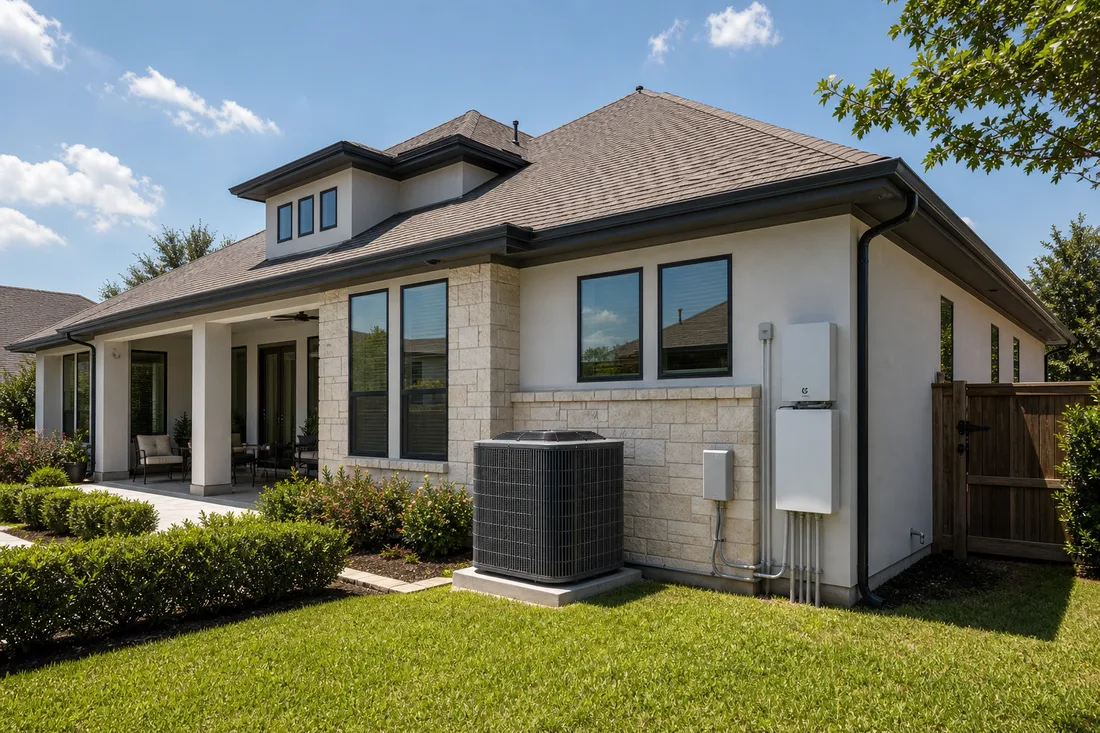
Houston, TX — the AC must survive the outage
Picture a 2,400 sq ft Houston home where summer outages make central AC non-negotiable. The binding constraint isn’t daily kWh — it’s the inverter surge to start a 4-ton compressor. Pair a ~28 kWh bank (two 314Ah cabinets) with an inverter sized for locked-rotor surge.
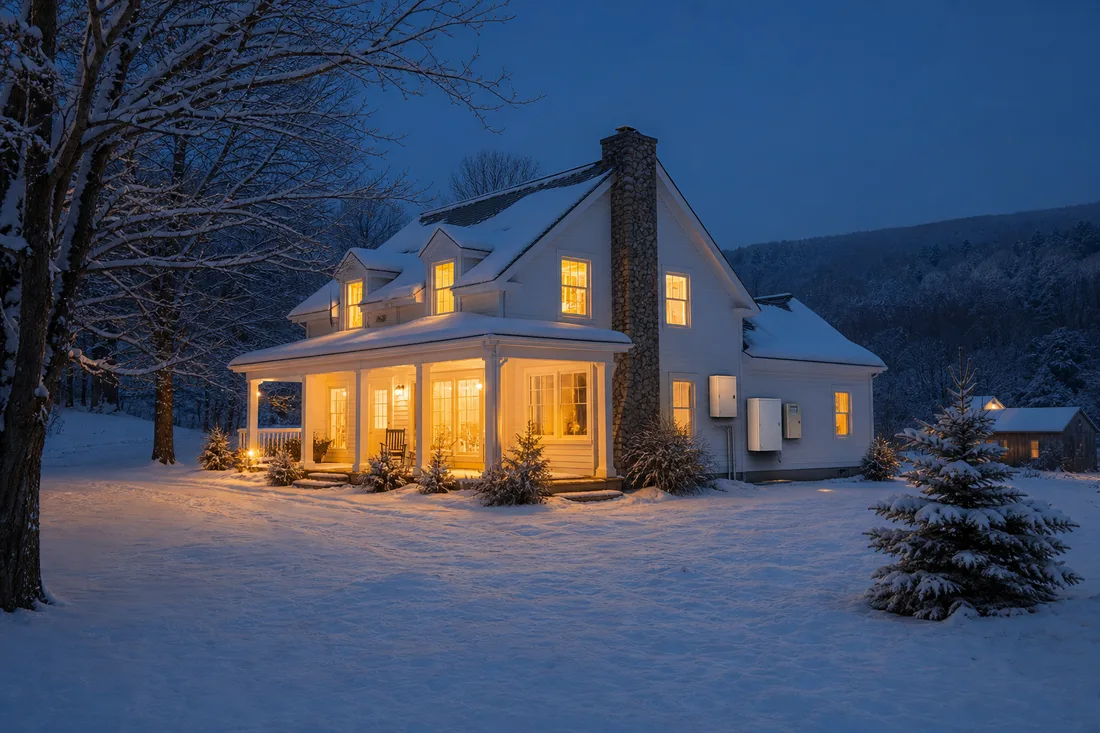
Rural Vermont — multi-day winter outages
Consider a rural Vermont home where ice storms cut power for 2–3 days. Daily kWh and autonomy drive it: ~18 kWh/day over three days points to a large bank (four 314Ah cabinets) plus solar recharge. Aggregate capacity well above default allowances makes the UL9540-listed platform the only practical choice.
Most Common Whole-Home Backup Mistakes
Sizing the battery but not the inverter. Whole-home backup fails at the inverter’s surge limit, not the battery’s kWh. Match surge to your largest motor load.
Sizing to annual-average kWh. Backup is about outage loads. Build the load list for what you actually need to run.
Ignoring fire code until final inspection. Whole-home banks routinely exceed default allowances. Confirm UL 9540 / 9540A during plan review.
Using 100% DoD in the math. Size to 80% usable for daily cycling, or you’ll under-deliver and shorten battery life.
Cadangan Baterai Seluruh Rumah FAQ
How many kWh do I need to back up my whole home?
Most whole-home backups target 15–25 kWh of backed-up load per day, which at 80% usable DoD means roughly 20–55 kWh of nameplate LFP storage depending on home size and days of autonomy. Size from your actual outage load list, not annual-average consumption.
Can a battery really run my central air conditioner?
Yes, if the hybrid inverter is sized for the AC compressor’s surge (locked-rotor) current, which can be 3–7× its running draw. Whole-home backup of motor loads is limited by inverter surge rating, not battery capacity.
Do I need UL 9540 for a whole-home system?
Almost always. A UL 9540 Listing is the system-level certification AHJs require. Whole-home banks often also need UL 9540A fire-propagation data because their aggregate capacity or layout exceeds default NFPA 855 / IFC allowances.
How many days of backup should I plan for?
For grid backup in stable areas, one day of autonomy is typical. In storm- or wildfire-prone regions, plan for 2–3 days and pair the battery with solar so it recharges between outages.
Is LFP better than NMC for whole-home backup?
For residential use, yes. LFP has a higher thermal-runaway threshold, longer cycle life (6,000–8,500 cycles), and better high-temperature tolerance, and produces more favorable UL 9540A results. Every Savolture residential system uses LFP.
Can I add a generator as well as a battery?
Yes. Many whole-home designs pair a battery with a generator for extended outages: the battery handles instant silent switchover and daily cycling, while the generator recharges it during prolonged events. A hybrid inverter with generator input coordinates the two automatically.
Does whole-home backup qualify for the Cheaper Home Batteries Program?
Australia’s federal Cheaper Home Batteries Program (from 1 July 2025) discounts eligible battery storage installed by an accredited installer, using batteries on the approved product list. Whole-home backup systems can qualify when the battery and install meet program rules — confirm current eligibility and rebate amounts with your installer and the official program, as caps and lists change. See our CEC-listed battery guide for Australia.
Are Savolture batteries on the CEC approved product list?
For any Australian rebate, the battery must appear on the relevant approved product list (e.g. CEC) and be installed by an accredited installer. Tell us your state and target program when you enquire and we’ll confirm which of our LFP models match the current approved list before you commit.
Ready to design your whole-home backup?
Send your home size, loads & target inverter
We’ll return a capacity recommendation, inverter match, and certification documentation within 24 hours.